What Makes a Carbon Fiber Sandwich Panel
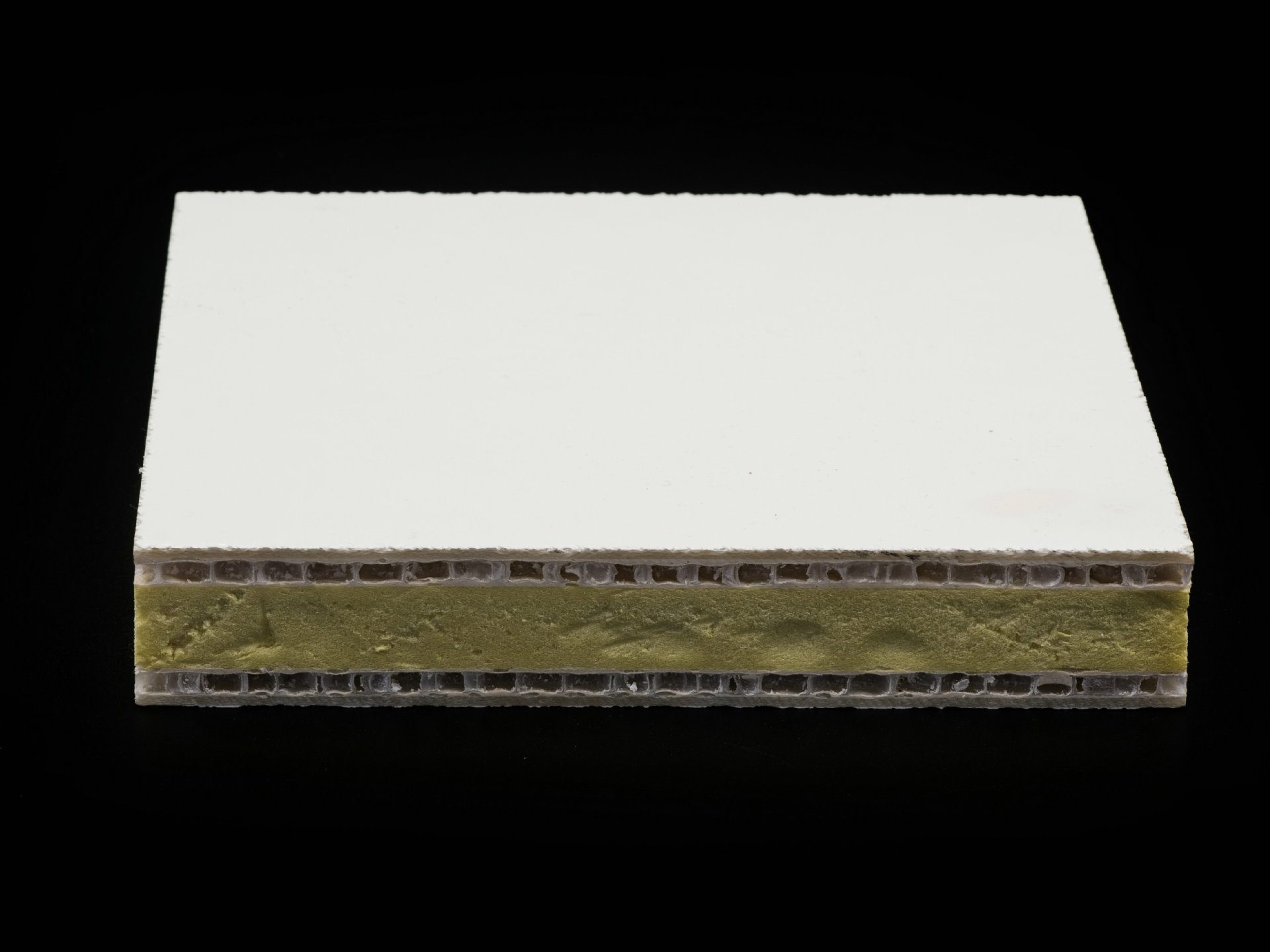
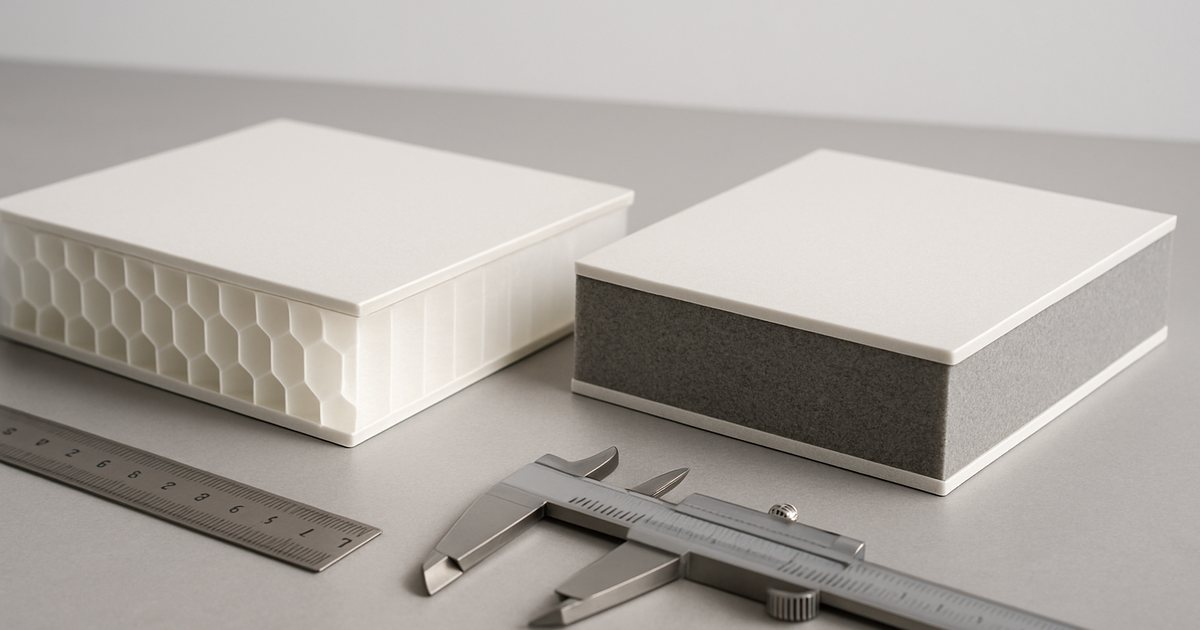
A carbon fiber sandwich panel is a composite structure consisting of two thin, stiff carbon fiber face sheets bonded to a thick, lightweight core material. The face sheets carry the bending loads (tension on one face, compression on the other), while the core separates the face sheets and carries shear loads. This division of labor produces a structure that is dramatically stiffer and lighter than either material alone.
The carbon fiber skins get all the marketing attention, but it is the core material that determines the panel's weight, cost, thermal performance, and suitability for specific applications. Two panels with identical carbon fiber skins but different cores can have completely different mechanical properties, price points, and failure modes.
This guide helps engineers and product designers choose the right core for their carbon fiber sandwich panel application.
Core Material Options
PP (Polypropylene) Honeycomb
PP honeycomb is a thermoplastic honeycomb core extruded from polypropylene. It is HOTECH's primary core product.
Strengths: Lightest honeycomb option at typical densities (40–120 kg/m³). Waterproof — zero moisture absorption means no weight gain and no property degradation in wet environments. 100% recyclable as a single-material thermoplastic. Most cost-effective honeycomb core. Available in cell sizes from 3–30 mm. Limitations: Lower shear strength and shear modulus than aluminum or Nomex honeycomb at equivalent density. Maximum continuous service temperature of 80°C (not suitable for high-temperature aerospace applications). Lower out-of-plane compression stiffness than metallic honeycomb. Best for: Marine panels, automotive interior panels, sports equipment, drone frames, architectural panels, and any application where moisture resistance, weight, cost, and recyclability are priorities over maximum stiffness.Aluminum Honeycomb
Aluminum honeycomb is the traditional high-performance core for aerospace and defense applications.
Strengths: Highest specific shear strength and shear modulus of any common honeycomb core. Excellent dimensional stability. Fire resistant (non-combustible metal). Wide operating temperature range (-55°C to +177°C). Very consistent mechanical properties. Limitations: Susceptible to galvanic corrosion when in contact with carbon fiber — an aluminum-carbon fiber interface in the presence of moisture creates an electrochemical cell that corrodes the aluminum. This is a serious design consideration that requires isolating the aluminum core from the carbon skins with a glass fiber barrier ply or corrosion-resistant adhesive. Heavier than polymer honeycomb at equivalent cell configurations. Not recyclable as a sandwich (requires separation). Best for: Aerospace structural panels, satellite components, military applications, and any application where maximum specific stiffness is required and the operating environment is dry or the galvanic issue is managed.Nomex (Aramid) Honeycomb
Nomex honeycomb is made from aramid fiber paper (Nomex is DuPont's brand name) formed into a honeycomb pattern and coated with phenolic resin.
Strengths: Excellent fire resistance — Nomex is inherently flame-resistant and self-extinguishing. Good specific shear properties (between aluminum and PP). Widely used in aerospace and approved under numerous aerospace material specifications (e.g., MIL-C-81986). Good fatigue resistance. Limitations: Absorbs moisture — Nomex paper is hygroscopic and can absorb 2–4% moisture by weight. This adds mass and can degrade mechanical properties over time in humid environments. Expensive — typically 3–5x the cost of PP honeycomb. Not recyclable. Higher density than PP honeycomb at equivalent structural performance. Best for: Aircraft interior panels (where fire resistance is mandated), racing car structures (fire safety), and applications requiring aerospace-grade material traceability.PU (Polyurethane) Foam
Closed-cell polyurethane foam provides both structural core and thermal insulation functions.
Strengths: Good thermal insulation (R-6+ per inch) combined with structural core function. Available in a wide density range (30–300 kg/m³). Can be thermoformed into complex shapes at higher densities. Closed-cell structure provides moderate moisture resistance. Limitations: Heavier than honeycomb at equivalent stiffness — PU foam at the density needed for structural panels (80–150 kg/m³) weighs more than PP honeycomb (60–100 kg/m³) at the same performance level. Not recyclable (thermoset). Outgasses blowing agents over time. Compression creep under sustained loads. Best for: Insulated panels requiring both thermal and structural performance — refrigerated containers, cold storage panels, and building facades where insulation value matters as much as mechanical strength.PET Foam
PET (polyethylene terephthalate) foam is a recyclable closed-cell structural foam increasingly used as a sustainable alternative to PU and PVC foams.
Strengths: High shear strength relative to density — PET foam outperforms PU foam in specific shear strength at equivalent densities. Recyclable (thermoplastic). Good fatigue resistance. Low moisture absorption. No outgassing. Limitations: Higher cost than PU foam. Limited maximum density range compared to PU. Lower thermal insulation than PU. Best for: Marine hulls, wind turbine blades, automotive structural panels, and applications where sustainability and fatigue resistance are priorities.Balsa Wood
End-grain balsa is a natural core material with a long history in marine and aerospace sandwich construction.
Strengths: Excellent specific shear strength — end-grain balsa has the highest shear strength-to-weight ratio of any common core material. Natural, renewable material. Good thermal insulation. Limitations: Absorbs moisture readily — balsa must be sealed completely or it will soak up water and rot. Inconsistent mechanical properties (natural material variability). Supply chain vulnerability (balsa is primarily sourced from Ecuador). Difficult to source in large continuous sheets. Cannot be thermoformed. Best for: Marine hulls (with proper sealing), wind turbine blades, and traditional boat building where the highest shear strength at minimum weight is required and moisture control is managed through design.Mechanical Property Comparison
| Core Material | Density (kg/m³) | Compressive Strength (MPa) | Shear Strength (MPa) | Shear Modulus (MPa) | Service Temp (°C) |
|---|---|---|---|---|---|
| PP Honeycomb (8mm cell) | 80 | 1.5–2.0 | 0.5–0.7 | 15–25 | -40 to +80 |
| Aluminum Honeycomb (3.2mm cell) | 50 | 2.8–3.5 | 1.5–2.0 | 350–450 | -55 to +177 |
| Nomex Honeycomb (3.2mm cell) | 48 | 1.5–2.5 | 0.8–1.2 | 25–40 | -55 to +177 |
| PU Foam | 80 | 0.5–1.0 | 0.4–0.8 | 10–20 | -60 to +100 |
| PET Foam | 80 | 0.8–1.4 | 0.6–1.0 | 18–30 | -60 to +120 |
| Balsa (end-grain) | 100 | 6.0–9.0 | 1.5–2.5 | 80–120 | -40 to +60 |
*Values are typical ranges for comparison. Actual properties depend on specific grade, cell configuration, and test conditions. Test per ASTM C365 (compression), ASTM C273 (shear).*
Weight Calculation Example
For a 1 m² panel with 0.5 mm carbon fiber skins on each side and a 20 mm core:
| Core Material | Core Weight (kg) | Skin Weight (kg) | Total (kg/m²) |
|---|---|---|---|
| PP Honeycomb (80 kg/m³) | 1.60 | 1.50 | 3.10 |
| Aluminum Honeycomb (50 kg/m³) | 1.00 | 1.50 | 2.50 |
| Nomex Honeycomb (48 kg/m³) | 0.96 | 1.50 | 2.46 |
| PU Foam (80 kg/m³) | 1.60 | 1.50 | 3.10 |
| PET Foam (80 kg/m³) | 1.60 | 1.50 | 3.10 |
| Balsa (100 kg/m³) | 2.00 | 1.50 | 3.50 |
At equivalent stiffness, aluminum and Nomex honeycomb produce the lightest panels because they achieve the required shear properties at lower densities. PP honeycomb and foam cores are heavier but significantly cheaper.
Cost Comparison
| Core Material | Approximate Cost (USD/m², 20mm) | Cost Index |
|---|---|---|
| PP Honeycomb | $6–14 | 1x (baseline) |
| PU Foam | $3–8 | 0.5–0.6x |
| PET Foam | $18–30 | 2–3x |
| Aluminum Honeycomb | $25–45 | 3–4x |
| Nomex Honeycomb | $30–60 | 4–5x |
| Balsa (end-grain) | $15–25 | 2–3x |
*Prices are FOB factory for standard grades. Aerospace-certified Nomex and aluminum cores can cost 2–3x these ranges.*
Application Decision Matrix
| Application | Primary Requirement | Recommended Core | Why |
|---|---|---|---|
| Drone frame | Minimum weight | Aluminum honeycomb | Highest specific stiffness at lowest density |
| Racing car body | Fire safety + weight | Nomex honeycomb | Fire-resistant, light, aerospace-traceable |
| Marine deck | Moisture + weight | PP honeycomb | Waterproof, no galvanic corrosion with CF |
| Automotive interior | Cost + weight | PP honeycomb | Best cost-performance ratio |
| Aircraft interior | Fire + certification | Nomex honeycomb | FAR 25.853 compliance |
| Sports equipment | Cost + feel | PP honeycomb | Energy absorption, waterproof, recyclable |
| Architectural panel | Aesthetics + cost | PP honeycomb or PU foam | Custom finishes, large sizes available |
| Insulated panel | Thermal + structure | PU or PET foam | Insulation + structural in one material |
| Wind turbine blade | Fatigue + shear | PET foam or balsa | Best fatigue life, high shear strength |
| Satellite structure | Max stiffness, zero CTE | Aluminum honeycomb | Dimensional stability, vacuum-compatible |
Why PP Honeycomb Core Is Gaining Share in Carbon Fiber Panels
In the past decade, PP honeycomb has been displacing aluminum and Nomex honeycomb in non-aerospace carbon fiber sandwich panels for three reasons:
1. No galvanic corrosion. Aluminum honeycomb in contact with carbon fiber creates an electrochemical cell that corrodes the aluminum. PP is an electrical insulator — no galvanic interaction with carbon fiber. This eliminates the need for barrier plies and simplifies panel construction. 2. Cost reduction without proportional performance loss. For applications that do not require aerospace-grade stiffness (which is most applications), PP honeycomb delivers 70–80% of aluminum honeycomb's performance at 20–30% of the cost. The carbon fiber skins dominate the panel's bending stiffness; the core's primary job is to maintain skin separation and carry shear loads — tasks PP honeycomb performs adequately at a fraction of the price. 3. Sustainability pressure. PP honeycomb is 100% recyclable. Nomex and aluminum honeycomb in sandwich panels are extremely difficult to recycle because separating the core from the adhesive and skins is uneconomical. As end-of-life regulations tighten (EU ELV directive, REACH), recyclable cores gain a regulatory advantage.Bonding Carbon Fiber Skins to Honeycomb Core
The bond between skin and core is the most critical joint in a sandwich panel. Two methods are common:
Adhesive bonding: A structural adhesive film (epoxy or polyurethane) is placed between the skin and core, then cured under heat and pressure. This is the standard method for thermoset carbon fiber (prepreg) panels. Adhesive selection must account for peel strength, shear strength, service temperature, and compatibility with both the skin resin and core material. Thermal lamination (for thermoplastic skins): When using CFRT (thermoplastic carbon fiber) skins with PP honeycomb core, thermal lamination bonds the two materials without adhesive — the PP in the skin and the PP in the core fuse together under heat and pressure. This produces a stronger bond than adhesive, eliminates adhesive cost, and enables full recyclability. HOTECH specializes in this process.