What Is Sandwich Panel Construction?
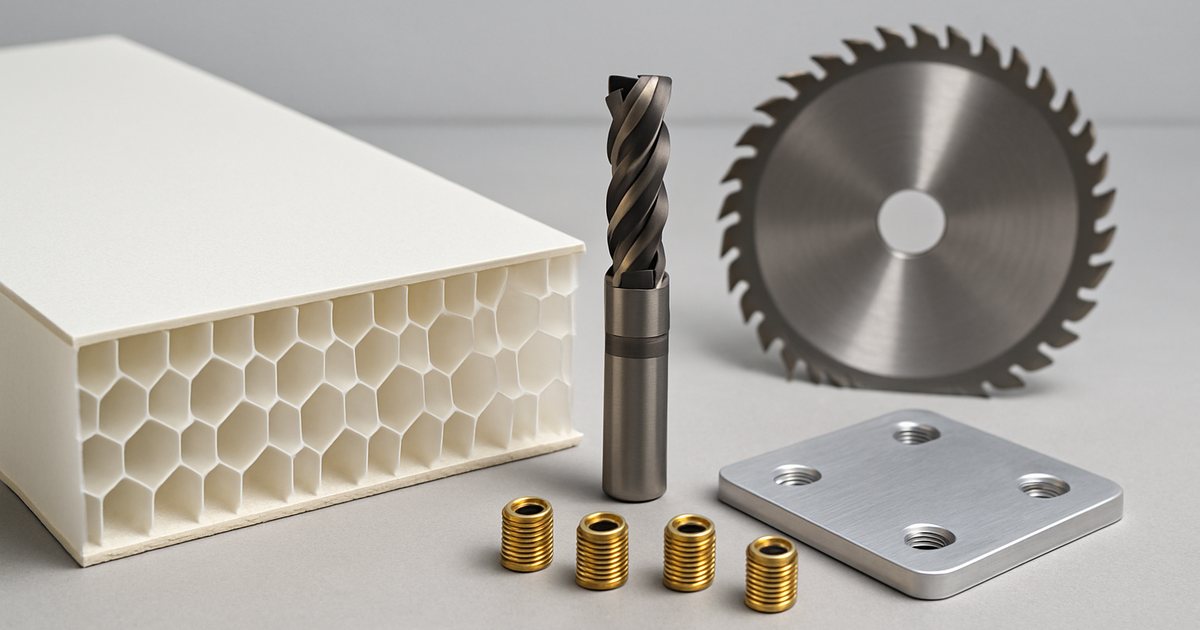
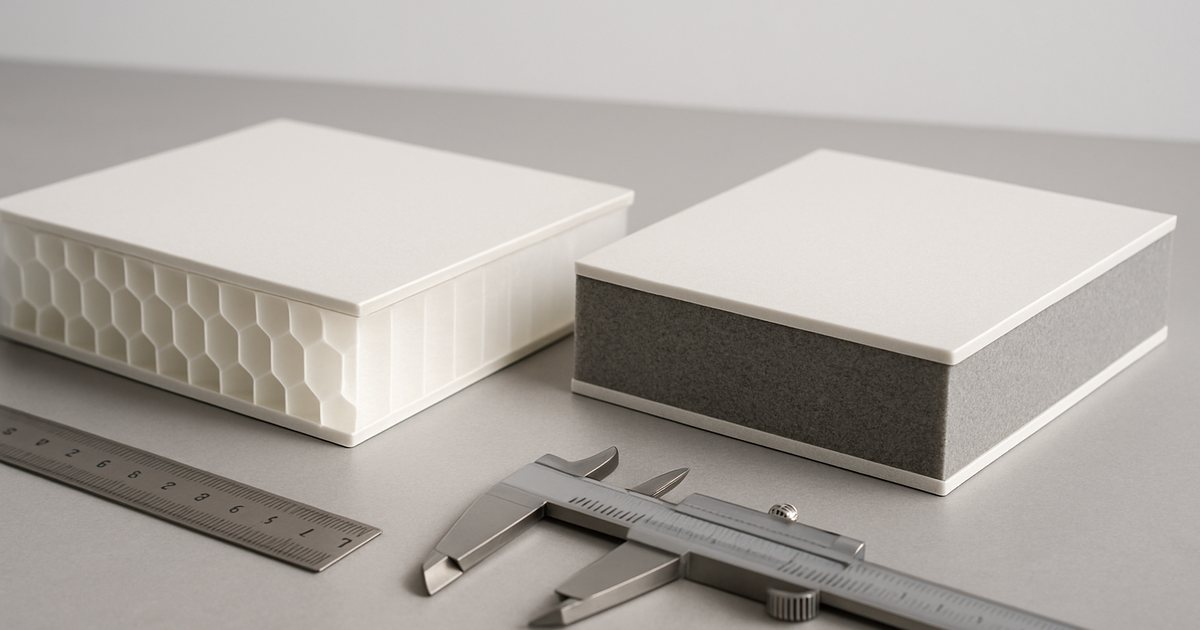
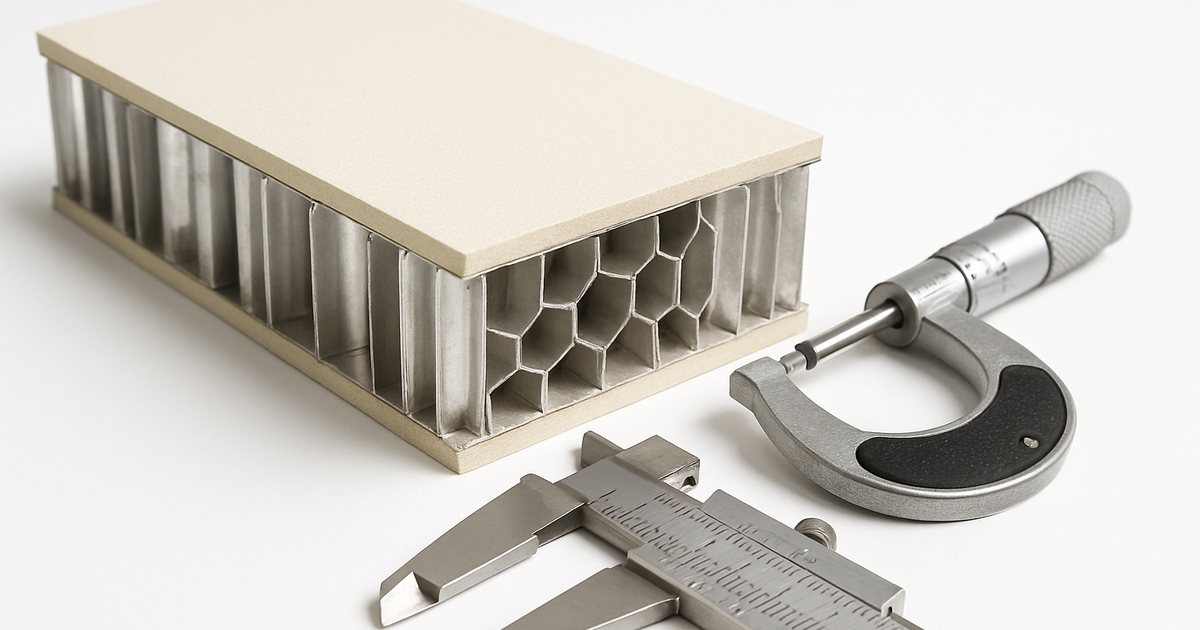
Sandwich panel construction is a structural engineering approach where two thin, stiff face sheets (skins) are separated by a thick, lightweight core material. The resulting panel achieves high flexural stiffness and strength at minimal weight — the same structural principle used in I-beams, airplane wings, and corrugated cardboard.
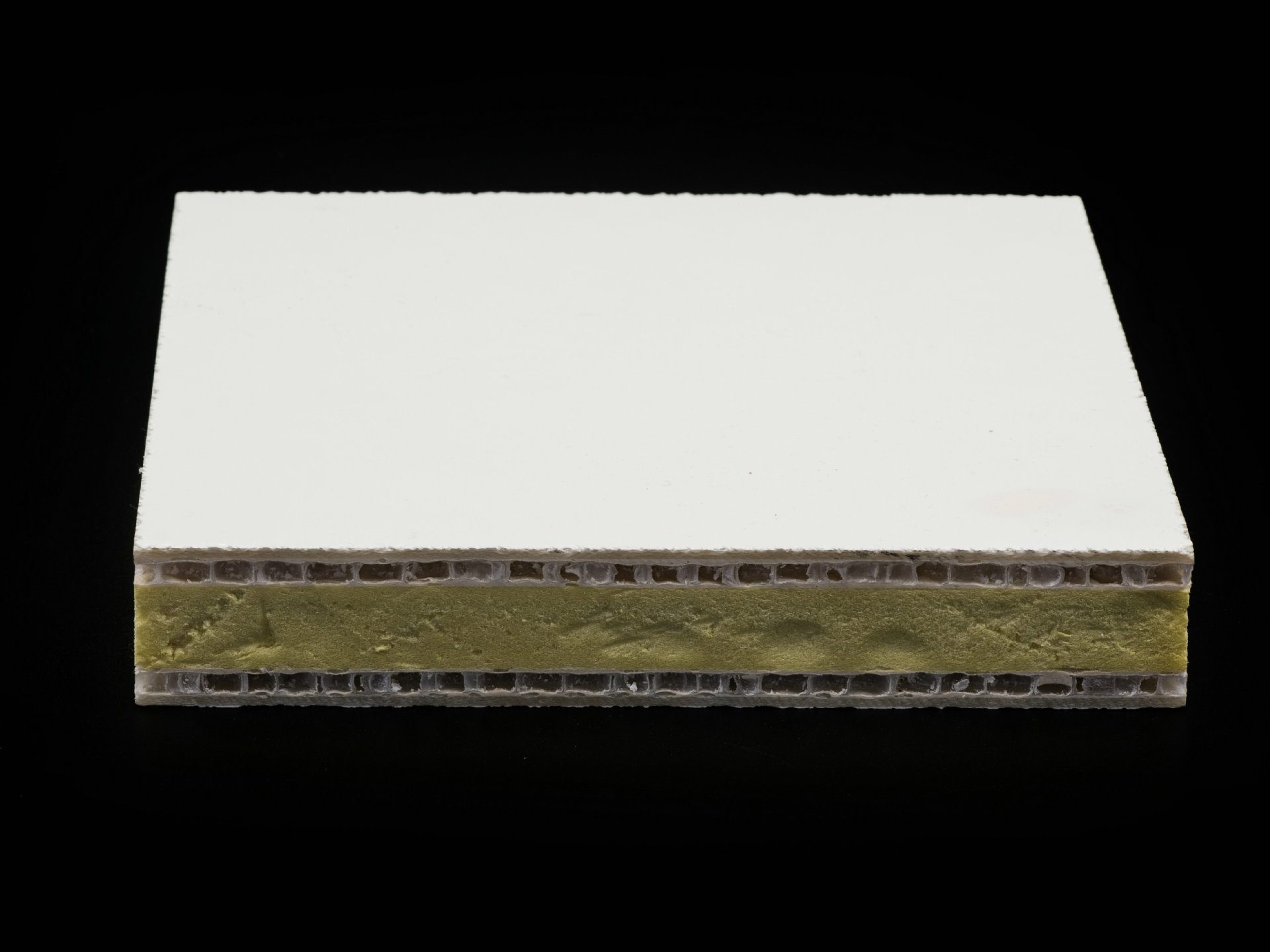
The concept is simple: stiffness in bending depends on the cube of the thickness. Doubling the distance between the face sheets increases the bending stiffness by a factor of 8 (2 cubed), while adding only the weight of the core material (which can be 95%+ air). This makes sandwich construction the most weight-efficient way to build stiff panels.
To quantify this: a sandwich panel with 1mm aluminum face sheets and a 20mm honeycomb core weighs approximately 3 kg/m2 and has the same flexural stiffness as a 6mm solid aluminum plate weighing 16 kg/m2. That is the same stiffness at one-fifth the weight.
Face Sheet (Skin) Materials
The face sheets carry the in-plane loads and resist the bending stresses. The choice of face sheet material determines the panel's strength, stiffness, surface quality, and cost.
Glass Fiber Reinforced Polymer (GFRP)
The most widely used face sheet material for industrial and commercial sandwich panels.| Property | GFRP (E-glass/PP) | GFRP (E-glass/Epoxy) |
|---|---|---|
| Tensile Strength | 250-400 MPa | 300-500 MPa |
| Tensile Modulus | 15-25 GPa | 20-30 GPa |
| Density | 1.7-1.9 g/cm3 | 1.8-2.0 g/cm3 |
| Cost (relative) | 1x | 1.5-2x |
| Recyclability | Yes (PP matrix) | No (epoxy) |
Carbon Fiber Reinforced Polymer (CFRP)
For applications where maximum stiffness at minimum weight is required.- Tensile Strength: 600-800 MPa (woven fabric)
- Tensile Modulus: 50-70 GPa
- Density: 1.5-1.6 g/cm3
- Cost: 5-10x GFRP
Aluminum Sheet
Thin aluminum sheets (0.3-1.5mm) provide excellent surface flatness, weather resistance, and fire performance.- Tensile Strength: 170-310 MPa (depending on alloy)
- Tensile Modulus: 70 GPa
- Density: 2.7 g/cm3
- Fire Rating: A1 non-combustible
Steel Sheet
For maximum strength and fire resistance, thin steel skins (0.4-1.0mm) are used.- Tensile Strength: 270-550 MPa
- Tensile Modulus: 200 GPa
- Density: 7.85 g/cm3
Other Face Sheet Options
- Natural stone veneer (1-3mm): Architectural facades with real stone appearance at 80% less weight
- Wood veneer (0.5-1mm): Furniture, interior panels, decorative wall cladding
- HPL (High Pressure Laminate): Durable, scratch-resistant surface for commercial interiors
- Non-woven fabric: Low-cost face sheet for packaging and temporary structures
Core Material Options
The core material determines the weight, thermal insulation, and shear performance of the sandwich panel. See our detailed article on honeycomb core panels for a comprehensive comparison, but here is a summary of options available with our sandwich panels:
PP Honeycomb Core (Our Primary Core)
- Weight: 50-120 kg/m3
- Shear Strength: 0.3-1.5 MPa
- Temperature Range: -40 to +80 degrees C
- Key Advantage: Waterproof, recyclable, cost-effective
Micro-Foamed PP (MPP) Core
- Weight: 60-100 kg/m3
- Thermal Conductivity: 0.035-0.040 W/mK
- Temperature Range: -30 to +50 degrees C
- Key Advantage: Thermal insulation for cold chain
PU (Polyurethane) Foam Core
- Weight: 30-80 kg/m3
- Thermal Conductivity: 0.022-0.028 W/mK
- Temperature Range: -40 to +80 degrees C
- Key Advantage: Best thermal insulation
XPS (Extruded Polystyrene) Foam Core
- Weight: 25-45 kg/m3
- Thermal Conductivity: 0.030-0.036 W/mK
- Temperature Range: -50 to +75 degrees C
- Key Advantage: Moisture resistant closed-cell foam
Bonding Methods: How Skins Meet Core
The bond between face sheets and core is the most critical interface in a sandwich panel. Bond failure (delamination) is the most common mode of sandwich panel failure.
Method 1: Thermal Bonding (Our Primary Method)
When both core and face sheets are thermoplastic (e.g., PP honeycomb core + CFRT face sheets), the materials can be thermally bonded by melting the interface surfaces together under pressure. Process: Core and face sheets are heated to 180-200 degrees C in a continuous press, compressed, and cooled. The polymer chains intermingle at the interface, creating a true molecular bond. Advantages: No adhesive needed, no VOC emissions, fully recyclable (single-material system), very high bond strength (panel fails in the core before the bond line fails). Limitations: Only works with compatible thermoplastics (PP core + PP-based face sheets).Method 2: Adhesive Bonding
When face sheets are made of different materials (metal, stone, non-PP composites), structural adhesives are used. Common adhesives for sandwich panels:- Polyurethane (PU): Good peel strength, flexible, works on most substrates. Cure time: 2-24 hours.
- Methacrylate (MMA): Excellent for aluminum-to-PP bonds, high shear strength. Cure time: 10-30 minutes.
- Epoxy film adhesive: Highest shear strength, aerospace standard. Requires heat cure (120-180 degrees C).
- Hot-melt adhesive (EVA/polyolefin): Fast cycle time (seconds), adequate for non-structural bonds. Lower temperature resistance.
Method 3: Mechanical Fastening
For field assembly and applications where panels need to be disassembled, mechanical fasteners supplement or replace adhesive bonds.- Through-bolts with backing plates: For structural connections
- Blind rivets: For panel-to-frame attachment
- Clinch studs: For internal equipment mounting
Understanding Sandwich Panel Failure Modes
Designing a sandwich panel correctly requires understanding how panels fail. The five primary failure modes are:
1. Face Sheet Yielding or Fracture
The face sheet stress exceeds the material's tensile or compressive strength. This is a face sheet design issue — solved by increasing face sheet thickness or using a stronger face sheet material.2. Core Shear Failure
The shear stress in the core exceeds the core's shear strength. This occurs when panels are loaded in bending with short span lengths (high shear forces). Solved by increasing core density or using a higher-performance core material.3. Face Sheet Wrinkling
The compressive face sheet buckles (wrinkles) due to insufficient core support. This occurs with very thin face sheets on low-density cores. Solved by increasing core density, increasing face sheet thickness, or reducing panel span.4. Delamination (Bond Failure)
The bond between face sheet and core fails, allowing the face sheet to separate from the core. This is the most common field failure and is typically caused by insufficient adhesive coverage, contaminated bonding surfaces, or impact damage. Our thermal bonding process virtually eliminates this failure mode because the bond is a molecular-level weld rather than a surface adhesive.5. Local Indentation (Core Crushing)
Concentrated loads (point loads from equipment legs, forklift tines, or heavy objects) crush the core cells directly beneath the load point. Solved by specifying higher core density in load-bearing areas or using load-spreading inserts/pads.Design Calculation Basics
For engineers specifying sandwich panels, the two critical calculations are:
Minimum Face Sheet Thickness (for bending strength)
The face sheet thickness required to resist the bending moment is:
t_f = M / (sigma_allow x d)
Where: t_f = face sheet thickness, M = bending moment per unit width, sigma_allow = allowable face sheet stress (with safety factor), d = distance between face sheet centroids (approximately equal to core thickness).
Minimum Core Shear Strength (for shear resistance)
The core shear strength required is:
tau_core = V / d
Where: tau_core = required core shear strength, V = shear force per unit width, d = core thickness.
We provide engineering support for panel specification, including load case analysis, safety factor application, and thermal expansion calculations. Contact our engineering team with your application requirements for a panel specification recommendation.
Custom Sandwich Panel Solutions from HOTECH
Our sandwich panel manufacturing capability covers the full range from simple commodity panels to complex engineered solutions:
- Standard panels: PP honeycomb core + GFRP or PET face sheets, stock sizes up to 2400 x 6000mm
- Insulation panels: MPP micro-foamed core + CFRT face sheets for refrigerated vehicles and cold chain
- Architectural panels: PP honeycomb core + stone, wood, or HPL face sheets for building applications
- High-performance panels: PP honeycomb core + carbon fiber face sheets for motorsport, marine, and industrial
- Custom specifications: Any combination of core and face sheet materials, custom dimensions, CNC-cut shapes, pre-drilled holes, edge treatments
Frequently Asked Questions
What is the maximum span for a sandwich panel without intermediate support?
The maximum unsupported span depends on the panel thickness, face sheet stiffness, core shear strength, and applied load. As a general guideline for our 25mm PP honeycomb panels with GFRP face sheets under a uniform load of 1 kN/m2: maximum span is approximately 1,200-1,500mm. For longer spans, thicker panels (40-50mm) or intermediate supports are required. We provide span tables and load charts for all our standard panel configurations.
Can sandwich panels be used as structural load-bearing walls?
Sandwich panels are primarily used as cladding and enclosure panels, not as primary structural elements. They resist lateral loads (wind, impacts) and carry their own weight, but they are not typically designed to carry vertical building loads like columns or load-bearing walls. For structural applications, sandwich panels can be designed as stressed-skin panels that contribute to overall building stiffness, but this requires specific engineering analysis.
How do you join two sandwich panels edge to edge?
Common joining methods: (1) Aluminum H-profile inserted between panels — simple, allows expansion, easily disassembled. (2) Tongue-and-groove machined edges with adhesive — seamless, permanent, highest strength. (3) Backing strip bonded across the joint — moderate strength, field-installable. (4) Folded edge connections — the face sheet is folded around the panel edge and bonded to the adjacent panel.
What testing standards apply to sandwich panels?
Key standards: ASTM C393 (flexural properties of sandwich constructions), ASTM C365 (flatwise compressive properties), ASTM C273 (shear properties of core materials), ISO 844 (compressive properties of cellular plastics), EN 14509 (self-supporting insulated sandwich panels for buildings). We test our panels per these standards and provide test reports with all quotations.
Are there limitations on the thickness of sandwich panels you can produce?
Our continuous lamination press handles panel thicknesses from 8mm to 80mm. For thicker panels (80-150mm), we use a discontinuous press with longer cycle times. Panels thicker than 150mm are technically feasible but are rarely requested — at such thicknesses, the core shear strength becomes the limiting factor, and a structural frame with thinner cladding panels is usually more efficient.