
What Does CFRT Stand For?
CFRT stands for Continuous Fiber Reinforced Thermoplastic. It is a class of composite materials in which continuous (unbroken) reinforcing fibers — typically glass fiber or carbon fiber — are embedded in a thermoplastic resin matrix such as polypropylene (PP), polyamide (PA/nylon), or polycarbonate (PC).
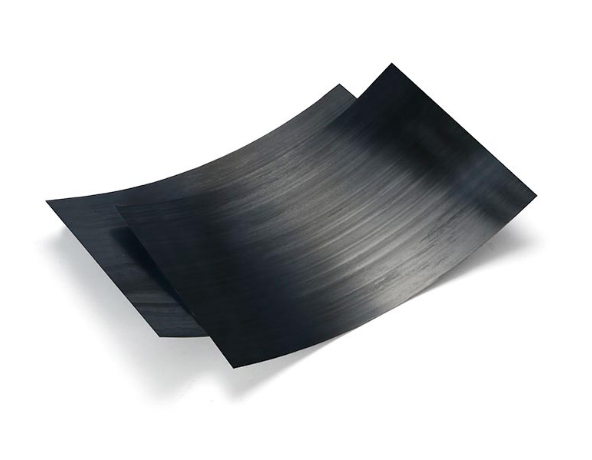
The word "continuous" is the critical distinction. Unlike short-fiber composites (where chopped fibers of 3-12mm length are mixed into the resin), CFRT uses fibers that run the entire length or width of the panel. This fundamental structural difference means CFRT panels deliver dramatically higher tensile strength, impact resistance, and fatigue life compared to short-fiber or random-fiber reinforced panels.
At HOTECH, our CFRT panels combine continuous glass fiber reinforced PP face sheets with our proprietary PP honeycomb core, creating a sandwich panel system that is lightweight, strong, waterproof, and fully recyclable.
CFRT vs. Traditional FRP: Why the Difference Matters
Traditional FRP (Fiber Reinforced Polymer) panels typically use thermoset resins — polyester, vinyl ester, or epoxy — reinforced with chopped strand mat (CSM) or woven roving. These panels have served the RV and truck industry for decades, but they come with significant limitations.
| Property | CFRT Panel (PP + Continuous GF) | Traditional FRP (Polyester + CSM) | Short-Fiber GMT |
|---|---|---|---|
| Fiber Length | Continuous (full panel length) | 25-50mm chopped strands | 12-25mm |
| Tensile Strength | 350-500 MPa | 80-150 MPa | 60-100 MPa |
| Impact Resistance | Excellent (no brittle fracture) | Poor (cracks and delaminates) | Moderate |
| Recyclability | 100% thermoplastic recyclable | Not recyclable (thermoset) | Partially recyclable |
| VOC Emissions | Zero (no styrene) | High (styrene, toxic fumes) | Low |
| Cycle Time | 30-60 seconds (thermoforming) | 5-15 minutes (curing) | 60-90 seconds |
| Repairability | Weldable, thermoformable | Requires grinding + resin | Limited |
The most important practical differences:
Impact behavior: When a traditional FRP panel takes a hit — a forklift impact, road debris, or loading dock collision — it cracks, delaminates, and cannot be repaired. CFRT panels absorb the impact through fiber deformation and matrix yielding. They dent rather than shatter, and minor damage can be repaired with a heat gun. Manufacturing speed: Thermoset FRP requires minutes of cure time per part. CFRT panels can be thermoformed in under 60 seconds because the PP matrix simply needs to be heated above its melting point (approximately 165 degrees C), shaped, and cooled. This makes CFRT suitable for high-volume automotive production. End-of-life: Thermoset FRP is the #1 waste problem in the composites industry. It cannot be melted down or reformed — it goes to landfill. CFRT panels can be shredded, remelted, and reformed into new products, aligning with circular economy requirements that are becoming mandatory in the EU (End-of-Life Vehicle Directive).CFRT Panel Specifications: What We Manufacture
Our CFRT honeycomb panel range includes three primary surface configurations:
Anti-Slip Black CFRT
The most popular configuration for vehicle flooring. The face sheet features a textured anti-slip surface with continuous glass fiber reinforcement. Typically used for RV floor panels and truck cargo floors where slip resistance and load-bearing capacity are both critical.Smooth White CFRT
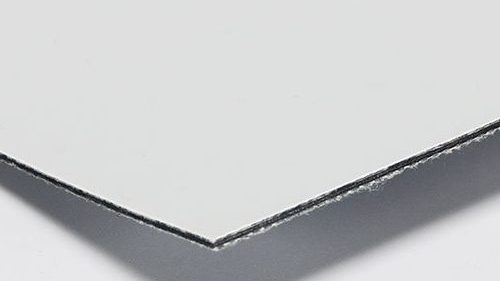
A clean, bright white finish for interior walls and ceilings. The continuous fiber reinforcement is embedded within the face sheet, providing a smooth surface that is easy to clean and aesthetically suitable for food transport vehicles and passenger vehicles.Laminated CFRT
Custom lamination with decorative films, HPL, or functional coatings. Used in premium RV interiors, exhibition vehicles, and architectural applications where both performance and appearance matter.All configurations use our in-house PP honeycomb core (8mm or 12mm cell size) with total panel thicknesses from 10mm to 50mm.
Mechanical Performance Data
Our CFRT panels are tested in-house and by third-party labs (SGS) per ISO standards. Here are representative values for our most common 25mm CFRT panel (anti-slip black, 8mm cell core):
- Flexural Strength: 25-40 MPa (ISO 178)
- Flexural Modulus: 2.0-3.5 GPa (ISO 178)
- Compressive Strength (flatwise): 1.0-2.0 MPa (ASTM C365)
- Shear Strength (core): 0.6-1.2 MPa (ASTM C273)
- Surface Hardness: Shore D 60-70
- Water Absorption: < 0.1% (24h immersion, ISO 62)
- Operating Temperature: -40 to +80 degrees C
- Areal Weight: 3.0-5.0 kg/m2 (depending on configuration)
Applications Where CFRT Panels Excel
RV Floor Panels
Traditional RV floors use plywood substrates that absorb moisture through every screw hole, joint, and edge. Within 3-5 years, the plywood core rots, leading to soft spots, mold growth, and eventual structural failure. CFRT honeycomb floor panels are completely waterproof. Zero moisture absorption means zero rot, zero mold, and a floor that lasts the lifetime of the vehicle.Truck Sidewalls and Roofs
Commercial truck bodies take constant abuse — loading dock impacts, cargo shifting, pressure washing, and weather exposure. CFRT sidewall panels resist impact without cracking, resist water without coating, and weigh 50-60% less than steel, translating directly to increased legal payload.Refrigerated Vehicle Construction
Our CFRT panels can be combined with MPP insulation cores to create refrigerated vehicle body panels that are both structural and thermally insulating. The continuous fiber face sheets provide the structural strength while the micro-foamed PP core provides insulation.Industrial Pallets and Packaging
CFRT panels are increasingly used for reusable logistics platforms. A CFRT pallet weighing 8 kg can carry loads up to 1,500 kg and survive 200+ loading cycles — compared to wooden pallets that weigh 25 kg and last 5-10 cycles.How CFRT Panels Are Made: Our Process
Our CFRT panel production is a two-stage process:
Stage 1 — CFRT Face Sheet Production: Continuous glass fiber tapes (typically 60% fiber volume fraction) are woven on our automated looms and consolidated with PP resin in a double-belt press at 200-220 degrees C. The result is a thin (0.5-1.5mm), extremely strong, thermoplastic face sheet. Stage 2 — Sandwich Panel Lamination: The CFRT face sheets are thermally bonded to our PP honeycomb core in a continuous lamination press. Because both the core and the face sheets are polypropylene-based, the bond is a true thermoplastic weld — not an adhesive joint. This means the entire panel is a single-material system that can be fully recycled.Total production capacity: 2,000,000 square meters per year across our Tongxiang facility.
Frequently Asked Questions
What is the price difference between CFRT panels and traditional FRP panels?
CFRT panels typically cost 15-30% more per square meter than traditional polyester FRP panels. However, the total cost of ownership is lower due to longer service life (no rot, no delamination), lower weight (fuel savings), faster installation (thermoformable edges), and end-of-life recyclability (no disposal costs). For volume OEM applications, we offer competitive pricing — contact us with your annual volume for a quote.
Can CFRT panels be thermoformed after production?
Yes, this is one of the key advantages of thermoplastic composites. CFRT panels can be heated to 170-180 degrees C and formed into curved shapes, bent edges, or complex geometries. This is impossible with thermoset FRP panels, which are permanently rigid once cured.
What fiber types are available for CFRT panels?
Our standard CFRT panels use E-glass continuous fiber (most cost-effective, good all-round performance). We also produce CFRT panels with carbon fiber (higher stiffness, lighter weight, premium cost) and basalt fiber (better chemical resistance, natural material). Hybrid configurations combining glass and carbon fiber are available for applications requiring optimized cost-performance.
How do CFRT panels handle UV exposure?
The PP matrix is UV-stabilized with HALS (Hindered Amine Light Stabilizer) additives. For panels with long-term outdoor exposure, we recommend our white CFRT or panels with UV-resistant top coats. In vehicle body applications where panels are typically painted or covered, UV degradation is not a concern.
Do you offer CFRT panels with fire-retardant properties?
Yes. We offer CFRT panels with flame-retardant PP formulations that meet FMVSS 302 (automotive interior), EN 45545 (railway), and GB 8410 (Chinese vehicle standard) flammability requirements. Fire performance certification documents are available upon request.
![PP Honeycomb Panel — Properties, Applications & How It's Made [2026]](/images/products/pp-honeycomb-panel.jpg)