The Plywood Problem in RV Construction
Walk through any RV salvage yard and you will see the same failure mode repeated thousands of times: rotted floor panels, delaminated wall sections, and mold-infested structural members. The common denominator is plywood — specifically, plywood that has absorbed water.
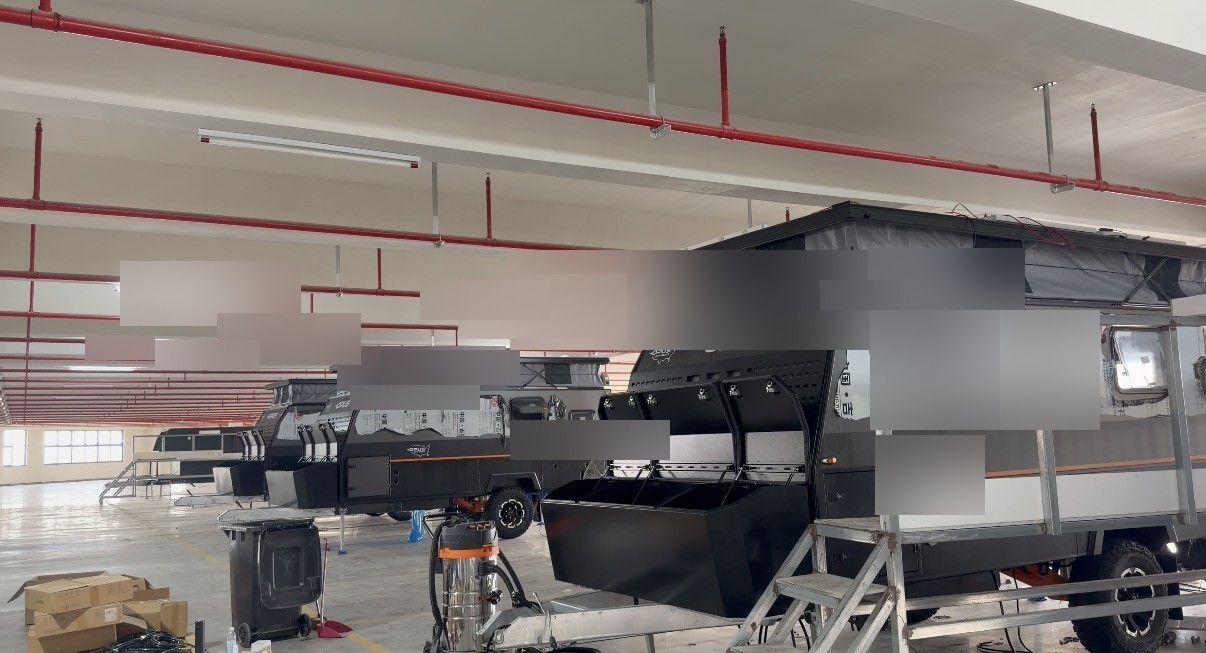
Traditional RV construction uses lauan plywood (Philippine mahogany) or Baltic birch plywood as the structural substrate for floors, walls, and roofs. These panels are then covered with vinyl flooring, wallpaper, or fiberglass exterior skins. The assumption is that the coverings will keep water out.
In practice, water finds its way in through every screw hole, joint, window seal, and edge. Once inside, the plywood acts like a sponge — absorbing moisture and holding it against the surrounding materials. Within 3-7 years, the result is predictable: soft spots in the floor, wall delamination, musty odors, black mold, and structural failure.
Industry data supports this: water damage is the leading cause of RV warranty claims, accounting for an estimated 30-40% of all warranty costs for major manufacturers (source: RVIA industry reports). The average cost to repair a rotted RV floor is $3,000-8,000 in labor and materials — often exceeding the residual value of older RVs.
Why Composite Panels Solve the Moisture Problem
The solution is straightforward: replace the substrate material with one that does not absorb water.
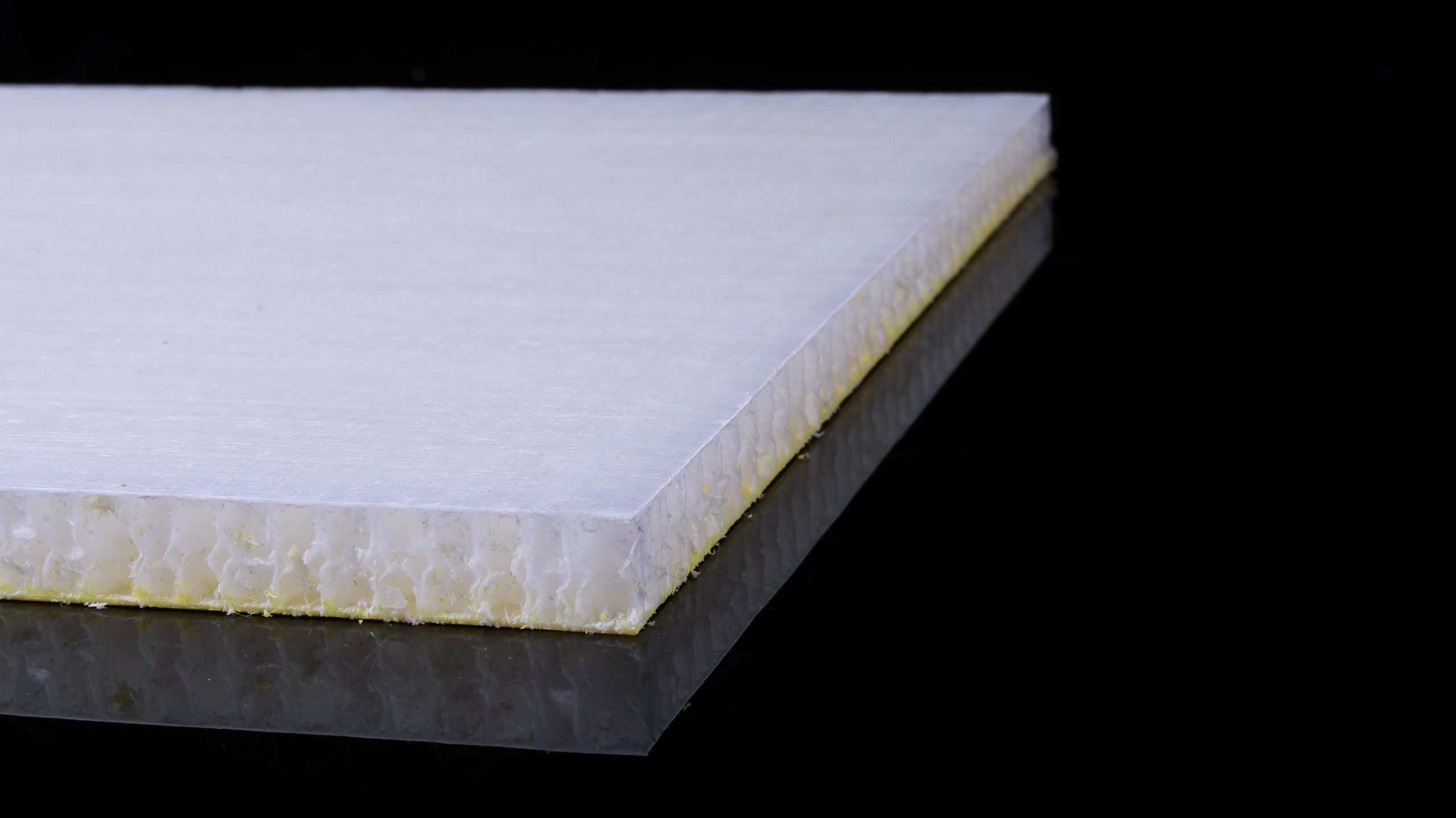
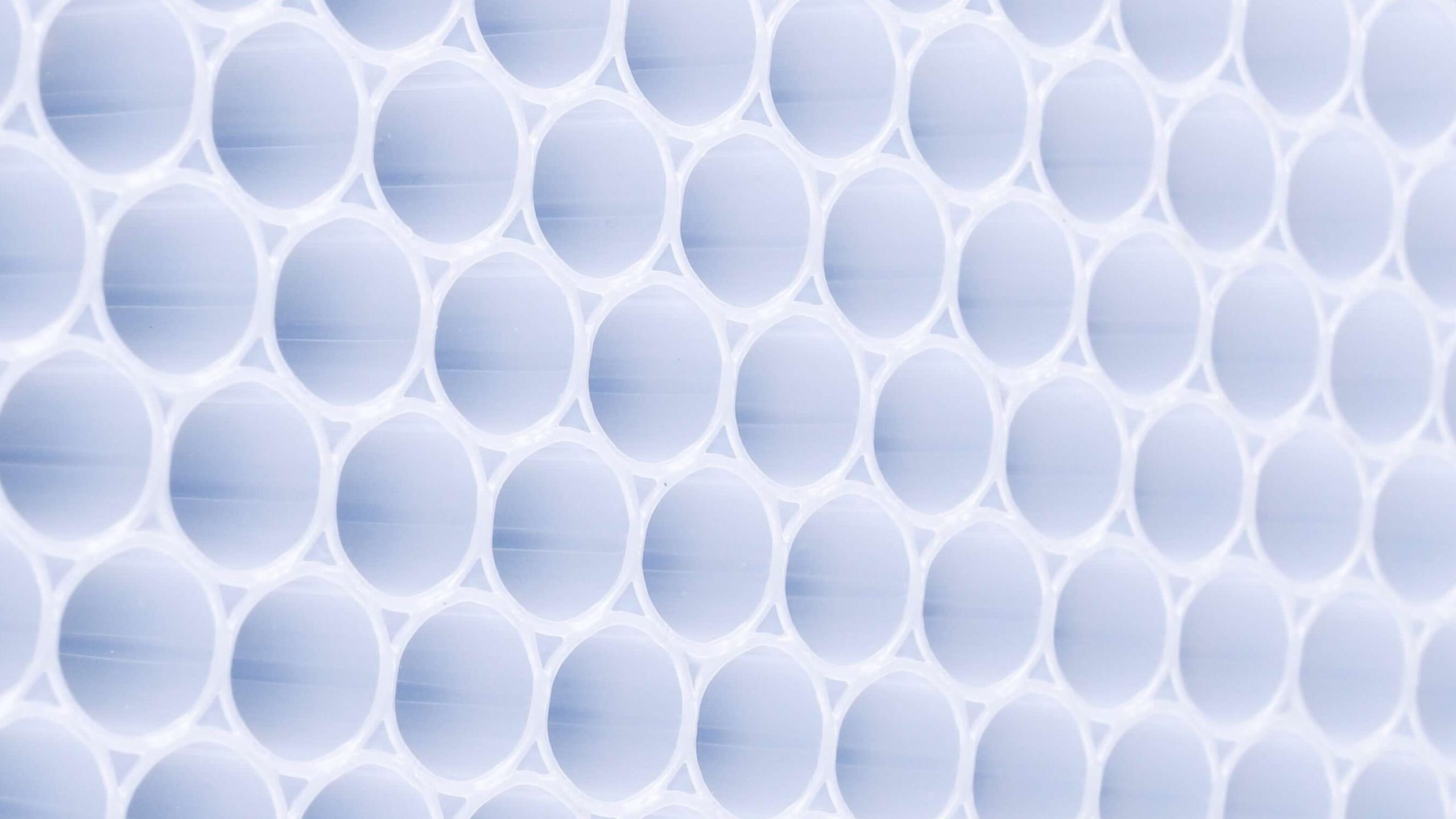
PP honeycomb panels absorb less than 0.1% moisture by weight — essentially zero. Even if the panel is submerged in water, the polypropylene structure does not swell, warp, delaminate, or support mold growth. This is not a coating or treatment — it is an inherent property of the polypropylene material.
Here is a direct comparison between plywood and PP honeycomb panel for RV applications:
| Property | Lauan Plywood (12mm) | PP Honeycomb Panel (15mm) | Improvement |
|---|---|---|---|
| Weight per m2 | 6.5 kg | 2.2 kg | 66% lighter |
| Water Absorption (24h) | 15-25% | < 0.1% | 99%+ improvement |
| Mold Resistance | Poor (supports growth) | Excellent (no nutrient) | Eliminates mold |
| Dimensional Stability (wet) | Swells 3-5% | No change | Eliminates warping |
| Rot Resistance | Poor (3-7 year lifespan) | Excellent (lifetime) | Eliminates rot |
| Screw Pull-out Strength | 800-1,200 N | 600-1,000 N (with inserts) | Comparable |
| Thermal Insulation (R-value) | R-1.0 | R-1.5 | 50% better |
The weight advantage is equally significant. Replacing all plywood in a typical 7-meter travel trailer with PP honeycomb panels saves 150-250 kg of vehicle weight. This translates to:
- Lower towing fuel consumption (5-10% improvement)
- Reduced tongue weight (easier towing with smaller vehicles)
- Additional payload capacity for water, batteries, and equipment
- Better acceleration, braking, and handling
Panel-by-Panel Application Guide for RV Builders
Floor Panels
The most critical application. RV floors see constant moisture from tracked-in water, spills, condensation under the vehicle, and plumbing leaks. We recommend our CFRT anti-slip panels (25mm thickness, 8mm cell core) for RV floors:- Anti-slip textured surface eliminates the need for separate vinyl flooring in cargo areas
- Continuous glass fiber reinforcement handles the concentrated loads from furniture legs, appliance mounts, and passenger foot traffic
- Direct-mount capability — flooring and adhesives bond well to the PP surface, or the panel can serve as the finished floor in utility areas
Sidewall Panels
RV sidewalls need to be flat, lightweight, and accept interior finishing materials (wallpaper, vinyl, fabric). Our standard PP honeycomb panels (20mm, PET face sheets) provide:- Flat, smooth surface for direct lamination of interior finishes
- Sufficient stiffness to resist wind loads and remain flat in service
- Easy attachment to the aluminum or wood frame via screws or structural adhesive
Roof Panels
The roof is the most weight-sensitive location on an RV (high center of gravity degrades handling). Our lightweight PP honeycomb panels (15-20mm, 12mm cell core) are ideal:- Areal weight of 1.8-2.5 kg/m2 (vs. 6+ kg/m2 for plywood substrate)
- No moisture absorption from rain or condensation
- Can be used as the structural substrate under the exterior skin (fiberglass, aluminum, TPO membrane)
Furniture Substrate
Interior furniture (cabinets, tables, benches, beds) in RVs traditionally uses particleboard or MDF — both of which absorb moisture and swell. PP honeycomb panels with decorative face sheets (wood grain, solid color) serve as lightweight, waterproof furniture substrates.Engineering Considerations for the Switch
Switching from plywood to PP honeycomb panels in an existing RV design requires attention to these engineering details:
Fastener Strategy
Plywood holds screws well in any direction. PP honeycomb panels require modified fastener strategies:- Through-bolts with backing washers: Best for structural connections (floor to frame, wall to wall)
- Threaded inserts (Rivnuts): Best for furniture attachment points and repeatable connections
- Structural adhesive (methacrylate or polyurethane): Best for panel-to-panel joints and skin bonding
- Self-tapping screws: Suitable for light-duty connections into the face sheets (not into the core)
Edge Treatment
Cut edges of PP honeycomb panels expose the core cells. For wet environments (exterior panels, floor edges near doors), we recommend:- PP edge strip welded to the panel face (our standard solution)
- Aluminum U-channel extrusion pressed onto the edge
- Polyurethane sealant applied to the edge cells
Joining Methods
Panel-to-panel joints in RV construction:- Tongue and groove: Our panels can be manufactured with CNC-machined tongue and groove edges for seamless floor panel joints
- Aluminum H-profile: Inserted between adjacent panels for wall joints
- Structural adhesive: For permanent, sealed joints (common in exterior wall construction)
Case Study: Weight Comparison for a 7m Travel Trailer
| Component | Plywood Construction | PP Honeycomb Construction | Weight Saved |
|---|---|---|---|
| Floor (12 m2) | 78 kg | 30 kg | 48 kg |
| Sidewalls (28 m2) | 182 kg | 62 kg | 120 kg |
| Roof (14 m2) | 91 kg | 32 kg | 59 kg |
| Front/Rear walls (8 m2) | 52 kg | 18 kg | 34 kg |
| Furniture substrate (6 m2) | 42 kg | 15 kg | 27 kg |
| Total | 445 kg | 157 kg | 288 kg (65%) |
A 288 kg weight reduction on a 2,500 kg travel trailer represents a 12% total weight reduction. For electric tow vehicles, this directly extends towing range. For conventional tow vehicles, it allows downsizing to a smaller, more fuel-efficient tow vehicle or adding 288 kg of water, batteries, and equipment.
Addressing Common Concerns from RV Manufacturers
"Our workers know how to work with plywood. Composites are different."
PP honeycomb panels are cut with the same tools as plywood — circular saws, jigsaws, routers, and drills. No special equipment is needed. The main learning curve is in fastener strategy (see above), which typically takes 1-2 days of training. We provide on-site technical support during the transition."Our customers want real wood interiors."
PP honeycomb panels with wood veneer face sheets look and feel like solid wood panels at 20% of the weight. Premium oak, walnut, or teak veneers can be laminated to the panel surface during production. The customer sees and touches wood — the structural advantage is hidden inside."Composite panels are more expensive than plywood."
In raw material cost per square meter, yes — PP honeycomb panels cost 2-3x more than lauan plywood. But the total calculation favors composites: no sealing treatment, no anti-mold treatment, lower weight (reduced chassis cost), longer warranty life (fewer claims), and premium positioning (composite RVs command higher resale values). Several North American RV manufacturers report that the switch to composite panels reduced their total warranty costs by 20-35%.Frequently Asked Questions
Are composite RV panels approved for highway use?
Yes. Composite panels used in RV construction meet all relevant vehicle standards including FMVSS 302 (flammability), NFPA 1192 (RV standard), and EN 1789 (European motorhome standard, where applicable). We provide material test reports for fire, mechanical, and chemical properties. The panels are also used by tier-1 RV manufacturers who have their own compliance testing programs.
Can existing RV plywood floors be retrofitted with composite panels?
Yes, and this is a growing aftermarket service. The process involves removing the old plywood substrate, cleaning the frame, and installing pre-cut PP honeycomb or CFRT panels. The new panels can be cut to match the original dimensions and fastened to the existing frame using through-bolts and structural adhesive. Several RV renovation shops in the US and Australia are offering this service.
What is the R-value of PP honeycomb panels compared to plywood?
A 25mm PP honeycomb panel has an R-value of approximately 1.8-2.0 (imperial units). A 12mm plywood panel has an R-value of approximately 1.0. For RVs that will be used in cold climates, our MPP micro-foamed insulation panels offer R-values of 4.0-6.0 per 25mm thickness — comparable to XPS foam insulation but with structural strength.
How do composite panels perform in high-temperature climates?
PP honeycomb panels operate safely up to 80 degrees C. An RV roof in direct sun in Arizona or the Middle East can reach 70-80 degrees C on the exterior surface. The interior surface temperature is lower due to the insulating air gap in the honeycomb core. For extreme heat applications, we can specify higher-temperature PP formulations or add a reflective exterior coating.
What is the minimum order quantity for RV panel sets?
For standard panel dimensions (sheets up to 2400mm x 1200mm), our MOQ is 200 square meters — approximately enough for 3-4 travel trailers. For custom-cut panel kits (CNC-cut to your trailer design with pre-drilled mounting holes), the MOQ is 50 sets. We provide engineering support to create your custom panel kit specification.