What Is an FRP Composite Panel?
FRP (Fiber Reinforced Polymer) composite panels are sheet materials made by embedding glass fiber, carbon fiber, or other reinforcing fibers into a polymer resin matrix. The most common type — and what most people mean when they say "FRP panel" — is a glass fiber reinforced polyester panel produced by pultrusion, hand layup, or sheet molding compound (SMC) processes.
FRP panels have been used in construction, transportation, and industrial applications since the 1960s. They are valued for their corrosion resistance, high strength-to-weight ratio, and design flexibility. But FRP is not one material — it is a family of materials with widely varying properties depending on the fiber type, resin system, and manufacturing process.
FRP Panel Types: Not All FRP Is Created Equal
| FRP Type | Resin | Fiber | Process | Typical Use |
|---|---|---|---|---|
| Polyester/Glass | Unsaturated polyester | E-glass CSM + woven roving | Hand layup, SMC | Building panels, water tanks |
| Vinyl Ester/Glass | Vinyl ester | E-glass | Pultrusion, hand layup | Chemical plants, corrosive environments |
| Epoxy/Glass | Epoxy | E-glass or S-glass | Vacuum infusion, prepreg | Marine, aerospace secondary structures |
| Epoxy/Carbon | Epoxy | Carbon fiber | Prepreg + autoclave | Aerospace, racing, high-performance |
| PP/Glass (CFRT) | Polypropylene | Continuous glass fiber | Thermal press | Vehicle bodies, industrial panels |
The last entry — PP/Glass CFRT — is technically an FRP material but uses a thermoplastic resin instead of a thermoset. This is our primary composite panel technology at HOTECH, and we believe it represents the future of the FRP industry.
Cost Analysis: Upfront vs. Total Cost of Ownership
Upfront material cost tells only part of the story. For any panel that will be in service for more than 2-3 years, total cost of ownership (TCO) is the correct metric:
| Cost Factor | FRP (Polyester) | Steel | Aluminum | Plywood | PP Honeycomb |
|---|---|---|---|---|---|
| Material Cost (per m2) | $15-30 | $8-15 | $20-40 | $5-12 | $12-25 |
| Fabrication Cost | Medium | Low | Medium | Low | Low |
| Surface Treatment | Gel coat (included) | Paint + primer ($3-6/m2) | Anodize ($5-10/m2) | Seal + paint ($2-4/m2) | None needed |
| Weight Penalty (fuel, 10yr) | Medium | High ($$$) | Medium | Medium | Low ($) |
| Maintenance (10yr) | Low | High (repaint, rust repair) | Low | High (reseal, replace rot) | None |
| End-of-Life Disposal | $2-5/m2 (landfill) | Scrap value (+$1-3/m2) | Scrap value (+$3-5/m2) | $1-2/m2 (landfill) | Scrap value (+$0.5-1/m2) |
| 10-Year TCO per m2 | $25-45 | $25-50 | $35-60 | $20-40 | $15-30 |
The surprise in this analysis: PP honeycomb panels have the lowest 10-year TCO despite not having the lowest upfront cost. This is driven by three factors: zero maintenance, zero surface treatment, and the lightest weight (lowest fuel penalty). Plywood appears cheap upfront but requires sealing, repainting, and eventual replacement when it rots.
Mechanical Strength Comparison
Pure strength numbers favor FRP and metals. But strength alone is misleading — what matters is strength at the weight you can accept and the cost you can afford:
| Property | FRP (Glass/Polyester, 3mm) | Steel (1.5mm) | Aluminum (2mm) | Plywood (18mm) | PP Honeycomb (25mm) |
|---|---|---|---|---|---|
| Weight per m2 | 5.4 kg | 11.8 kg | 5.4 kg | 10 kg | 3.5 kg |
| Tensile Strength | 100-200 MPa | 250-400 MPa | 150-300 MPa | 30-50 MPa | 25-40 MPa (face) |
| Flexural Rigidity | Medium | Low (thin) | Low (thin) | High | High |
| Impact Resistance | Poor (cracks) | Good (dents) | Good (dents) | Fair | Good (dents) |
| Fatigue Life | Good | Excellent | Good | Poor | Good |
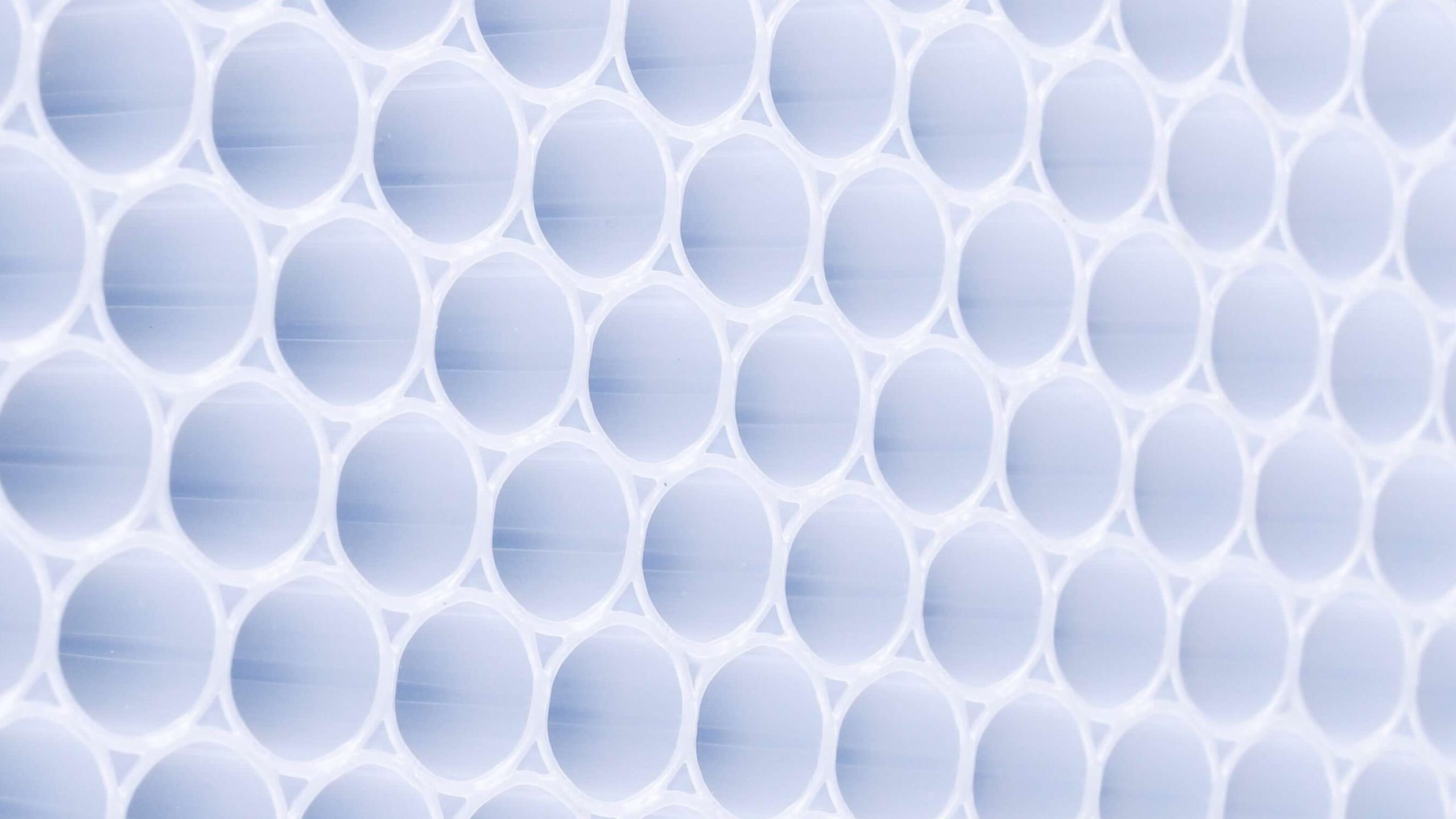
For panel applications (walls, roofs, partitions), flexural rigidity is more important than tensile strength. A 25mm PP honeycomb panel has higher flexural rigidity than a 1.5mm steel sheet or a 3mm FRP panel because of the sandwich effect — the separated face sheets create much higher second moment of area.
When to Choose FRP (and When Not To)
Choose FRP When:
- Chemical resistance is critical: FRP (especially vinyl ester) resists acids, alkalis, and solvents that would destroy steel and aluminum. Chemical processing plants, water treatment facilities, and marine environments benefit from FRP.
- Complex shapes are needed: FRP can be molded into virtually any shape — domes, curved walls, integrated ribs, and complex contours. Honeycomb panels are predominantly flat or gently curved.
- Electrical insulation is required: FRP is non-conductive, making it the material of choice for electrical enclosures, cable trays, and applications near electrical equipment.
- Surface appearance is paramount: FRP with gel coat provides a smooth, paintable, UV-resistant surface finish that is difficult to achieve with other lightweight materials.
Choose PP Honeycomb When:
- Weight reduction is the top priority: PP honeycomb panels are 30-50% lighter than equivalent FRP panels at comparable stiffness.
- Water resistance without coating: PP is inherently waterproof — no gel coat, no sealant, no maintenance. FRP requires intact gel coat; if the gel coat is damaged, the glass fiber core absorbs water (a condition called "osmotic blistering" in marine applications).
- Recyclability is mandated: Thermoset FRP cannot be recycled — it goes to landfill or incineration. PP honeycomb panels are 100% recyclable, which is increasingly important for companies with ESG commitments and for compliance with the EU End-of-Life Vehicle Directive.
- Cost-effective flat panels: For large, flat panel areas (truck sidewalls, building partitions, RV walls), PP honeycomb sandwich panels offer the best combination of performance and cost.
Choose Steel When:
- Absolute strength is needed at lowest upfront cost, and weight is not a concern.
- Welding infrastructure is the only fabrication capability available locally.
- Very short vehicle service life (under 3 years) makes total cost of ownership irrelevant.
The Thermoplastic Advantage: Why CFRT Is the Future of FRP
Traditional FRP uses thermoset resins (polyester, vinyl ester, epoxy) that undergo an irreversible chemical reaction during curing. Once cured, the material cannot be melted, reformed, or recycled. This creates three problems:
Thermoplastic FRP (our CFRT technology) solves all three problems. The PP matrix can be remelted and reformed, manufacturing scrap is recycled back into production, damaged panels can be heat-welded, and end-of-life panels are shredded and reprocessed.
The European composites industry considers thermoplastic composites the fastest-growing segment, driven primarily by automotive lightweighting and recyclability mandates. Companies that adopt thermoplastic composite panels today are positioning themselves ahead of upcoming regulations.
Frequently Asked Questions
Is FRP stronger than steel?
In terms of absolute tensile strength, no — steel is stronger. But FRP has a higher strength-to-weight ratio: a 3mm FRP panel with tensile strength of 150 MPa weighing 5.4 kg/m2 has a specific strength of 28 MPa/(kg/m2), while a 1.5mm steel sheet at 350 MPa weighing 11.8 kg/m2 has a specific strength of 30 MPa/(kg/m2). They are comparable on a weight-normalized basis, but FRP wins when corrosion resistance and design flexibility are factored in.
How long do FRP panels last?
Thermoset FRP panels properly protected with gel coat can last 25-30 years in outdoor applications. However, the gel coat itself degrades under UV and requires maintenance (re-coating every 5-10 years in harsh environments). PP honeycomb panels with UV-stabilized face sheets have similar or better longevity without maintenance.
Can FRP panels be repaired?
Thermoset FRP can be repaired by grinding the damaged area, applying new fiberglass mat and resin, and curing. The repair is labor-intensive and the repaired area is visible. Thermoplastic CFRT panels can be repaired more simply by heat-welding a patch — similar to repairing a plastic bumper on a car.
What about fire performance?
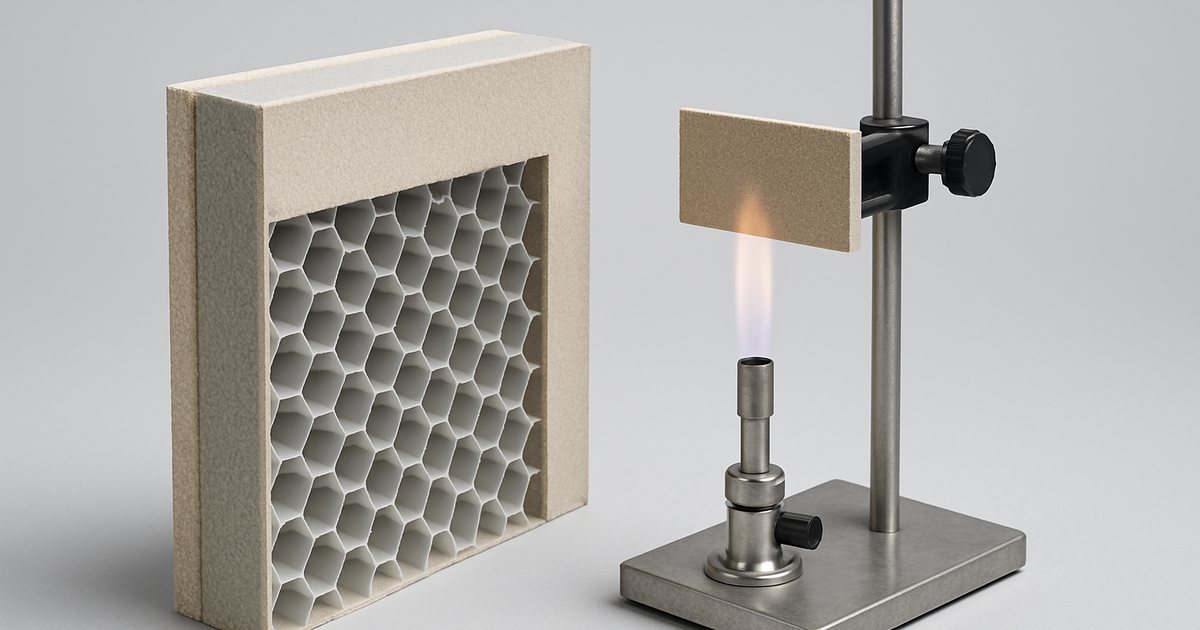
Standard polyester FRP is combustible and produces toxic smoke (styrene gas) when burning. Fire-retardant FRP formulations are available but add 20-30% to cost. PP honeycomb panels can also be supplied with fire-retardant grades. For applications with strict fire codes (public buildings, passenger vehicles), aluminum composite panels with mineral core remain the safest option.
Which composite panel has the best sound insulation?
PP honeycomb sandwich panels have moderate acoustic insulation due to the air-filled core (typically 15-20 dB sound reduction for a 25mm panel). For better acoustic performance, our MPP micro-foamed insulation panels achieve 25-35 dB reduction. Dedicated acoustic panels with open-cell foam or mineral wool cores are available for applications where sound is the primary concern.