Quick Answer
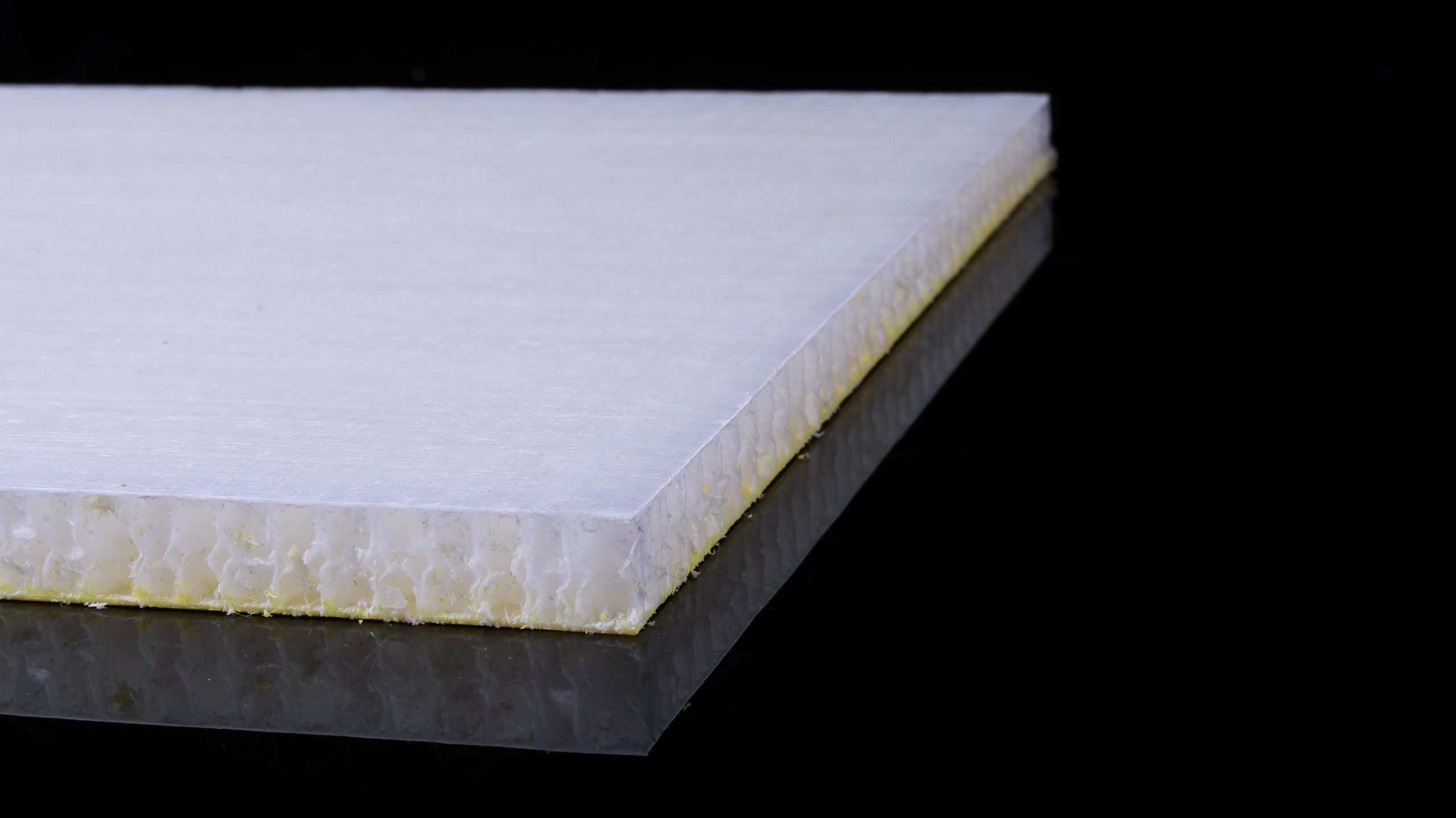
There is no such thing as a "fire rated composite panel" in the abstract. A panel earns a classification only for the exact build that was tested — core type, core density, skin material, skin thickness, adhesive, total thickness, and surface finish. Change any one of those and the certificate no longer applies.
Here is the short version of what applies where:
| If your panel goes into... | The standard you need | Realistic core options |
|---|---|---|
| US truck/van occupant compartment | FMVSS 302 (49 CFR 571.302) | Standard PP honeycomb passes |
| EU bus/coach interior (M2, M3) | UN ECE R118 Annex 6/7/8 | FR-PP honeycomb, FR-FRP |
| Rail vehicle interior | EN 45545-2, HL1-HL3 | Phenolic, aluminium, mineral core |
| Building / cold-store wall or ceiling | EN 13501-1 or ASTM E84 | Mineral wool, PIR, aluminium honeycomb |
| Dry-freight or reefer cargo box | Usually nothing mandatory | Standard PP honeycomb, FRP |
| Marine interior | IMO FTP Code Part 5 | Phenolic, aluminium honeycomb |
That last row is the one that saves buyers the most money, and we will come back to it.

Why "Fire Rated" Is the Most Misused Phrase in Panel Procurement
We receive roughly 40 to 60 RFQs a month at our Tongxiang plant. A large share of them contain a line like "panels must be fire rated" or "flame retardant required" with nothing else attached. That sentence is not quotable.
The reason is that fire performance is not a material property in the way that flexural modulus is a material property. It is the measured result of a specific specimen burning under a specific test geometry, ignition source, and duration. A polypropylene honeycomb panel that passes a horizontal burn test at 4 in/min can fail a vertical burn test on the same day, from the same production lot, because the flame in a vertical test preheats the material above it by convection and creates a self-sustaining burn front.
So when a spec says "fire rated," the factory has to guess which of a dozen incompatible test regimes you mean. Guessing wrong costs you either a rejected shipment or a 30 percent price premium you did not need.
The rest of this guide gives you the standards, the numbers, where each core material physically lands, and how to write a spec we can price in one round instead of four.
The Four Standard Families That Actually Apply
1. Vehicle interior standards (reaction to a small flame)
FMVSS 302 is the US federal rule for the occupant compartment of passenger cars, multipurpose vehicles, trucks and buses. The test is deliberately mild: a 356 x 102 mm specimen up to 13 mm thick is clamped horizontally, exposed to a 15-second bunsen flame, and the burn rate must not exceed 102 mm/min (4 in/min). Most thermoplastics, including unmodified polypropylene, pass this without any flame retardant at all. UN ECE R118 is the European equivalent for buses and coaches (categories M2 and M3) and it is meaningfully harder. It has three separate annexes:- Annex 6 — horizontal burning rate, limit 100 mm/min
- Annex 7 — melting behaviour: molten drips must not ignite a cotton wool pad below the specimen
- Annex 8 — vertical burning rate, limit 100 mm/min
2. Rail: EN 45545-2
This is the strictest transport standard in commercial use. Materials are assigned a requirement set (R1 for interior wall and ceiling surfaces, R7 for cables, R22 for insulation, and so on) and must meet limits at a hazard level HL1, HL2 or HL3. HL1 covers above-ground vehicles with easy evacuation; HL3 covers underground and sleeping cars where evacuation is slow.
For R1, the limits are:
| Parameter | Test method | HL1 | HL2 | HL3 |
|---|---|---|---|---|
| CFE — critical flux at extinguishment | ISO 5658-2 | ≥ 20 kW/m² | ≥ 20 kW/m² | ≥ 20 kW/m² |
| MARHE — max avg rate of heat emission | ISO 5660-1 | no limit | ≤ 90 kW/m² | ≤ 60 kW/m² |
| Ds(4) — optical smoke density at 4 min | ISO 5659-2 | ≤ 600 | ≤ 300 | ≤ 150 |
| VOF4 — cumulative smoke, 4 min | ISO 5659-2 | ≤ 1200 | ≤ 600 | ≤ 300 |
| CITG — conventional index of toxicity | ISO 5659-2 / FTIR | ≤ 1.2 | ≤ 0.9 | ≤ 0.75 |
MARHE is the killer for hydrocarbon cores. Heat release is driven by how much fuel is in the panel, and no surface treatment changes that.
3. Building products: EN 13501-1 and ASTM E84
EN 13501-1 assigns a Euroclass from A1 (non-combustible) through F (no performance determined), plus a smoke sub-class (s1 to s3) and a flaming-droplet sub-class (d0 to d2). Classification is built from up to four tests: EN ISO 1182 non-combustibility, EN ISO 1716 gross calorific potential, EN 13823 single burning item (SBI), and EN ISO 11925-2 small flame ignitability. ASTM E84 (identical in scope to UL 723 and NFPA 255) is the North American tunnel test. It produces two indices:| Class | Flame Spread Index (FSI) | Smoke Developed Index (SDI) |
|---|---|---|
| Class A (I) | 0-25 | ≤ 450 |
| Class B (II) | 26-75 | ≤ 450 |
| Class C (III) | 76-200 | ≤ 450 |
Note that both classes share the same smoke ceiling. A panel can hit Class A on flame spread and still fail the project spec on smoke if the architect wrote a tighter SDI limit.
For insulated metal panels and cold-store construction, FM 4880 large-scale corner testing and NFPA 285 exterior wall assembly testing are frequently specified on top of E84. These are assembly tests, not material tests, and they cost tens of thousands of dollars to run. If your spec mentions them, budget for the assembly, not the panel.
4. Marine: IMO FTP Code
Part 5 of the IMO Fire Test Procedures Code governs surface flammability of bulkhead, ceiling and deck finish materials. In practice this pushes you to phenolic-skinned or aluminium honeycomb construction. Thermoplastic cores are not a realistic route here.
Where Each Core Material Actually Lands
This is the table we wish more buyers saw before writing a spec. Heat of combustion is the number that determines whether a target is physically reachable.
| Core material | Gross heat of combustion | Best realistic classification | Where it stops |
|---|---|---|---|
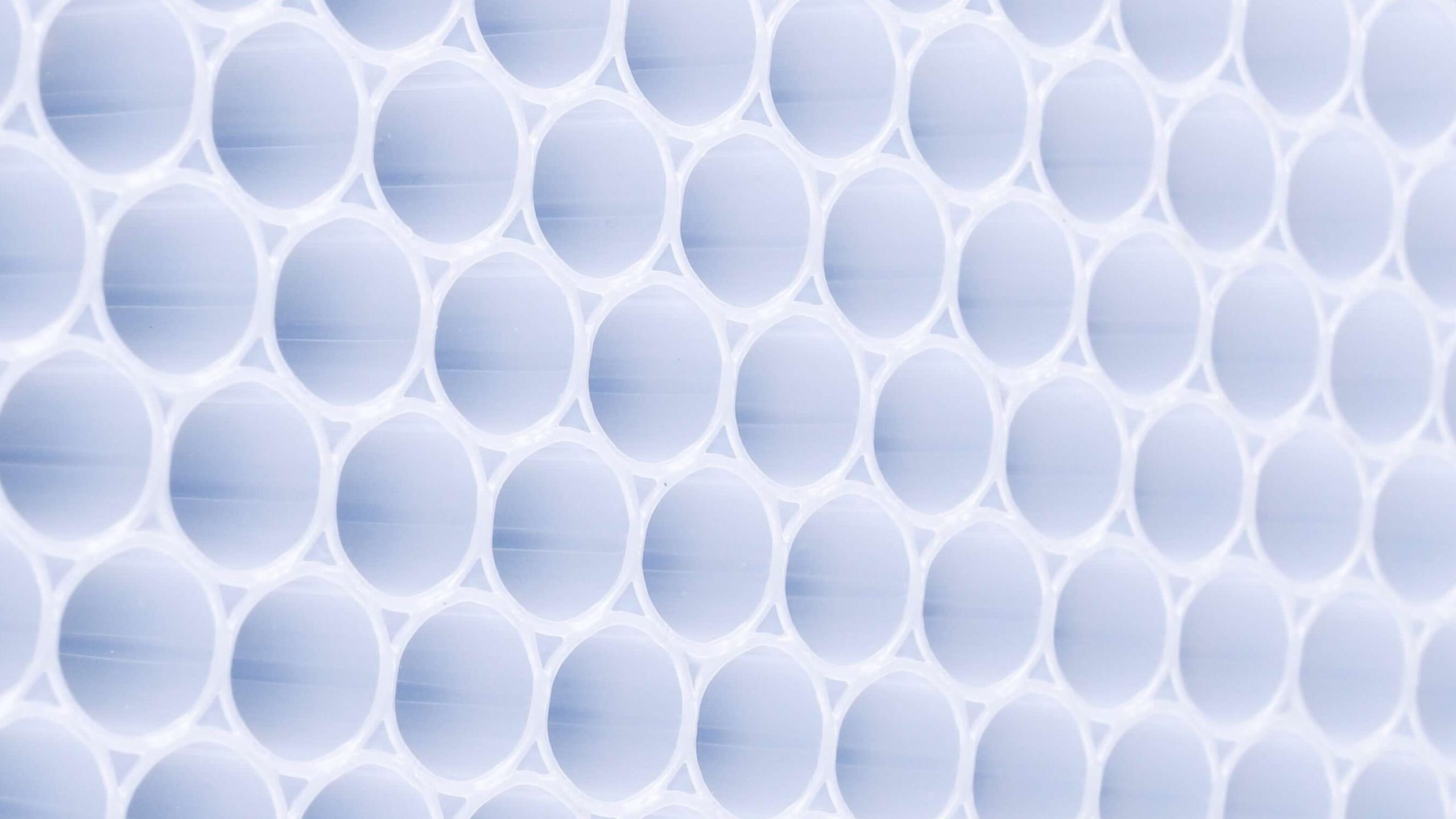
| Standard PP honeycomb | ~44 MJ/kg | FMVSS 302 pass; UL 94 HB | Fails vertical burn, fails drip test |
| FR-PP honeycomb | ~35-40 MJ/kg | ECE R118 (all annexes); UL 94 V-2 to V-0 | Cannot reach EN 45545 HL2 R1 |
| PU foam | ~25-28 MJ/kg | Euroclass E, some B with facings | High smoke, HCN in combustion gases |
| PIR foam | ~22-25 MJ/kg | Euroclass B-s1,d0 achievable | Better than PU, still combustible |
| XPS foam | ~39-41 MJ/kg | Euroclass E typical | Melts and shrinks early |
| MPP micro-foamed PP | ~40-44 MJ/kg | FMVSS 302; FR grade to R118 | Same hydrocarbon ceiling as PP |
| Phenolic foam | ~14-17 MJ/kg | Euroclass B-s1,d0 to A2 | Friable, lower mechanical strength |
| Aluminium honeycomb | ~0 (metal) | A2-s1,d0 with mineral facings | Adhesive and skin become limiting |
| Mineral wool | ~0-2 MJ/kg | A1 / A2-s1,d0 | Heavy, poor structural stiffness |
The pattern is clear once you look at column two. Fire classification tracks fuel load far more closely than it tracks additive chemistry.
Need help matching a fire spec to a core? Send us the standard number and hazard level and we will tell you in one email whether a PP-cored panel can meet it. Contact our engineering team.The Physics Limit: Why You Cannot Get an A2 Panel With a PP Core
Buyers regularly ask us to supply a PP honeycomb panel classified A2-s1,d0. We always decline, and here is the reason in one paragraph.
Euroclass A2 requires the material to pass EN ISO 1716, which caps gross calorific potential at 3.0 MJ/kg for the product as a whole (with slightly different limits for substantial and non-substantial components). Polypropylene has a gross heat of combustion around 44 MJ/kg. That is roughly fifteen times the ceiling. No flame retardant loading changes the energy stored in a C-C and C-H backbone; retardants change how fast that energy is released and whether ignition is sustained, not how much energy is there.
The same logic applies to EN 45545-2 HL2, where MARHE is capped at 90 kW/m². A hydrocarbon core with a thin skin will exceed that in a cone calorimeter regardless of the additive package.
So the honest answer from a manufacturer is: if your project genuinely requires A2 or HL2, you need a mineral, phenolic or aluminium core, and you should re-budget accordingly. Anyone who quotes you a cheap A2-rated PP panel is quoting a certificate that will not survive audit.
Flame Retardant Routes and What They Cost You
When FR-PP is the right answer, there are three practical additive systems. Each trades something away.
| FR system | Typical loading | UL 94 result | Property penalty | Resin cost adder |
|---|---|---|---|---|
| Brominated + antimony trioxide | 15-20 wt% | V-0 achievable | Impact strength -25 to -40%; smoke increases sharply | +25-40% |
| Halogen-free intumescent (APP-based) | 25-30 wt% | V-0 achievable | Impact -30 to -45%; moisture sensitivity; density up ~8% | +35-55% |
| Mineral filler (ATH / MDH) | 45-60 wt% | HB to V-2 only | Density up 30-45%; stiffness up, toughness down hard | +15-25% |
Two things fall out of this table that matter for a sandwich panel specifically:
First, mineral filler at 50 percent loading destroys the weight advantage that made you choose a honeycomb panel in the first place. If a panel goes from 3.5 kg/m² to 5.0 kg/m², you have given back most of the payload gain over plywood and aluminium alternatives.
Second, the impact penalty is real and it shows up on the production line, not in the lab. FR-PP honeycomb core is more brittle during expansion and calibration, which raises scrap rate. Our internal scrap on FR core runs 4-7 percent versus 1.5-2.5 percent on standard core. That difference is inside the price you get quoted.
There is also a fourth route that costs nothing extra and buyers rarely consider: put the fire performance in the skin instead of the core. A phenolic-resin GRP face sheet or an intumescent-coated skin can carry the surface-spread requirement while a standard PP core carries the structure. For ASTM E84 in particular, which is a surface burning test, this is often the cheapest compliant build. It does not work for EN 45545 R1, where heat release is measured on the full assembly.
The Over-Specification Trap That Costs Buyers Real Money
Here is the single most common expensive mistake we see, and it is worth its own section.
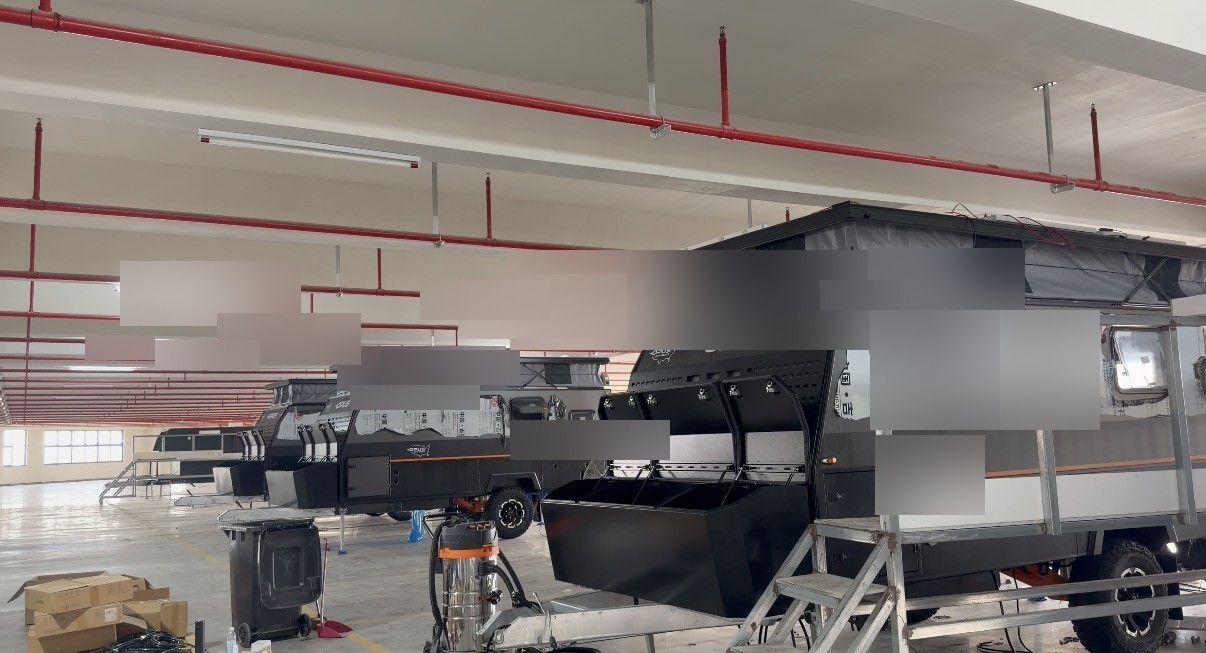
FMVSS 302 applies to the occupant compartment. Read the scope of 49 CFR 571.302: it covers components in the occupant compartment — seat cushions, headliners, interior trim, dashboards. The cargo box of a dry van, a reefer body, or a box truck is not the occupant compartment.Despite that, we get spec sheets for dry freight body panels that demand FMVSS 302 certification on every panel. That certification is not free. It costs the test fee, it costs lot traceability, and if the buyer also assumed "fire rated" meant FR-grade resin, it adds 25-40 percent to the resin bill for a compliance requirement that does not legally exist for that part of the vehicle.
Three checks before you write a fire requirement into a cargo body spec:
We have taken 12-18 percent out of quoted panel cost on several truck body programs simply by getting the buyer to confirm which panels actually sit in the cab.

How to Write a Fire Spec a Factory Can Quote in One Round
Copy this block into your RFQ and you will get a firm price and a firm lead time instead of a request for clarification:
- Standard and edition — e.g. "EN 45545-2:2020" not "European rail fire standard"
- Requirement set and hazard level — e.g. "R1, HL2"
- Which components it applies to — wall panel only, or wall plus ceiling plus floor
- Whether the classification must be on the assembly or the constituent materials
- Who issues the certificate — accredited third-party lab required, or is a factory test report acceptable
- Whether existing certificates are acceptable or new testing is required for your build
- Sample size available for testing — most labs need 3-6 specimens per test
- Smoke and toxicity limits if separate from the base classification
Testing Cost and Lead Time: Indicative Numbers
These are ranges from third-party lab quotes we have received over the past 18 months. They vary by lab, region and queue length, so treat them as budget planning figures rather than firm prices.
| Test | Indicative cost per specimen set | Typical lead time |
|---|---|---|
| FMVSS 302 horizontal burn | USD 300-600 | 5-10 working days |
| UL 94 (HB / V-series) | USD 800-1,800 | 2-3 weeks |
| ECE R118 Annex 6 + 7 + 8 | USD 2,000-3,500 | 3-5 weeks |
| ASTM E84 tunnel test | USD 2,500-4,500 | 3-6 weeks |
| EN 13501-1 (SBI + small flame) | USD 5,000-9,000 | 6-10 weeks |
| EN 45545-2 R1 full set (HL2) | USD 4,000-8,000 | 4-8 weeks |
| FM 4880 corner test | USD 30,000+ | 3-6 months |
Two practical notes. First, build testing lead time into your project schedule at the quotation stage, not after PO — a 6-week EN 13501-1 queue has derailed more launch dates than any material problem we have seen. Second, if you are running a multi-thickness family, ask the lab about classification ranges up front; testing the thinnest and thickest build and interpolating is sometimes acceptable and can halve your test bill.
What HOTECH Supplies
We manufacture at Tongxiang, Zhejiang with 31 patents and vertically integrated production from PP pellet through core extrusion to finished panel. On the fire side:
- Standard PP honeycomb core and panels — FMVSS 302 compliant, suitable for cargo bodies, RV and trailer construction, and general industrial use
- FR-PP honeycomb — halogen-free intumescent and brominated systems available; ECE R118 Annex 6/7/8 test reports available on request
- FR-skin builds — phenolic and intumescent-coated GRP face sheets over standard core, the cost-efficient route for ASTM E84 surface requirements
- CFRT panels with FR-grade PP matrix for bus and coach interior applications
- MPP insulation panels for reefer and cold-chain builds where insulation and structure are combined
Frequently Asked Questions
Is polypropylene honeycomb flame retardant?
Unmodified polypropylene honeycomb is not flame retardant. It rates UL 94 HB and has a limiting oxygen index around 17-18 percent, which is below the 21 percent oxygen content of air, meaning it will sustain a flame once ignited. It does pass FMVSS 302 because that test is a mild horizontal burn with a 102 mm/min limit. Flame-retardant grades are produced by compounding the PP with brominated or intumescent halogen-free additive systems before extrusion.
Can a PP honeycomb panel achieve Euroclass A2 or A1?
No. Euroclass A2 requires a gross calorific potential below roughly 3.0 MJ/kg under EN ISO 1716, and polypropylene has a gross heat of combustion around 44 MJ/kg. Flame retardants change ignition behaviour and burn rate but do not remove chemical energy from the polymer. If a project requires A1 or A2, the core must be mineral wool, aluminium honeycomb, or a similar non-combustible material.
Does FMVSS 302 apply to a dry van cargo box?
Not by regulation. FMVSS 302 covers materials in the occupant compartment of the vehicle. A dry freight cargo body or reefer box is outside that scope. Buyers frequently specify it anyway, which adds cost without adding legal compliance. Confirm with your OEM customer whether the requirement is regulatory or contractual before pricing FR-grade material into a cargo box build.
What is the difference between FMVSS 302 and UL 94?
FMVSS 302 tests a horizontally clamped automotive specimen and measures burn rate against a 102 mm/min limit. UL 94 tests plastics for electrical and appliance enclosures using both horizontal (HB) and vertical (V-2, V-1, V-0, 5V) orientations. The vertical tests are substantially harder because flame preheats the material above the burn front. Passing FMVSS 302 does not imply a UL 94 V rating, and the two certificates are not interchangeable.
How much does flame-retardant grade add to composite panel cost?
Expect 15-25 percent for mineral-filled grades, 25-40 percent for brominated systems, and 35-55 percent for halogen-free intumescent systems on the resin portion of the bill. Because resin is roughly half of the panel cost, the finished-panel premium is usually 12-30 percent. On top of that, FR core runs 4-7 percent scrap versus 1.5-2.5 percent standard, and MOQ rises from 200 m² to 500 m² because a dedicated extrusion run and purge cycle are required.
Can I use a supplier's existing fire certificate for my panel?
Only if your build is identical to the tested build in core type, core density, skin material, skin thickness, adhesive system, total thickness and surface finish. Fire classification is assigned to a tested construction, not to a material name. If you change the face sheet from 0.8 mm to 1.2 mm GRP, the certificate no longer covers your panel and a competent auditor will reject it. Always ask for the test report itself, not just a certificate number, and check the specimen description against your drawing.
Which fire standard applies to bus and coach interior panels in Europe?
UN ECE Regulation No. 118, which applies to vehicle categories M2 and M3. It requires horizontal burning rate below 100 mm/min (Annex 6), melting behaviour where drips do not ignite cotton wool (Annex 7), and vertical burning rate below 100 mm/min (Annex 8). Annex 9 covers fuel repellence for insulation materials. Unmodified polypropylene typically fails Annex 7 because it melts and drips at 160-170 degrees C, so an anti-drip additive package is required in addition to the flame retardant.
Related Guides
- Sandwich Panel Construction: Core Materials, Skins and Bonding Methods
- Honeycomb Core Materials: PP vs Aluminum vs Nomex
- Thermoplastic vs Thermoset Composites: Which Is Right for Your Application
- Cutting, Joining and Fastening Composite Sandwich Panels
- Refrigerated Truck Body Panels: XPS vs PU vs MPP Insulation
Get a Fire-Compliant Panel Quote
Send us the standard number, hazard level, and the drawing of the part. We will tell you within one working day whether a PP-cored build can meet it, what the FR premium is, and whether we already hold a valid test report for that construction — or whether new testing is needed and what it will cost.
Request a Quote | View Sandwich Panel Products | WhatsApp Us