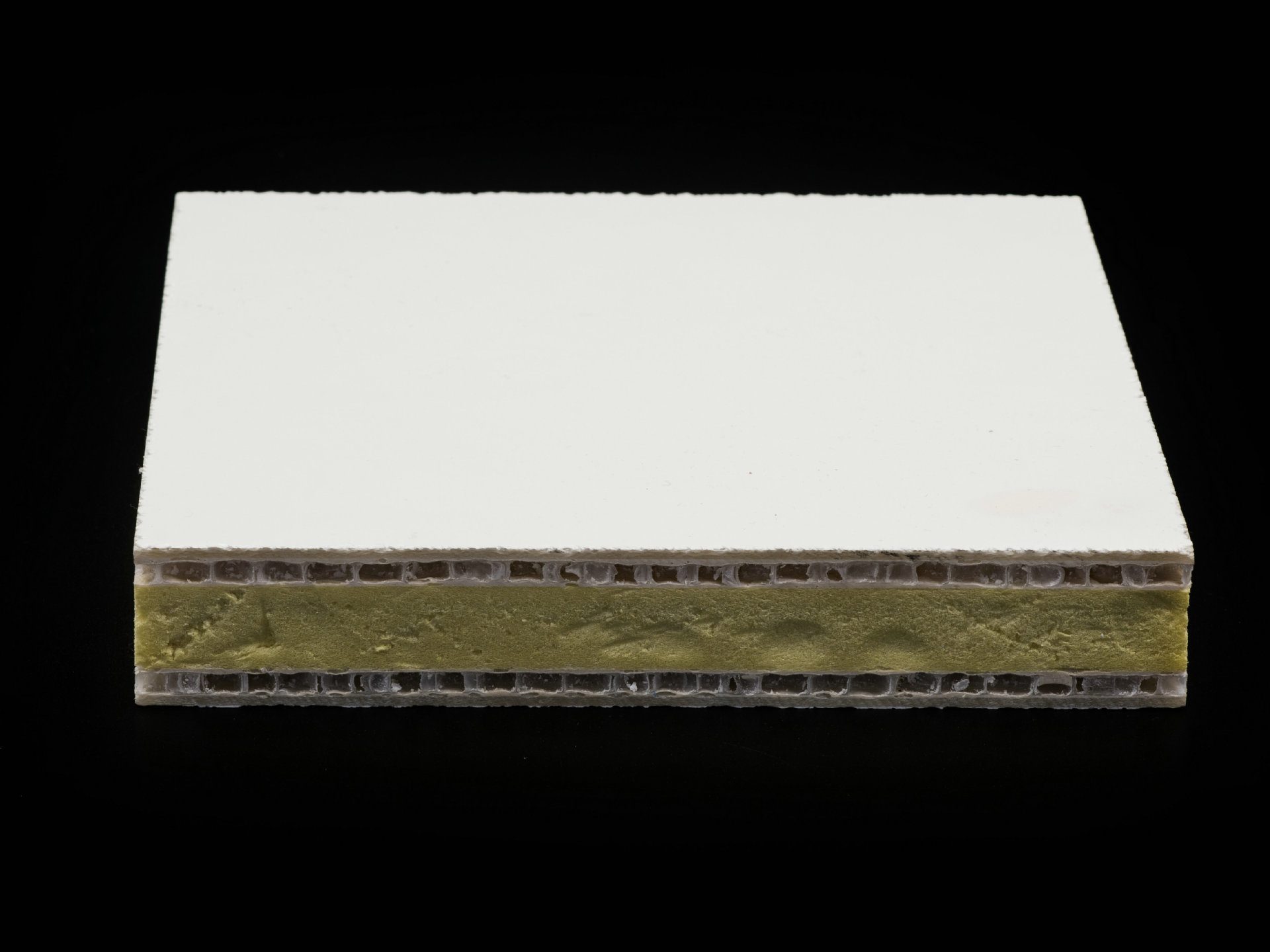
What Are FRP Wall Panels?
FRP (Fiber-Reinforced Plastic) wall panels are flat or textured composite sheets made of polyester or vinyl ester resin reinforced with chopped fiberglass strands. They provide a smooth, non-porous, chemical-resistant surface that is easy to clean and meets hygiene standards for food processing, pharmaceutical, healthcare, and cold storage environments.
FRP panels are the standard wall and ceiling finish in commercial kitchens, meat processing plants, dairy facilities, car washes, and any space requiring frequent washdown. They replace ceramic tile (higher cost, grout maintenance) and painted drywall (not washdown-compatible) at lower installed cost.
FRP Panel Specifications
Thickness: Standard FRP panels range from 0.060 inches (1.5 mm) to 0.125 inches (3 mm). The 0.090-inch (2.3 mm) thickness is the most common for wall applications — thick enough for impact resistance, thin enough for easy handling and adhesive bonding. Standard sheet sizes: 4 ft × 8 ft (1220 × 2440 mm) is the global standard. 4 ft × 10 ft and 4 ft × 12 ft sheets are available for tall wall applications. Custom sizes available from manufacturers at MOQ. Surface finish: Smooth (glossy, easiest to clean), pebble (textured, hides minor surface irregularities), and embossed (decorative patterns for retail and hospitality). Smooth finish is standard for food and pharma; pebble is common for commercial restrooms and car washes. Fire rating: Class A (ASTM E84, flame spread index ≤25, smoke developed index ≤450) is the standard for commercial construction. Class C panels are available at lower cost for non-regulated applications. Always verify fire rating against local building code requirements. Chemical resistance: Standard polyester FRP resists most common cleaning chemicals, mild acids, and alkalis. For aggressive chemical environments (chemical plants, battery rooms), vinyl ester FRP provides superior corrosion resistance at 30-50% higher cost.Key Applications
Food processing and commercial kitchens: USDA and FDA-compliant FRP panels are the go-to wall finish. The smooth, non-porous surface prevents bacterial growth, withstands daily steam cleaning, and meets HACCP hygiene requirements. Panels are typically bonded to substrate with FRP adhesive and sealed at joints with PVC moldings. Cold storage and refrigerated rooms: FRP panels resist moisture, do not support mold growth, and maintain structural integrity at temperatures from -40°C to +65°C. When combined with rigid foam insulation (PU or EPS) as a composite sandwich panel, FRP provides both the interior finish and thermal insulation in one installation step. Healthcare and cleanrooms: Smooth FRP panels meet ISO 14644 cleanroom standards for particle control. The seamless installation (using silicone-sealed butt joints) eliminates the bacteria-harboring grout lines of ceramic tile. Common in operating rooms, laboratories, and pharmaceutical production areas. Car washes and laundries: FRP's water resistance and impact strength handle the high-moisture, high-impact environment. Pebble-textured panels are preferred for hiding water spots and minor contact damage. Recreational vehicles and trailers: Lightweight FRP (0.060-inch) is used as the interior and exterior skin on RVs, trailers, and modular buildings. At 1.5-2.0 kg/m², FRP is significantly lighter than plywood or metal cladding.FRP vs Alternatives
FRP vs ceramic tile: FRP costs 40-60% less installed (no thinset, no grout, no grouting labor). FRP installs 3-5x faster. Tile is harder and more scratch-resistant but grout lines trap bacteria and require ongoing maintenance. For commercial kitchens and food processing, FRP has largely replaced tile. FRP vs stainless steel: Stainless is more durable and handles higher temperatures, but costs 3-5x more than FRP per square foot installed. FRP is the standard for walls; stainless is reserved for direct food contact surfaces (countertops, equipment splash guards) and high-temperature cooking areas. FRP vs painted drywall: Drywall is cheaper but cannot handle washdown, moisture, or impact. FRP is specified whenever the wall will be cleaned with a hose, exposed to steam, or subject to cart impact.Wholesale Pricing
Standard polyester FRP (0.090", 4×8 ft, smooth white): $18-25 per sheet at pallet volume (40+ sheets). Factory-direct from HOTECH: $12-16 per sheet FOB China at container volume. Vinyl ester FRP (chemical-resistant): $28-40 per sheet at pallet volume. FRP/PU composite sandwich panel (for cold storage): $25-45 per m² depending on insulation thickness, FOB China.HOTECH manufactures FRP panels, PP honeycomb composite panels, and insulated sandwich panels at our factory in Zhejiang, China. MOQ 200 sheets for standard FRP, 100 panels for composite sandwich panels.
Request FRP panel samples and pricing → | View All Composite Panels →