What Is Core Crush?
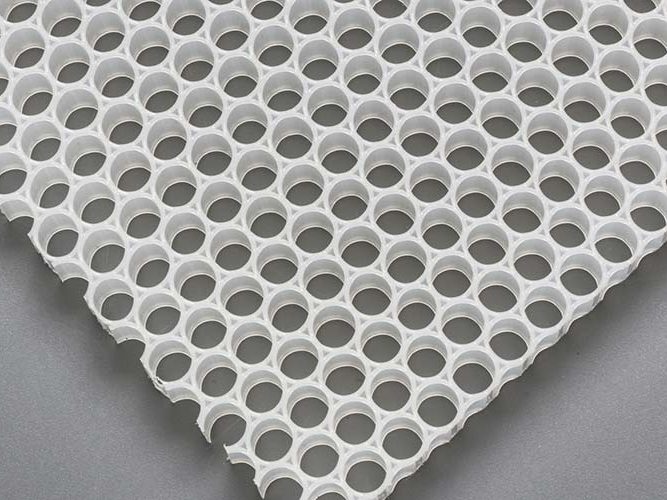
Core crush is the structural collapse of the honeycomb core inside a pickleball paddle. When it happens, the hexagonal cell walls buckle inward and lose their ability to spring back after impact. The paddle develops "dead spots" — areas that feel soft and unresponsive compared to the rest of the hitting surface.
For players, core crush means reduced power, inconsistent ball response, and ultimately a paddle that needs to be replaced. For paddle manufacturers, it means warranty claims, brand reputation damage, and lost customers. Tournament officials are also paying attention: a core-crushed paddle can produce an exaggerated trampoline effect that may fail PBCoR (Paddle Ball Coefficient of Restitution) testing.
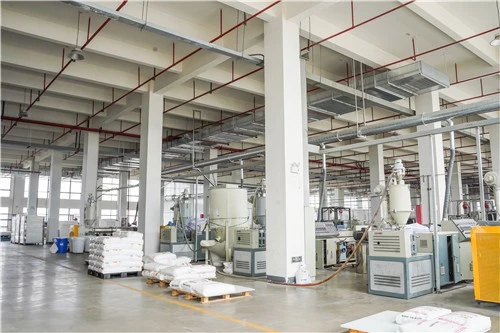
As a company that manufactures the PP honeycomb core sheets used inside these paddles, we see this problem from the material science side. Core crush is not a fundamental flaw of honeycomb technology — it is a manufacturing process problem that can be prevented with proper material selection and production controls.
What Actually Happens Inside the Core
To understand core crush, you need to understand what happens to polypropylene honeycomb cells under stress.
Healthy Cell Behavior
A properly manufactured PP honeycomb cell works like a tiny spring. When a pickleball strikes the paddle face, the impact force transfers through the face sheet into the honeycomb core. Each cell wall bends slightly inward, absorbs energy, and then recovers its shape. This elastic deformation cycle can repeat tens of thousands of times without permanent damage — provided the cell walls are intact and the material has not been thermally degraded.
How Cells Fail
Cell walls fail in two distinct ways:
Buckling (elastic instability): When a thin cell wall is loaded beyond its critical buckling stress, it collapses sideways rather than compressing uniformly. Once buckled, the cell no longer returns to its original shape. This is the primary failure mode in core crush. The critical buckling stress of a PP cell wall depends on wall thickness, cell diameter, and the material's elastic modulus — all of which are affected by temperature during manufacturing. Thermal degradation: Polypropylene has a glass transition temperature around -10°C and begins to soften significantly above 130°C. When honeycomb core is exposed to temperatures above 150°C during thermoforming, the cell walls lose stiffness permanently. Even if they appear intact visually, their elastic modulus has been reduced and they buckle under lower impact forces than they were designed for.The Result
A core-crushed paddle has a mix of intact cells and collapsed cells. The collapsed regions create dead spots. Because the damage is internal (hidden between the face sheets), it is not visible from outside. Players detect it through feel and sound — a characteristic "crackling" sound when pressing firmly on the paddle center with their thumbs.
Why Thermoforming Causes Core Crush
Thermoforming is a paddle manufacturing technique that bonds the face sheets to the core using heat and pressure. The sandwich panel (core + two face sheets) is placed in a heated mold and pressed at temperatures typically ranging from 150°C to 200°C.
The Problem
PP honeycomb core is designed to operate at temperatures up to 80°C in continuous service. During thermoforming, the core is briefly exposed to 150–200°C — well above its safe operating range. At these temperatures:
Not All Thermoforming Is Equal
The severity of core crush depends on three process variables:
| Variable | Lower Risk | Higher Risk |
|---|---|---|
| Mold temperature | 130–145°C | 160–200°C |
| Pressure | 0.3–0.5 MPa | 1.0–2.0 MPa |
| Hold time | 30–60 seconds | 2–5 minutes |
Paddle manufacturers who control these parameters carefully can thermoform successfully with minimal core damage. The problem occurs when operators push temperatures or pressures too high to achieve faster cycle times or stronger face-to-core bonds.
Core Crush vs. Delamination: Different Problems
Players and reviewers sometimes confuse core crush with delamination. They are distinct failure modes:
| Core Crush | Delamination | |
|---|---|---|
| What fails | Honeycomb cell walls collapse | Face sheet separates from core |
| Location | Inside the core (internal) | At the face-core interface |
| Cause | Thermal damage + pressure during manufacturing, or accumulated impact fatigue | Adhesive failure, impact damage, or moisture ingress |
| Sound | Crackling/crunching when pressed | Hollow/rattling sound, audible changes during play |
| Feel | Dead spots, reduced power | Face sheet feels "loose," inconsistent ball rebound |
| Fixable? | No — core is permanently deformed | Sometimes — re-bonding is possible in theory |
Both problems can coexist in the same paddle, and both are accelerated by exposure to extreme heat (such as leaving a paddle in a hot car where interior temperatures can exceed 70°C).
How Paddle Manufacturers Can Prevent Core Crush
Based on our experience supplying honeycomb core to paddle brands across multiple manufacturing methods, here are the production-level solutions:
1. Use Cold-Press or Low-Temperature Bonding
Cold-press construction bonds face sheets to the core using adhesives that cure at room temperature or with moderate heat (60–80°C). This eliminates the thermal stress on the honeycomb core entirely. The trade-off is slightly longer cycle times and the need for high-quality structural adhesives.
Several premium paddle brands have switched from thermoforming to cold-press specifically to eliminate core crush complaints.
2. Specify Higher-Density Core for Thermoformed Paddles
If thermoforming is your preferred process, use a higher-density honeycomb core. Higher density means thicker cell walls, which have a higher critical buckling stress and better resist collapse under thermoforming pressure.
Our recommendation for thermoformed paddles:
| Manufacturing Method | Recommended Core Density |
|---|---|
| Cold-press / adhesive | 60–80 kg/m³ (standard) |
| Low-temperature thermoform (< 145°C) | 80–100 kg/m³ |
| High-temperature thermoform (> 150°C) | 100–120 kg/m³ |
The trade-off is weight: a 100 kg/m³ core weighs about 25% more than a 80 kg/m³ core at the same thickness. But it survives thermoforming without damage.
3. Control Thermoforming Parameters Tightly
If you must thermoform at higher temperatures, control these three variables:
- Temperature uniformity: Ensure the mold surface temperature varies by no more than ± 5°C across its area. Hot spots cause localized core crush.
- Pressure ramp-up: Apply pressure gradually (over 10–15 seconds) rather than instantly. This gives the core time to distribute the load.
- Minimum dwell time: Reduce the time at peak temperature to the minimum needed for face sheet bonding. Every additional second above 130°C increases the risk of permanent cell wall damage.
4. Use Pre-Laminated Sandwich Panels Instead of Loose Layups
At HOTECH, we offer pre-laminated sandwich panels — honeycomb core already bonded to CFRT or fiberglass face sheets via our thermal lamination process. This lamination is performed at our factory under tightly controlled conditions optimized for honeycomb integrity.
When paddle manufacturers use pre-laminated panels, they only need to cut, shape, and add edge guards — no high-temperature face-to-core bonding step in their factory. This eliminates the most common source of core crush.
5. Implement Incoming Material QC
Not all PP honeycomb core is manufactured to the same quality standard. Paddle brands should test incoming core material for:
- Cell size uniformity: Measure at least 10 cells per sheet. Variation should be within ± 0.5 mm of the specified cell diameter.
- Wall thickness consistency: Use a micrometer to check at least 5 points. Thin spots are crush initiation points.
- Flatwise compression test (ASTM C365): Crush a 50 × 50 mm sample at controlled displacement rate. The compression strength should meet the supplier's data sheet specification within ± 10%.
- Visual inspection: Hold the sheet up to light. Uniformly translucent cells indicate consistent wall thickness. Dark spots or shadows indicate pre-existing cell damage.
What Players Can Do
While core crush is fundamentally a manufacturing issue, players can extend their paddle's life:
- Never leave your paddle in a hot car. Interior car temperatures can exceed 70°C — enough to soften PP and accelerate cell wall fatigue.
- Test regularly. Press your thumbs firmly into the center of the paddle face every 2–3 weeks. If you hear crackling or feel unusual softness, the core is compromised.
- Store at room temperature. Avoid garages, attics, or direct sun exposure for long periods.
- Rotate paddles. If you play frequently (4+ sessions per week), rotating between two paddles gives each core time to fully recover between sessions.