Why Logistics Companies Are Rethinking Pallet Materials
The pallet is the most overlooked cost center in logistics. A typical distribution center uses thousands of pallets, each making dozens of trips per year. Small differences in pallet weight, durability, and cost per trip compound into significant annual savings or losses.
Wood pallets have dominated for a century because the upfront cost is low. But when you factor in replacement frequency, phytosanitary treatment (ISPM 15), damage to goods, weight-related freight costs, and disposal fees, wood is often the most expensive option over a 3-year horizon.
PP honeycomb pallets offer an alternative that costs more upfront but delivers measurable savings on every subsequent metric. This guide provides the data logistics managers need to make the comparison.
Pallet Material Comparison
Wood Pallets (GMA/EUR Standard)
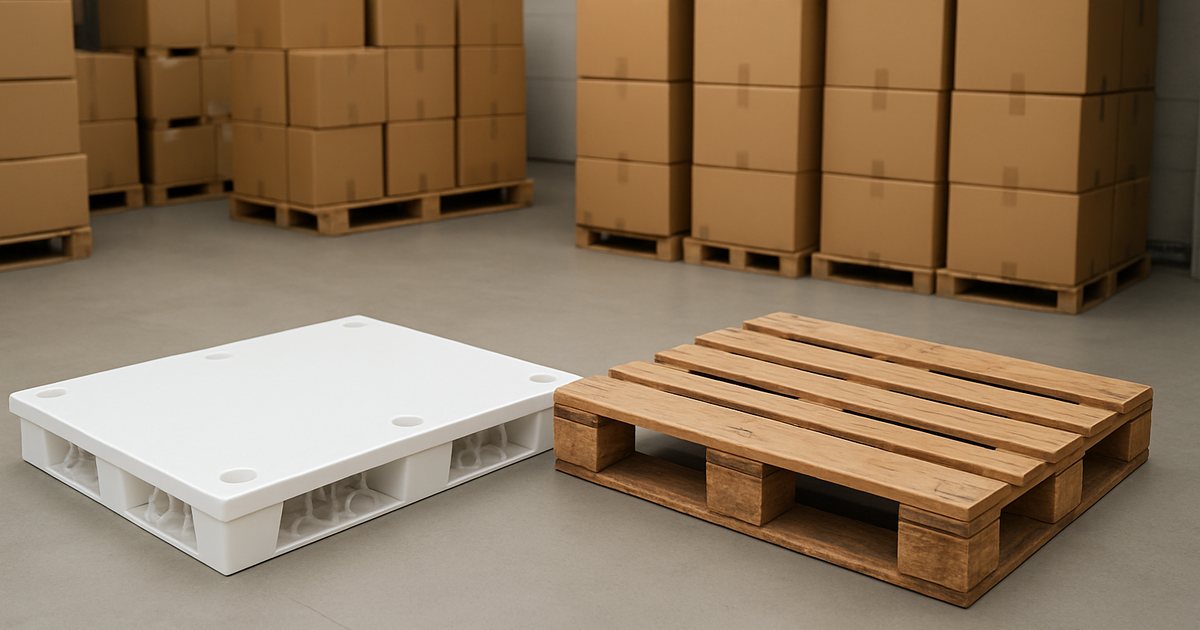
The industry default. A standard GMA pallet (48×40 inches / 1200×1000 mm) weighs 18–25 kg and costs $10–25 new.
Advantages: Lowest upfront cost. Universally accepted. Easy to repair with nails and boards. Biodegradable. Disadvantages: Heavy — wood pallet weight adds to freight cost on every shipment. Splinters and nails damage products and injure workers. Absorbs moisture, harbors insects, and requires ISPM 15 heat treatment or fumigation for international shipping. Average life of 3–5 trips before needing repair or replacement. Creates wood waste at end of life.Plastic Pallets (HDPE/PP Injection-Molded)
Injection-molded plastic pallets weigh 10–20 kg and cost $30–120 depending on construction (nestable, rackable, stackable).
Advantages: Consistent dimensions and weight. No splinters or nails. No ISPM 15 treatment required. Washable for food and pharmaceutical applications. Longer life (50–100 trips). Recyclable at end of life. Disadvantages: High upfront cost ($50–120 for rackable pallets). Heavy — solid plastic construction is not significantly lighter than wood for rackable designs. Broken pallets cannot be field-repaired. Color fades with UV exposure.PP Honeycomb Pallets
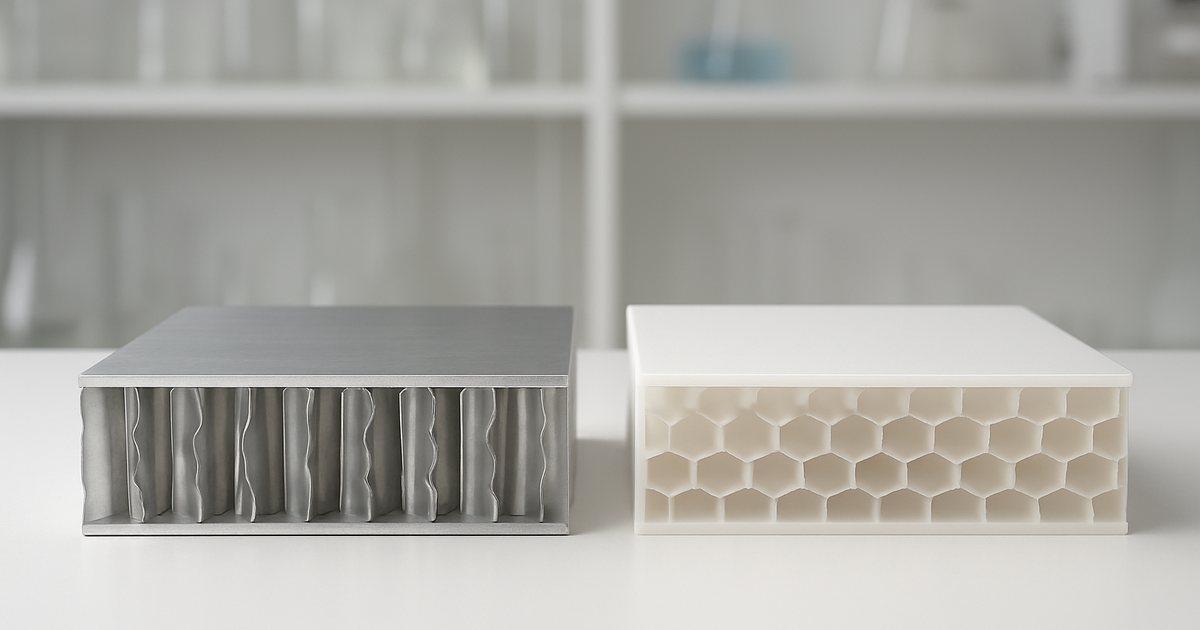
PP honeycomb pallets use polypropylene honeycomb core panels with CFRT or GF-PP face sheets, assembled with aluminum or PP edge frames. A standard 1200×1000 mm pallet weighs 5–8 kg.
Advantages: 60–75% lighter than wood (5–8 kg vs 18–25 kg). Completely waterproof — no ISPM 15 required. No splinters, no nails, no insect harboring. Static load capacity 2,000–4,000 kg (depending on design). 100% recyclable as single-material PP. Compact — nestable designs reduce return freight costs. Consistent dimensions with no warping or swelling. Disadvantages: Higher upfront cost ($20–40 per pallet). Lower racking capacity than heavy-duty plastic pallets — PP honeycomb pallets are best suited for static loads and light dynamic loads. Not suitable for uncontrolled outdoor storage (UV exposure without stabilizer).Head-to-Head Comparison
| Property | Wood (GMA) | Plastic (HDPE) | PP Honeycomb |
|---|---|---|---|
| Weight | 18–25 kg | 10–20 kg | 5–8 kg |
| Upfront Cost | $10–25 | $50–120 | $20–40 |
| Trips Before Replacement | 3–5 | 50–100 | 30–60 |
| Static Load Capacity | 2,500 kg | 5,000+ kg | 2,000–4,000 kg |
| ISPM 15 Required | Yes | No | No |
| Moisture Absorption | 15–25% | 0% | < 0.1% |
| Product Damage Risk | High (splinters/nails) | Low | Very low |
| Nestable (return shipping) | No | Some designs | Yes |
| Recyclable | Burn/landfill | Yes | 100% PP |
| Washable (food-grade) | No | Yes | Yes |
Cost-Per-Trip Analysis
The true comparison metric is cost per trip, not cost per pallet:
| Metric | Wood | Plastic | PP Honeycomb |
|---|---|---|---|
| Pallet cost | $15 | $80 | $30 |
| Expected trips | 4 | 75 | 45 |
| Cost per trip (pallet only) | $3.75 | $1.07 | $0.67 |
| Freight weight premium per trip* | $1.50 | $0.80 | $0.30 |
| ISPM 15 treatment (export) | $0.50 | $0 | $0 |
| Total cost per trip | $5.75 | $1.87 | $0.97** |
*Based on $0.08/kg excess weight charge for air freight or weight-based LTL pricing **Average ISPM 15 heat treatment cost per pallet for export shipments
PP honeycomb pallets deliver the lowest cost per trip — 83% lower than wood and 48% lower than plastic — because they combine moderate upfront cost with good durability and dramatically lower weight-related freight costs.
ROI Calculation
For a distribution operation using 500 pallets with 12 trips per pallet per year:
| Annual Cost | Wood | PP Honeycomb | Savings |
|---|---|---|---|
| Pallet purchases (replacements) | $22,500 | $4,000 | $18,500 |
| Freight weight premium | $9,000 | $1,800 | $7,200 |
| ISPM 15 treatment | $3,000 | $0 | $3,000 |
| Product damage claims | $5,000 | $500 | $4,500 |
| Annual total | $39,500 | $6,300 | $33,200 |
| Payback period | — | — | < 6 months |
The initial investment to replace 500 wood pallets with PP honeycomb pallets is approximately $15,000 ($30 × 500). With annual savings of $33,200, the payback period is under 6 months.
Beyond Pallets: PP Honeycomb in Reusable Packaging
The same PP honeycomb panel technology used in pallets extends to other logistics packaging:
Flight Cases & Equipment Cases
PP honeycomb board replaces plywood in flight cases and road cases. Advantages: 40–60% lighter (reduces air freight costs for touring equipment), waterproof (plywood cases absorb rain and delaminate), and no ISPM 15 treatment needed for international tours. See our detailed flight case guide.
Reusable Shipping Boxes & Crates
PP honeycomb panels can be fabricated into custom shipping boxes and crates that replace single-use corrugated cardboard or wood crating. A PP honeycomb shipping box typically lasts 50–100 shipping cycles versus 1–3 cycles for corrugated cardboard, and eliminates the cost of purchasing new boxes for every shipment.
Automotive Parts Containers
Automotive parts manufacturers use PP honeycomb containers for inter-factory shipping of components. The containers are lightweight, stackable, washable, and reusable for years — replacing cardboard packaging that generates thousands of tons of waste annually in a typical automotive supply chain.