Quick Answer
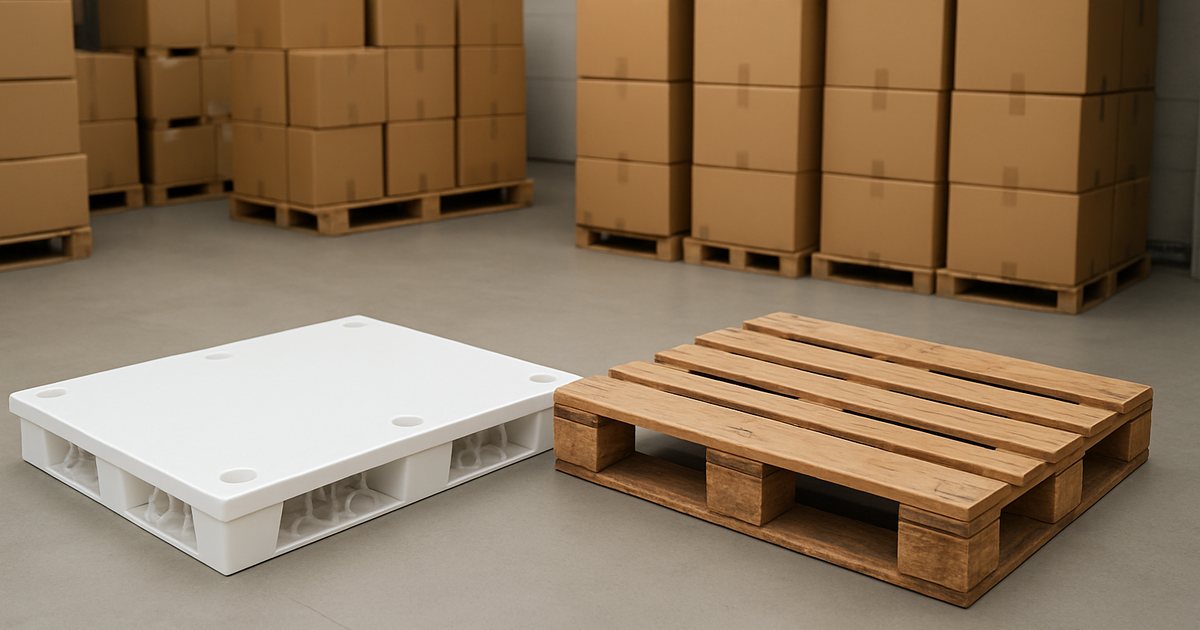
PP (polypropylene) honeycomb pallets weigh 4-6 kg versus 20-25 kg for standard wooden pallets — a 75% weight reduction that translates directly to lower shipping costs and higher payload utilization. They last 200+ cycles compared to 5-10 cycles for one-way wooden pallets, are exempt from ISPM 15 fumigation requirements for international shipping, and are 100% recyclable. For export-heavy businesses shipping 500+ pallets per year, the switch pays for itself within 12-18 months.
The Hidden Cost of Wooden Pallets
Wooden pallets are everywhere — an estimated 2 billion are in circulation in the US alone. They are cheap to buy ($8-15 for a standard 48x40 inch pallet) and universally available. But the purchase price hides several ongoing costs:
Weight penalty. A standard GMA wooden pallet weighs 20-25 kg. In a 20-ft container holding 10 pallets, that is 200-250 kg of pallet weight — weight that could be cargo. At current ocean freight rates, pallet weight costs $0.15-0.30 per kg per container shipment. ISPM 15 compliance. International shipments of wooden pallets require heat treatment or methyl bromide fumigation per ISPM 15. Treatment costs $5-15 per pallet and requires a certified facility. Non-compliant shipments are rejected at customs — delays, fines, and return shipping costs can run into thousands of dollars. Moisture and contamination. Wood absorbs moisture (8-15% by weight), which affects tare weight calculations in logistics and can contaminate moisture-sensitive cargo. Mold growth is common in humid storage conditions. Damage and disposal. One-way export pallets are used once and discarded at the destination. Even returnable pallets break after 5-10 cycles. Disposal costs are rising as landfill fees increase.PP Honeycomb Pallet Advantages
| Factor | Wooden Pallet | PP Honeycomb Pallet |
|---|---|---|
| Weight | 20-25 kg | 4-6 kg |
| Load Capacity (static) | 1,000-2,500 kg | 1,000-3,000 kg |
| Cycles | 5-10 (one-way: 1) | 200+ |
| ISPM 15 Required | Yes | No (no wood) |
| Water Absorption | 8-15% | 0% |
| Mold/Pest Risk | Yes | Zero |
| Nesting (empty storage) | No | Yes (saves warehouse space) |
| Recyclable | Partially (nails, contamination) | 100% (mono-material PP) |
Load Capacity
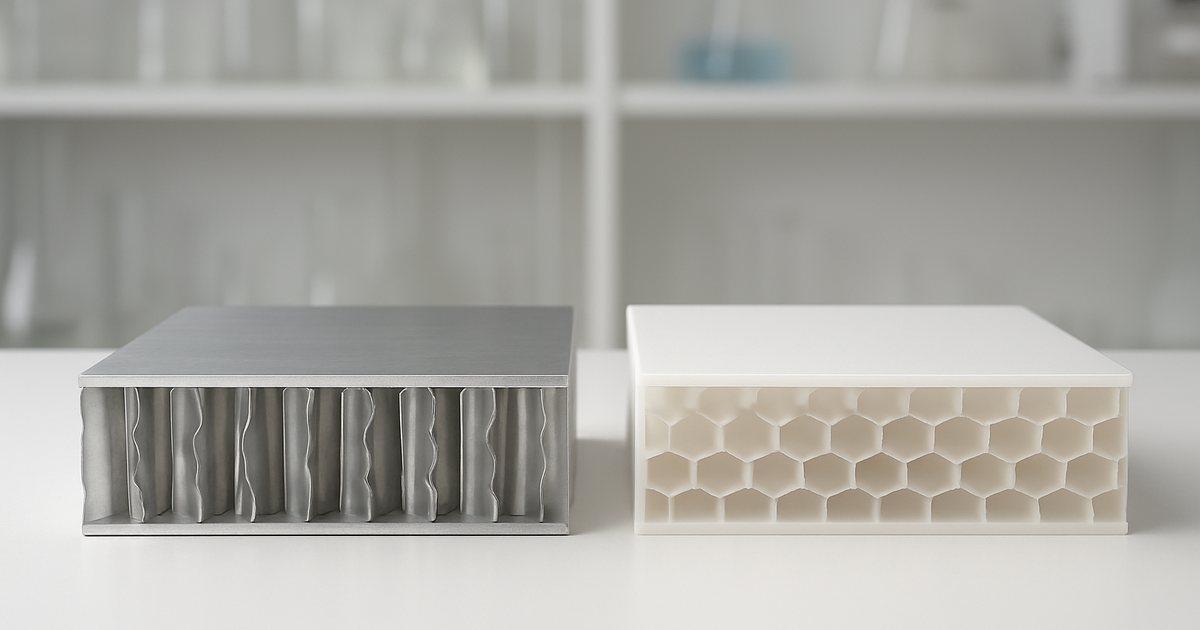
A common misconception is that honeycomb pallets cannot match the load capacity of wood. In reality, a properly designed PP honeycomb pallet with 6mm cell core and reinforced edges handles static loads of 2,000-3,000 kg and dynamic loads of 800-1,200 kg — comparable to a standard GMA wooden pallet.
The key design factors: core cell size (6mm for maximum strength), face sheet thickness (2-3mm fiberglass-reinforced PP), edge reinforcement (aluminum or solid PP profiles), and load distribution (evenly distributed loads achieve the highest capacity).
For heavy or concentrated loads (machinery, steel coils), we design custom pallets with reinforced zones under the load footprint. Our engineering team provides load capacity calculations based on your specific cargo weight and distribution.
Cost Comparison: Lifecycle Analysis
| Scenario | Wooden Pallet | PP Honeycomb Pallet |
|---|---|---|
| Purchase price | $12 | $35 |
| ISPM 15 treatment | $8 | $0 |
| Weight-related freight (per use) | $4.50 | $1.10 |
| Expected lifecycle | 1 use (export) | 200+ uses |
| Cost per use (export) | $24.50 | $0.18 |
| Cost per use (domestic, 5 cycles) | $3.30 | $0.18 |
For export shipping, PP honeycomb pallets cost $0.18 per use versus $24.50 per use for single-use wooden pallets — a 99% reduction in pallet cost per shipment.
Even for domestic use where wooden pallets are reused 5-10 times, PP honeycomb pallets still achieve 80-95% lower cost per use over their lifecycle.
ISPM 15 Exemption
ISPM 15 (International Standards for Phytosanitary Measures No. 15) requires wooden packaging materials in international trade to be heat-treated to 56°C core temperature for 30 minutes or fumigated with methyl bromide. Non-compliant shipments face rejection, quarantine, and fines.
PP honeycomb pallets are made entirely of synthetic polypropylene — no wood, no organic material, no pest or disease risk. They are automatically exempt from ISPM 15 requirements. No treatment, no stamps, no certificates, no delays.
For exporters shipping to Australia, New Zealand, and EU countries (which have the strictest enforcement), this exemption eliminates a significant compliance burden and risk.
Environmental Impact
PP honeycomb pallets support sustainability goals in multiple ways:
Weight reduction: Lower shipping weight means lower fuel consumption and CO₂ emissions per shipment. A 20-ft container with PP honeycomb pallets versus wooden pallets saves approximately 150-200 kg of dead weight, reducing emissions by 2-3% per container. Recyclability: At end of life (after 200+ cycles), PP honeycomb pallets are fully recyclable in standard polypropylene recycling streams. Wooden pallets contaminated with nails, strapping, and cargo residue are difficult to recycle cleanly. No deforestation: Each wooden pallet requires approximately 0.05 cubic meters of timber. At 2 billion pallets in circulation, the wood pallet industry consumes a staggering volume of timber annually.Applications
- Export shipping: One-way pallets where ISPM 15 compliance is required
- Pharmaceutical and food logistics: Zero contamination risk from mold, pests, or wood particles
- Air freight: Weight-sensitive cargo where every kilogram counts
- Cleanroom environments: No particulate shedding from wood fibers
- Returnable packaging systems: High-cycle reuse reduces total pallet spend
- Automated warehouses: Consistent dimensions and smooth surfaces work reliably with conveyors and ASRS systems
Frequently Asked Questions
Can PP honeycomb pallets hold as much weight as wooden pallets?
Yes. Our standard 1200x800mm PP honeycomb pallet supports 2,000 kg static load and 1,000 kg dynamic load. Custom heavy-duty versions support up to 3,000 kg static. The key is specifying the correct core density and edge reinforcement for your load requirements.
How many times can a PP honeycomb pallet be reused?
In standard logistics operations (forklift handling, stacking, warehouse storage), PP honeycomb pallets last 200+ cycles. In gentle environments (hand loading, cleanroom), lifespan exceeds 500 cycles.
Are PP honeycomb pallets rackable?
Standard honeycomb pallets are designed for floor stacking and conveyor systems. For racking applications (where the pallet spans between rack beams with unsupported load in the middle), we produce reinforced versions with internal steel tubes or solid PP profiles that span 1,200mm under rated load.
What sizes are available?
We produce pallets in any size. Standard sizes include 1200x800mm (Euro), 1200x1000mm (ISO), and 1219x1016mm (GMA/North America). Custom sizes for specific container footprints or product packaging are available with a minimum order of 200 units.
Can damaged pallets be repaired?
Minor damage (crushed corners, punctured face sheets) can be repaired with PP welding or adhesive patches. For major damage, the entire pallet can be recycled as PP feedstock. Unlike wooden pallets, there are no nails or mixed materials to separate.
Related Guides
- PP Honeycomb Panel: Properties, Applications & Manufacturing Guide
- Lightweight Honeycomb Panels: Engineering Guide
- Composite Panel Price Guide 2026: FOB Cost, MOQ & Freight
- PP Honeycomb Panels in Construction: Partitions, Facades & Sound Barriers
- Thermoplastic vs Thermoset Composites
Request Pallet Samples
Send us your pallet dimensions, load requirements, and annual volume for a custom quote. We provide free samples for evaluation.