Quick Answer
Aluminum honeycomb panels excel in high-temperature environments (above 80°C) and aerospace/defense applications where fire resistance is non-negotiable. PP (polypropylene) honeycomb panels win on weight, cost, corrosion resistance, and recyclability — making them the better choice for vehicle bodies, RVs, construction, and logistics. If your operating temperature stays below 80°C and you do not need aerospace-grade fire ratings, PP honeycomb is the more practical and economical option.
Two Honeycomb Technologies, Different Strengths
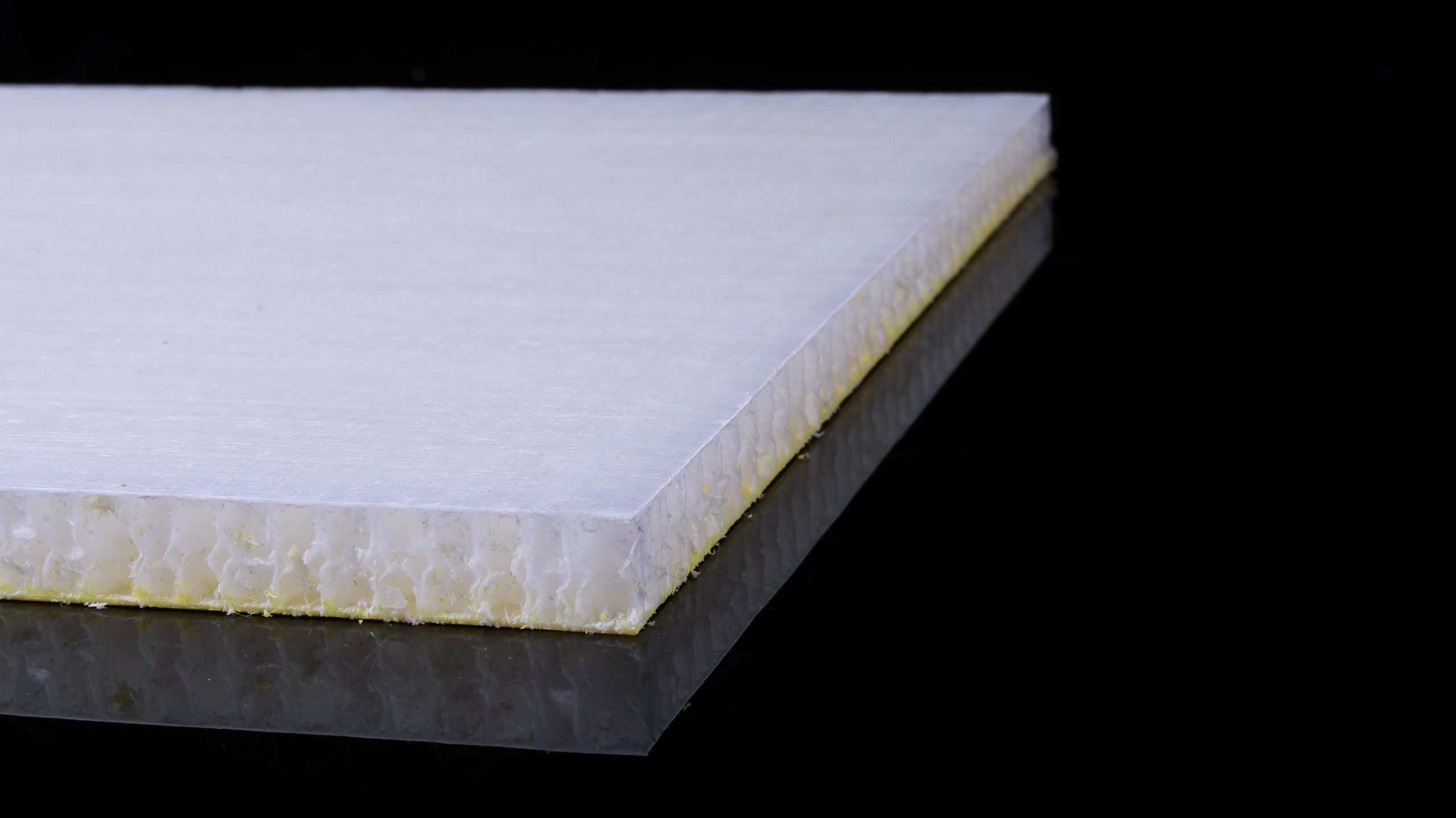
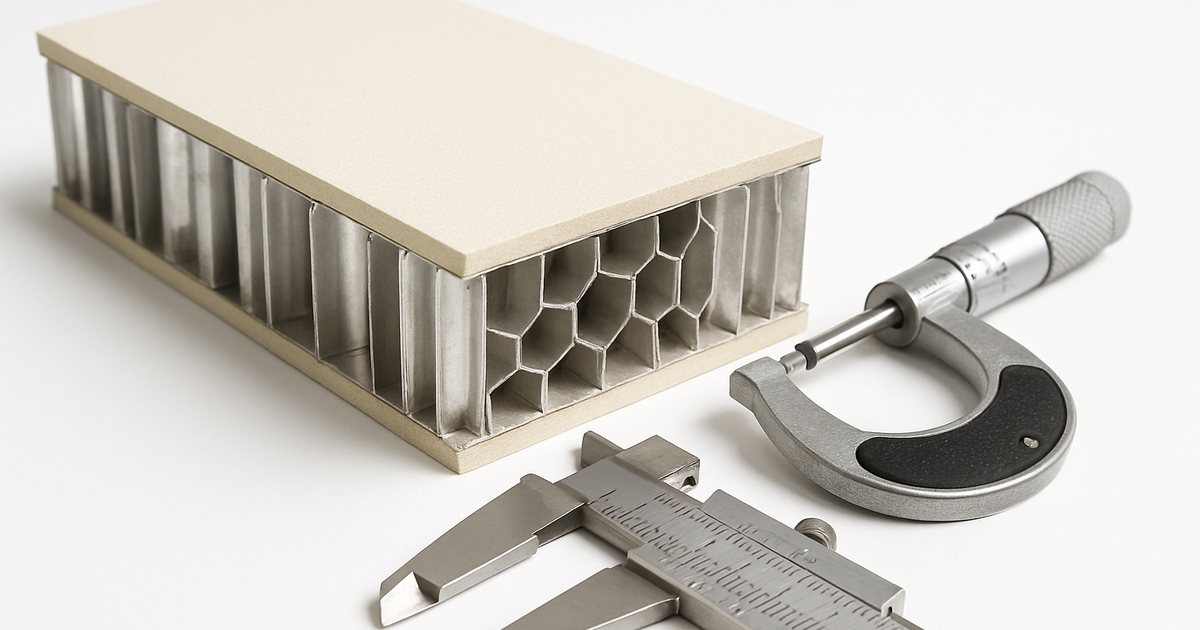
Both aluminum and polypropylene honeycomb panels use the same structural principle: a lightweight cellular core sandwiched between two face sheets. The hexagonal cell geometry distributes loads efficiently, creating panels with high stiffness-to-weight ratios. But the core material changes everything about the panel's performance envelope.
Aluminum honeycomb has been the default in aerospace since the 1960s. It is proven, well-understood, and specified in thousands of aircraft programs. PP honeycomb is newer — commercially scaled since the 2000s — and has rapidly displaced aluminum in ground transportation, construction, and industrial applications where its advantages in cost, weight, and processability outweigh aluminum's thermal and fire performance.
Head-to-Head Comparison
| Property | Aluminum Honeycomb | PP Honeycomb |
|---|---|---|
| Core Density | 29-130 kg/m³ | 40-80 kg/m³ |
| Panel Weight (20mm) | 3.0-6.0 kg/m² | 1.5-3.5 kg/m² |
| Compressive Strength | 1.0-7.0 MPa | 0.5-2.5 MPa |
| Operating Temperature | -55 to +180°C | -40 to +80°C |
| Water Absorption | Low (but corrodes) | 0% (no corrosion) |
| Chemical Resistance | Poor (acids, alkalis) | Excellent |
| Fire Resistance | Non-combustible | Self-extinguishing (with FR additives) |
| Recyclability | Recyclable (with separation) | 100% recyclable (mono-material) |
| Cost per m² (20mm panel) | $35-80 | $15-35 |
| Minimum Order Quantity | Often 50+ m² | 100+ m² |
Where Aluminum Honeycomb Wins
High-Temperature Applications
Aluminum honeycomb maintains structural integrity up to 180°C continuously and survives brief exposure above 250°C. PP honeycomb softens at 80°C and deforms above 100°C. For engine compartment panels, exhaust heat shields, and industrial equipment near heat sources, aluminum is the only option.
Aerospace and Defense
Aircraft interior panels, satellite structures, and military vehicle armor require aluminum honeycomb because of its fire performance (non-combustible per FAR 25.853), decades of flight heritage, and established qualification databases. Switching materials in aerospace requires years of testing and certification — so aluminum honeycomb will remain dominant in aviation for the foreseeable future.
Extreme Fire Ratings
In applications governed by EN 45545 HL3 (highest hazard level for rail transit) or stringent building fire codes, aluminum honeycomb with phenolic face sheets achieves the best fire ratings. PP honeycomb can meet FMVSS 302 and EN 45545 HL1-HL2 with flame-retardant additives, but HL3 compliance is more challenging.
Where PP Honeycomb Wins
Vehicle Bodies and Trailers
For truck bodies, dry freight trailers, and refrigerated vehicles, PP honeycomb panels offer 40-60% weight savings over aluminum honeycomb at significantly lower cost. A typical 4.2m dry freight truck body using PP honeycomb panels saves 200-350 kg compared to aluminum honeycomb construction — directly increasing payload capacity and reducing fuel consumption.
RV and Motorhome Construction
RV applications rarely exceed 60°C, so PP honeycomb's temperature limit is not a constraint. The weight advantage, moisture immunity, and lower cost make PP honeycomb the natural choice for RV walls, floors, and roofs. Delamination — the top warranty claim in the RV industry — is eliminated because polypropylene absorbs zero moisture.
Marine and Outdoor
Salt water, humidity, and chemical exposure corrode aluminum honeycomb cores over time, even with protective coatings. PP honeycomb is inherently corrosion-proof — it does not react with saltwater, acids, alkalis, or cleaning chemicals. For marine applications, outdoor signage, and chemical processing environments, PP honeycomb requires zero corrosion protection.
Logistics and Packaging
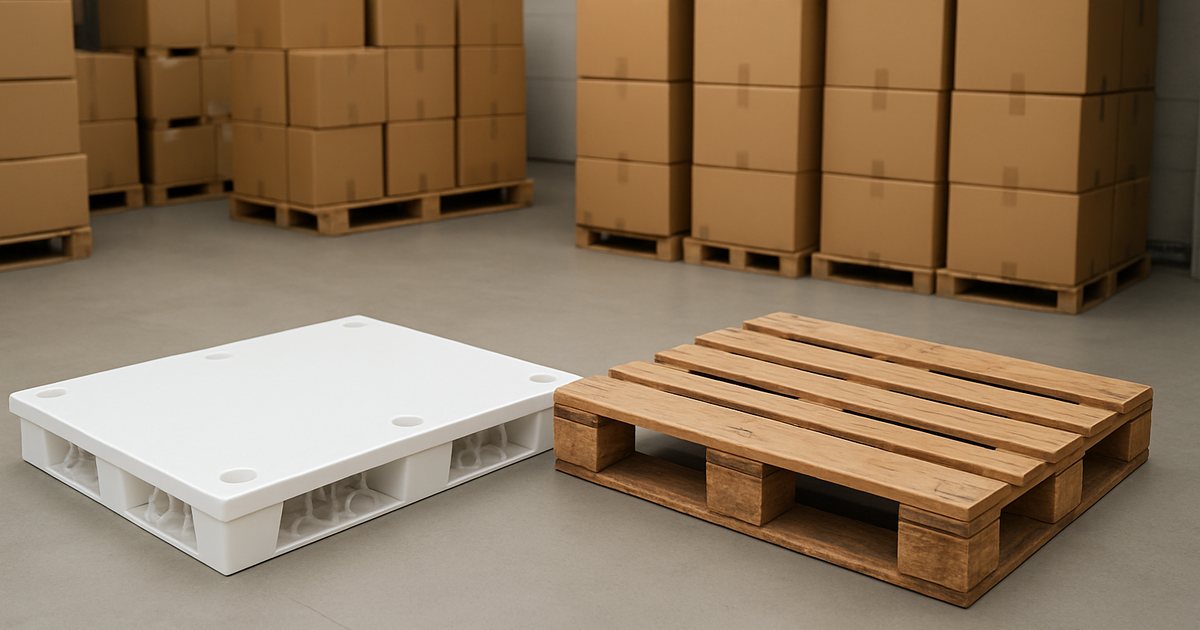
PP honeycomb pallets, flight cases, and reusable containers leverage the material's impact resistance, light weight, and recyclability. An 800x1200mm PP honeycomb pallet weighs 4-6 kg versus 20-25 kg for a standard wooden pallet and 8-12 kg for an aluminum equivalent. ISPM 15 compliance is automatic because there is no wood to fumigate.
Sustainability-Driven Projects
PP honeycomb panels are a mono-material system — the core, face sheets, and bonding are all polypropylene. This means 100% recyclability in standard PP recycling streams. Aluminum honeycomb panels require mechanical separation of the aluminum core from dissimilar face sheet materials (fiberglass, Nomex, etc.) before recycling, making the process more complex and expensive.
Cost Analysis: Total Cost of Ownership
Raw material cost favors PP honeycomb by 50-70%, but the real savings come from downstream processing and lifecycle costs:
| Cost Factor | Aluminum Honeycomb | PP Honeycomb |
|---|---|---|
| Panel cost (20mm, per m²) | $35-80 | $15-35 |
| Cutting & machining | Requires metalworking tools | Standard woodworking tools |
| Corrosion protection | Coating or anodizing required | None needed |
| Weight-related fuel savings (10yr) | Baseline | +$3,000-8,000 per vehicle |
| End-of-life recycling | Complex (mixed materials) | Simple (mono-material PP) |
For a truck body builder producing 500 units per year, switching from aluminum honeycomb to PP honeycomb panels saves approximately $2,000-4,000 per vehicle in material costs alone — before accounting for processing simplification and weight-related fuel savings.
How to Decide
Choose aluminum honeycomb if:- Operating temperature exceeds 80°C
- Application requires non-combustible fire rating
- Specified by an existing aerospace or defense program
- Mechanical loads require compressive strength above 2.5 MPa
- Operating temperature stays below 80°C
- Moisture, chemical, or corrosion exposure is expected
- Weight reduction is a primary design goal
- Cost is a significant factor
- Recyclability or sustainability is required
- Application is in vehicles, RVs, construction, or logistics
Frequently Asked Questions
Can PP honeycomb panels replace aluminum honeycomb in all applications?
No. Aluminum honeycomb is irreplaceable in high-temperature (above 80°C), aerospace, and applications requiring non-combustible fire ratings. For ground transportation, construction, marine, and logistics applications operating below 80°C, PP honeycomb is typically the better choice on performance, cost, and weight.
Which honeycomb panel has better impact resistance?
PP honeycomb panels absorb impact energy through elastic deformation of the polypropylene cells — they flex and recover. Aluminum honeycomb cells permanently deform (crush) on impact, which is actually desirable in aerospace energy-absorption applications but undesirable in vehicle body panels where dent resistance matters. For vehicle body panels, PP honeycomb wins.
Is PP honeycomb strong enough for structural applications?
Yes. PP honeycomb panels with continuous glass fiber reinforced face sheets (CFRT) achieve flexural strengths of 15-35 MPa — sufficient for truck body walls, RV floors, and construction partitions. The compressive strength of our 8mm cell core exceeds 1.5 MPa, supporting point loads of 150+ kg on a 100 cm² area.
How does fire performance compare?
Aluminum honeycomb is non-combustible. PP honeycomb is combustible but self-extinguishing when formulated with flame-retardant additives. Our FR-grade PP honeycomb panels meet FMVSS 302 (burn rate below 102 mm/min) and EN 45545 HL1-HL2. For HL3 applications, we recommend our aluminum-face sandwich panels.
Can you produce custom panel sizes?
Yes. We manufacture PP honeycomb panels up to 2,440mm wide and 12,000mm long in thicknesses from 8mm to 50mm. Cell sizes from 6mm to 25mm. Custom face sheet combinations (fiberglass, PET, carbon fiber, aluminum) available on orders above 500 m².
Related Guides
- PP Honeycomb Panel: Properties, Applications & Manufacturing Guide
- Honeycomb Core Panel: Structure, Types & Performance Data
- Carbon Fiber Honeycomb Panel: Strength, Weight & Applications
- Sandwich Panel Construction: Core Materials, Skins & Bonding Methods
- CFRT vs FRP vs Aluminum: Composite Panel Comparison
Need Help Choosing?
Our engineering team can review your application requirements and recommend the right panel configuration — including core material, cell size, face sheet type, and panel thickness. Contact us with your specifications for a free consultation.