
Market Snapshot: Where We Are in 2026
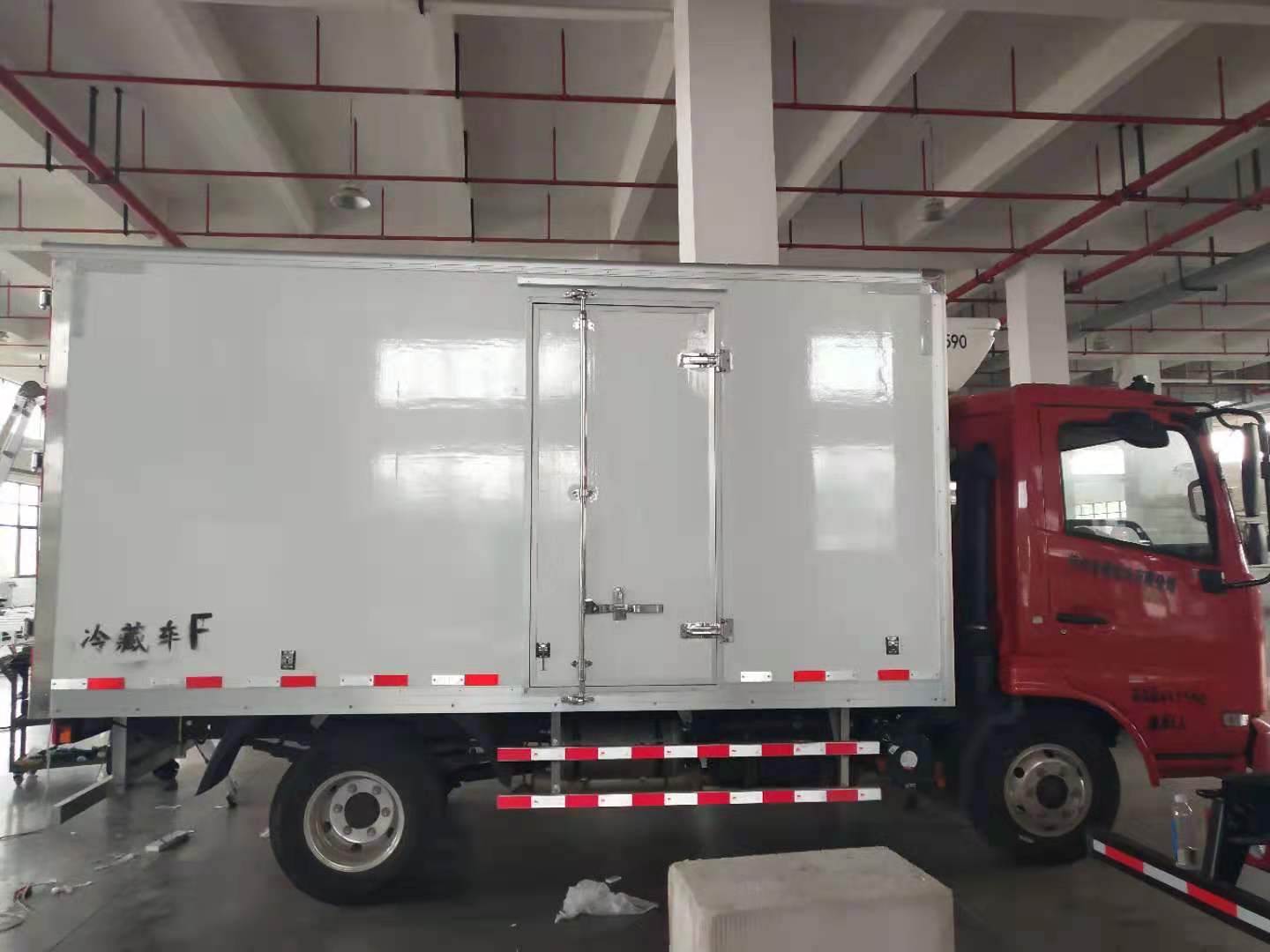
The global refrigerated truck body market is valued at approximately $10.9 billion in 2026 and is projected to reach $14.3 billion by 2032, growing at a CAGR of 4.5-6.0%. But behind these aggregate numbers are structural shifts that are reshaping how reefer bodies are designed, manufactured, and sourced.
Three forces are converging to transform this market in 2026:
This article analyzes each trend from a manufacturer's perspective and explains what it means for body builders, fleet operators, and procurement decision-makers.
Trend 1: Cold Chain Expansion Is the Primary Growth Engine
The Numbers
Global food loss between farm and consumer is estimated at 30-40% in developing countries, primarily due to lack of cold chain infrastructure. The economic cost exceeds $400 billion annually. Governments and international development agencies are responding with massive cold chain investment programs:
| Region | Cold Chain Investment (2024-2030) | Key Drivers |
|---|---|---|
| India | $15 billion (National Cold Chain Mission) | 25-30% food loss, 1.4B population |
| Africa (sub-Saharan) | $8 billion (collective, multiple programs) | 40%+ food loss, urbanization |
| Southeast Asia | $6 billion (ASEAN cold chain plan) | E-commerce growth, food safety regulation |
| Middle East | $4 billion (Saudi Vision 2030, UAE food security) | Food import dependency (80-90%) |
| Latin America | $5 billion (Brazil, Mexico, Colombia programs) | Agricultural exports, domestic distribution |
*Source: World Bank, FAO, IFC cold chain reports 2025-2026*
What This Means for Reefer Body Manufacturers
The traditional reefer body market was concentrated in North America, Europe, and Japan — mature markets with replacement-cycle demand. The growth is now coming from markets that are building cold chains from scratch.
These emerging markets have fundamentally different requirements:
- Price sensitivity is extreme — a reefer body that costs $25,000 in Europe must be available for $8,000-15,000 for Africa and Southeast Asia
- Local assembly is preferred — CKD/SKD models reduce import costs and create local jobs (see our CKD truck body guide)
- Service infrastructure is limited — bodies must be repairable with basic tools and locally available materials
- Road conditions are harsh — bodies must withstand unpaved roads, overloading, and extreme heat
Trend 2: Material Revolution — From Metal to Composites
The Problem with Traditional Reefer Body Construction
Traditional refrigerated truck bodies use a construction that has barely changed in 40 years: galvanized steel or aluminum skins bonded to plywood or steel frames, with PU foam injected between the inner and outer skins.
This construction has serious limitations:
| Problem | Cause | Impact |
|---|---|---|
| Moisture damage | Plywood framing absorbs water through scratches/joints | Structural failure after 3-5 years |
| Thermal bridging | Metal frames conduct heat through the insulation | 15-25% loss of effective R-value |
| Weight | Steel/aluminum skins + metal framing | Reduced payload capacity |
| Corrosion | Steel rusts in coastal/humid/wash-down environments | Shortened body life |
| Repair cost | Damage to metal skin requires body shop work | $500-2,000 per incident |
The Composite Alternative
Composite sandwich panels — CFRT, FRP, or PP honeycomb with appropriate skins and PU foam or PP honeycomb core — solve every one of these problems:
| Property | Traditional (steel + plywood + PU) | Composite (CFRT + PU foam core) | Improvement |
|---|---|---|---|
| Panel weight (per m2) | 12-18 kg | 5-8 kg | 40-60% lighter |
| Thermal conductivity | 0.040-0.050 W/mK (with bridges) | 0.022-0.028 W/mK (no bridges) | 40-55% better |
| Water absorption | 8-15% (plywood frame) | < 0.1% | Virtually eliminated |
| Corrosion | Steel/aluminum skins corrode | Composite skins immune | Eliminated |
| Effective R-value (50mm wall) | R-8 to R-12 (with thermal bridging) | R-14 to R-18 (no bridging) | 30-50% higher |
| Body lifespan | 5-8 years | 12-15+ years | 2x longer |
*Source: HOTECH factory testing and fleet operator feedback*
Key insight: The effective insulation performance of composite reefer bodies is 30-50% higher than traditional construction — not because the insulation material is different (both use PU foam), but because composite construction eliminates thermal bridging through metal frames. This translates directly to lower fuel consumption for the refrigeration unit and better temperature stability.Adoption Timeline
| Region | Composite Adoption (reefer bodies) | Primary Material | Growth Rate |
|---|---|---|---|
| Europe | 45-55% (2026 estimate) | FRP, transitioning to CFRT | 8-10% CAGR |
| China | 60-70% | FRP + PP honeycomb | 12-15% CAGR |
| North America | 30-40% | FRP | 5-7% CAGR |
| Middle East | 20-30% | FRP | 10-12% CAGR |
| Africa | 10-15% | FRP (mostly imported) | 15-20% CAGR |
| Southeast Asia | 15-25% | Mixed | 12-15% CAGR |
Europe and China are the most advanced markets for composite reefer bodies, driven by weight regulations (EU weight limits) and environmental policy (EU ELV recyclability requirements favor CFRT). Africa and Southeast Asia have the highest growth rates, starting from low baselines.
Trend 3: Multi-Temperature Bodies Are Growing Fast
What Is a Multi-Temperature Body?
A multi-temperature reefer body contains two or more independently controlled temperature zones within a single cargo area. For example:
- Zone 1 (frozen): -20°C for ice cream, frozen meat, seafood
- Zone 2 (chilled): +2 to +4°C for dairy, produce, beverages
- Zone 3 (ambient): +15°C for dry goods, bakery products
Why Multi-Temperature Is Growing
The economics are compelling for urban last-mile delivery:
| Metric | Single-Temp Fleet (3 trucks) | Multi-Temp Fleet (1 truck, 3 zones) |
|---|---|---|
| Vehicles needed | 3 | 1 |
| Drivers | 3 | 1 |
| Fuel cost per route | 3x | 1x (+ 15% for multi-temp compressor) |
| Insurance/registration | 3x | 1x |
| Stops per route | Split across 3 trucks | All on 1 truck |
| Total operating cost | 3x baseline | 1.15x baseline |
Multi-temperature bodies cost 40-60% more than single-temperature bodies but eliminate 2 vehicles and 2 drivers from the fleet. The payback period is typically 6-12 months for urban distribution operations.
Construction Challenges
Multi-temperature bodies require:
- Insulated partition walls between zones (movable or fixed)
- Multiple evaporator units or a single multi-zone compressor
- Separate thermometer and control for each zone
- Independent door access to each zone (often side doors + rear doors)
Trend 4: IoT and Telematics Integration
What Is Being Monitored
Modern reefer bodies are becoming sensor-rich environments:
| Parameter | Sensor Type | Regulation Driver |
|---|---|---|
| Cargo temperature | Multi-point wireless | FDA FSMA (US), EU 37/2005, HACCP |
| Door open/close events | Magnetic switch | Cold chain compliance |
| GPS location | Cellular/satellite | Fleet management |
| Refrigeration unit status | CAN bus interface | Preventive maintenance |
| Humidity | Capacitive sensor | Pharmaceutical (GDP compliance) |
| Shock/vibration | Accelerometer | High-value cargo, insurance |
Impact on Body Design
Telematics integration affects reefer body construction in several ways:
- Sensor mounting provisions must be designed into panel construction (recessed pockets, cable channels)
- Antenna placement (cellular, GPS) requires non-metallic panel areas — composite bodies provide better signal transmission than metal bodies
- Wire routing through insulated panels must not compromise thermal integrity
- Data logger mounting in the driver cab area requires a cable pass-through with moisture seal
Trend 5: Sustainability and Regulatory Pressure
EU End-of-Life Vehicle Directive
The updated EU ELV directive (effective 2025-2027 implementation) requires 95% vehicle recyclability by weight. This directly impacts reefer body material choice:
- CFRT panels: 100% recyclable (thermoplastic) — fully compliant
- FRP panels: Not recyclable (thermoset) — problematic for EU compliance
- Aluminum/steel: Recyclable — compliant
- PU foam insulation: Difficult to recycle — being targeted by EU regulators
Electric Refrigeration Units
Diesel-powered trailer refrigeration units (TRUs) are being phased out in several jurisdictions:
- California: CARB regulation requires zero-emission TRUs by 2029
- EU: Major cities implementing low-emission zones that restrict diesel TRUs
- UK: Similar regulations expected by 2030
What This Means for Your Business
If You Are a Truck Body Builder
If You Are a Fleet Operator
If You Are a Procurement Manager
Frequently Asked Questions
What is the current market size for refrigerated truck bodies?
The global refrigerated truck body market is approximately $10.9 billion in 2026, projected to reach $14.3 billion by 2032 at a 4.5-6.0% CAGR. Growth is driven primarily by cold chain expansion in emerging markets (Africa, Southeast Asia, Latin America) and food safety regulatory requirements in developed markets.
How much does a refrigerated truck body cost?
Prices vary dramatically by market and specification. In China, a standard 4.2m composite reefer body costs $3,000-6,000 FOB. In North America, equivalent bodies cost $15,000-30,000. European bodies with multi-temperature and telematics run $20,000-40,000. CKD kits from China offer the best value for emerging market buyers at $4,000-8,000 per kit.
Are composite reefer bodies as strong as metal ones?
Composite sandwich panels (CFRT or FRP with PU foam core) meet or exceed the structural performance of traditional steel-framed bodies for wall panels, roofs, and floors. The composite construction eliminates the metal frame entirely — the sandwich panel is self-supporting. Where point loads are critical (forklift entry, lashing tie-downs), local reinforcements of steel or aluminum are embedded in the composite panel.
How long does a composite refrigerated body last?
Composite reefer bodies typically last 12-15+ years versus 5-8 years for traditional steel-and-plywood construction. The key advantage is moisture immunity — composite panels do not absorb water, rot, or lose insulation value over time. The most common failure mode is mechanical damage (collisions, overloading), not material degradation.
What insulation thickness is needed for frozen cargo?
For maintaining -20°C with ambient temperatures of 35°C, the minimum recommended insulation thickness is 80mm PU foam (or equivalent R-value). The specific thickness depends on the temperature differential, panel thermal conductivity, and the refrigeration unit capacity. HOTECH offers reefer panels in 40mm (chilled), 60mm (light frozen), 80mm (deep frozen), and 100mm (pharmaceutical/ultra-cold) thicknesses.
Partner with HOTECH for Your Reefer Body Program
HOTECH manufactures composite sandwich panels and CKD reefer body kits at our Tongxiang factory with 31 patents and 15 years of production experience. We supply body builders and fleet operators in 30+ countries with standard and custom reefer body solutions.
- Panel options: CFRT, FRP, PP honeycomb, with PU foam insulation from 40-100mm
- Body formats: Fully assembled, CKD flat-pack, or panel-only supply
- Temperature classes: Chilled (+2°C), frozen (-20°C), ultra-cold (-30°C)
- Certifications: ISO 9001, ATP (Agreement on International Transport of Perishable Foodstuffs)

![PP Honeycomb Panel — Properties, Applications & How It's Made [2026]](/images/products/pp-honeycomb-panel.jpg)
