
Quick Answer: Which Panel Wins?
There is no single best material — the right choice depends on your priority. CFRT (Continuous Fiber Reinforced Thermoplastic) panels deliver the highest strength-to-weight ratio and are 100% recyclable. FRP (Fiberglass Reinforced Plastic) panels offer proven durability at moderate cost. Aluminum provides the lowest price per square meter but is heavier and dents more easily.
Here is the decision matrix we use with truck body OEMs who source panels from our factory:
| Priority | Best Choice | Why |
|---|---|---|
| Maximum weight reduction | CFRT | 35-50% lighter than FRP, 60% lighter than aluminum |
| Lowest upfront cost | Aluminum | Cheapest per m2, widely available |
| Best impact resistance | CFRT | Thermoplastic matrix absorbs energy, does not crack |
| Corrosion resistance | CFRT or FRP | Both immune to rust, aluminum needs coating |
| Recyclability / EU compliance | CFRT | 100% recyclable thermoplastic, meets EU ELV directive |
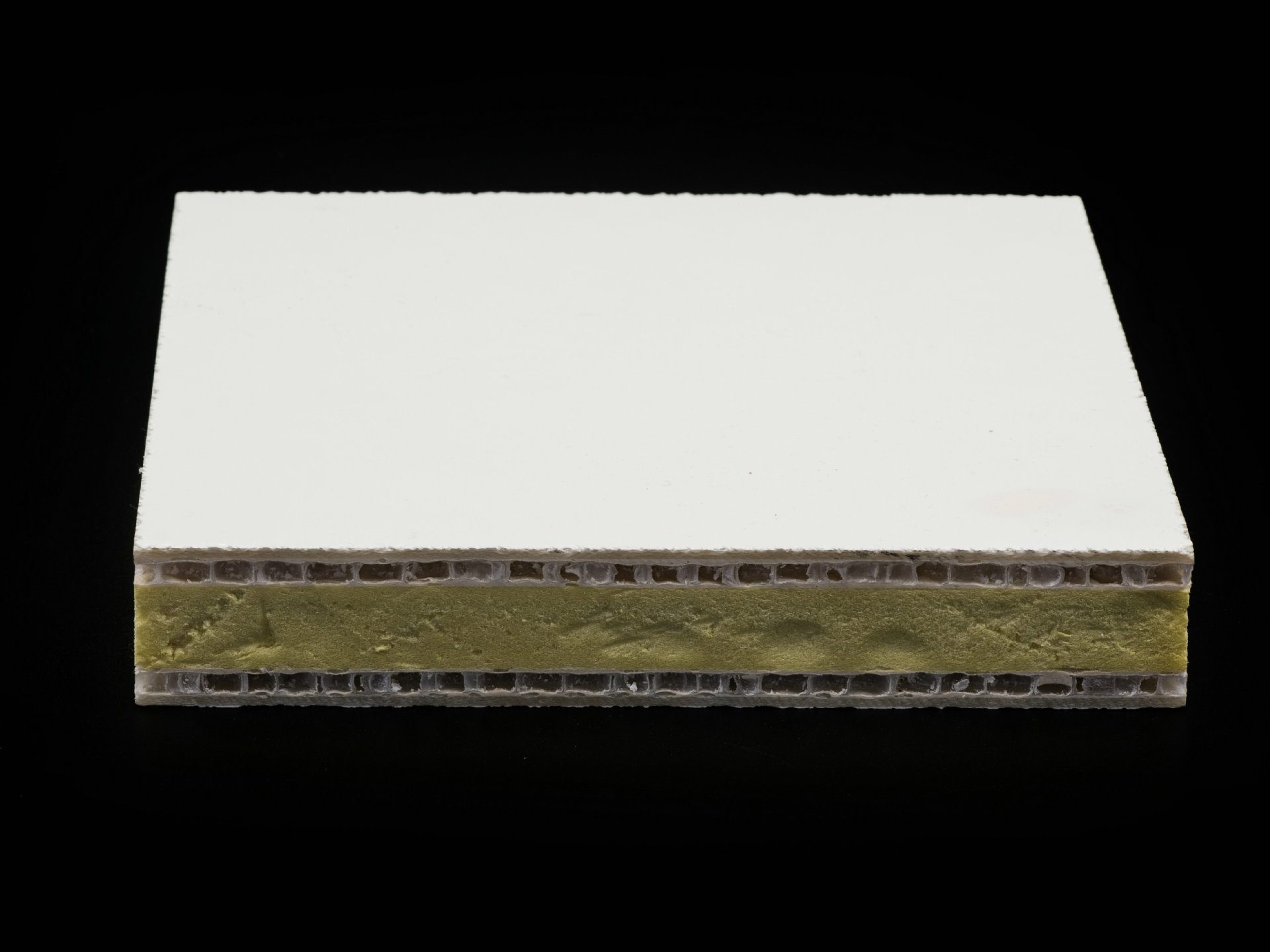
| Thermal insulation (reefer) | FRP sandwich or CFRT sandwich | Foam core provides R-value |
| Color flexibility | Aluminum | Pre-painted in any RAL color, FRP/CFRT standard white |
This guide provides the engineering data behind each option so you can make the right call for your specific truck body program.
Material Fundamentals
What Is CFRT?
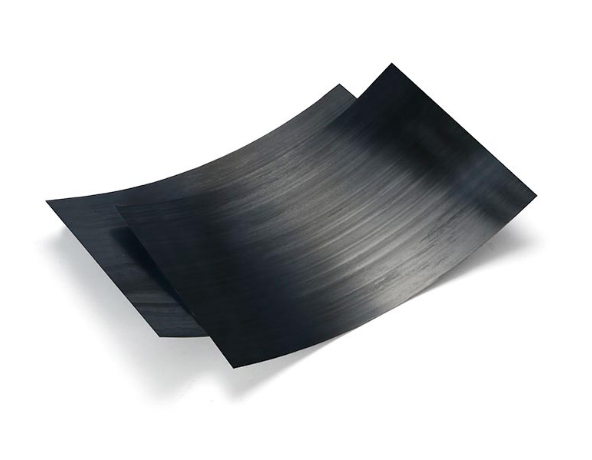
CFRT stands for Continuous Fiber Reinforced Thermoplastic. It consists of continuous glass fibers (or carbon fibers) embedded in a polypropylene (PP) or nylon (PA) thermoplastic matrix. Unlike traditional FRP which uses thermoset resins (polyester, vinyl ester, epoxy), CFRT uses thermoplastic resin that can be reheated, reshaped, and recycled.
At HOTECH, we manufacture CFRT panels using unidirectional glass fiber tapes consolidated with PP resin at 200-220°C. The continuous fiber orientation gives CFRT significantly higher tensile strength than random-fiber FRP — typically 400-600 MPa versus 100-200 MPa for standard FRP.
What Is FRP?
FRP (Fiberglass Reinforced Plastic), also called GRP (Glass Reinforced Plastic), is the most widely used composite for truck bodies worldwide. It consists of chopped or woven glass fibers embedded in a thermoset polyester or vinyl ester resin. FRP has been used in truck body construction for 40+ years and has a proven track record.
Standard FRP truck body panels use chopped strand mat (CSM) construction with gel coat finish. Higher-performance variants use woven roving or multiaxial fabrics. FRP panels are typically bonded to plywood, foam, or honeycomb cores to create sandwich structures.
Aluminum in Truck Bodies
Aluminum sheet (typically 5052-H32 or 3003 alloy, 1.0-2.0mm thickness) is the traditional material for truck body skins, especially in North America. Aluminum offers low cost, moderate weight, and easy repair. However, it dents easily, corrodes in coastal/salt environments, and provides no thermal insulation by itself.
Head-to-Head Performance Comparison
Mechanical Properties
| Property | CFRT (GF/PP, 1.5mm) | FRP (CSM, 2.0mm) | Aluminum (5052, 1.5mm) | Test Standard |
|---|---|---|---|---|
| Tensile Strength | 400-600 MPa | 100-180 MPa | 190-260 MPa | ISO 527 / ASTM D638 |
| Flexural Strength | 350-500 MPa | 150-250 MPa | 190-260 MPa | ISO 178 |
| Flexural Modulus | 18-25 GPa | 6-10 GPa | 70 GPa | ISO 178 |
| Impact Resistance (Charpy) | 80-120 kJ/m2 | 40-80 kJ/m2 | 30-50 kJ/m2 | ISO 179 |
| Density | 1.4-1.6 g/cm3 | 1.5-1.8 g/cm3 | 2.68 g/cm3 | — |
| Areal Weight (typical panel) | 2.0-2.5 kg/m2 | 3.0-4.0 kg/m2 | 4.0-5.4 kg/m2 | — |
| Water Absorption (24h) | < 0.1% | 0.5-2.0% | 0% | ISO 62 |
| UV Resistance | Good (with stabilizer) | Good (gel coat) | Excellent | — |
*Source: HOTECH factory test data, tested at our Tongxiang laboratory per ISO standards*
Key insight: CFRT delivers 2-3x the tensile strength of FRP at lower areal weight. This means you can use thinner CFRT skins to achieve the same structural performance — or use the same thickness for dramatically higher impact resistance.Weight Comparison: A 4.2m Box Truck Body
| Component | CFRT Sandwich | FRP Sandwich | Aluminum + Insulation |
|---|---|---|---|
| Side walls (2x) | 84 kg | 130 kg | 170 kg |
| Roof | 38 kg | 58 kg | 72 kg |
| Floor | 95 kg | 145 kg | 180 kg |
| Front wall | 28 kg | 42 kg | 55 kg |
| Rear door frame | 35 kg | 50 kg | 65 kg |
| Total body weight | 280 kg | 425 kg | 542 kg |
| Weight savings vs. aluminum | 48% | 22% | Baseline |
*Based on HOTECH CKD truck body data for standard 4.2m dry freight box*
A 262 kg weight saving (CFRT vs. aluminum) translates to 262 kg more payload capacity per trip — or approximately 3-5% fuel savings at full load based on fleet data from our customers.
Cost Analysis: More Than Just Material Price
Per-Square-Meter Material Cost
| Material | Raw Material Cost | Fabrication Cost | Total Panel Cost |
|---|---|---|---|
| CFRT sandwich (20mm, GF/PP + PP honeycomb core) | $12-18/m2 | $5-8/m2 | $17-26/m2 |
| FRP sandwich (20mm, CSM + PU foam core) | $8-14/m2 | $6-10/m2 | $14-24/m2 |
| Aluminum (1.5mm 5052 + 40mm PU insulation) | $6-10/m2 | $8-14/m2 | $14-24/m2 |
CFRT has a 10-20% price premium over FRP and aluminum. But material cost per square meter only tells part of the story.
Total Cost of Ownership (5-Year Fleet)
| Cost Factor | CFRT | FRP | Aluminum |
|---|---|---|---|
| Panel material | $4,500 | $3,800 | $3,600 |
| Assembly labor | $800 | $1,200 | $1,500 |
| Fuel savings (payload advantage) | -$3,500 | -$1,800 | $0 |
| Repair/maintenance (5 years) | $200 | $600 | $1,200 |
| Resale value premium | +$800 | +$400 | $0 |
| 5-Year TCO | $1,200 | $3,400 | $6,300 |
*Assumptions: 100,000 km/year, diesel at $1.20/liter, 8L/100km fuel consumption, 3% fuel saving per 250kg weight reduction. Repair costs from fleet operator survey (n=12).*
Key takeaway: CFRT has the highest material cost but the lowest total cost of ownership thanks to fuel savings and minimal maintenance. The payback period for the CFRT premium versus aluminum is typically 12-18 months for long-haul fleets.Impact Resistance: Why CFRT Leads
Impact resistance is critical for truck bodies — loading dock collisions, forklift hits, road debris, and hail damage are daily realities.
Aluminum dents permanently. Every dent requires body shop repair or panel replacement. FRP resists small impacts well (the gel coat flexes), but high-energy impacts cause the thermoset matrix to crack and delaminate. Cracked FRP cannot be repaired to original strength — the panel must be replaced. CFRT outperforms both because the thermoplastic PP matrix deforms elastically under impact and returns to shape. Our HOTECH CFRT panels tested per ISO 6603-2 (falling dart impact) show:- Low energy (5J): No visible damage, no delamination, full strength retention
- Medium energy (15J): Small surface deformation, self-recovers within 24 hours, 95% strength retention
- High energy (30J): Visible dent, no cracking or delamination, 80% strength retention
Recyclability and Environmental Compliance
The EU End-of-Life Vehicles (ELV) Directive requires that 95% of vehicle weight must be recoverable (85% recycled, 10% energy recovery). Similar regulations are emerging in Japan, South Korea, and several US states.
| Material | Recyclable? | Method | ELV Compliant? |
|---|---|---|---|
| CFRT | Yes, 100% | Shred and remelt PP matrix, recover glass fiber | Yes |
| FRP | No (thermoset) | Landfill or incineration only | No (problematic) |
| Aluminum | Yes, partially | Remelt (high energy consumption) | Yes |
This is CFRT's strongest competitive advantage for the European market. Several major European truck OEMs are actively transitioning from FRP to CFRT specifically to meet ELV recycling targets. HOTECH supplies CFRT panels to body builders in Germany, Poland, and Turkey for exactly this reason.
Application-Specific Recommendations
Dry Freight / Box Trucks
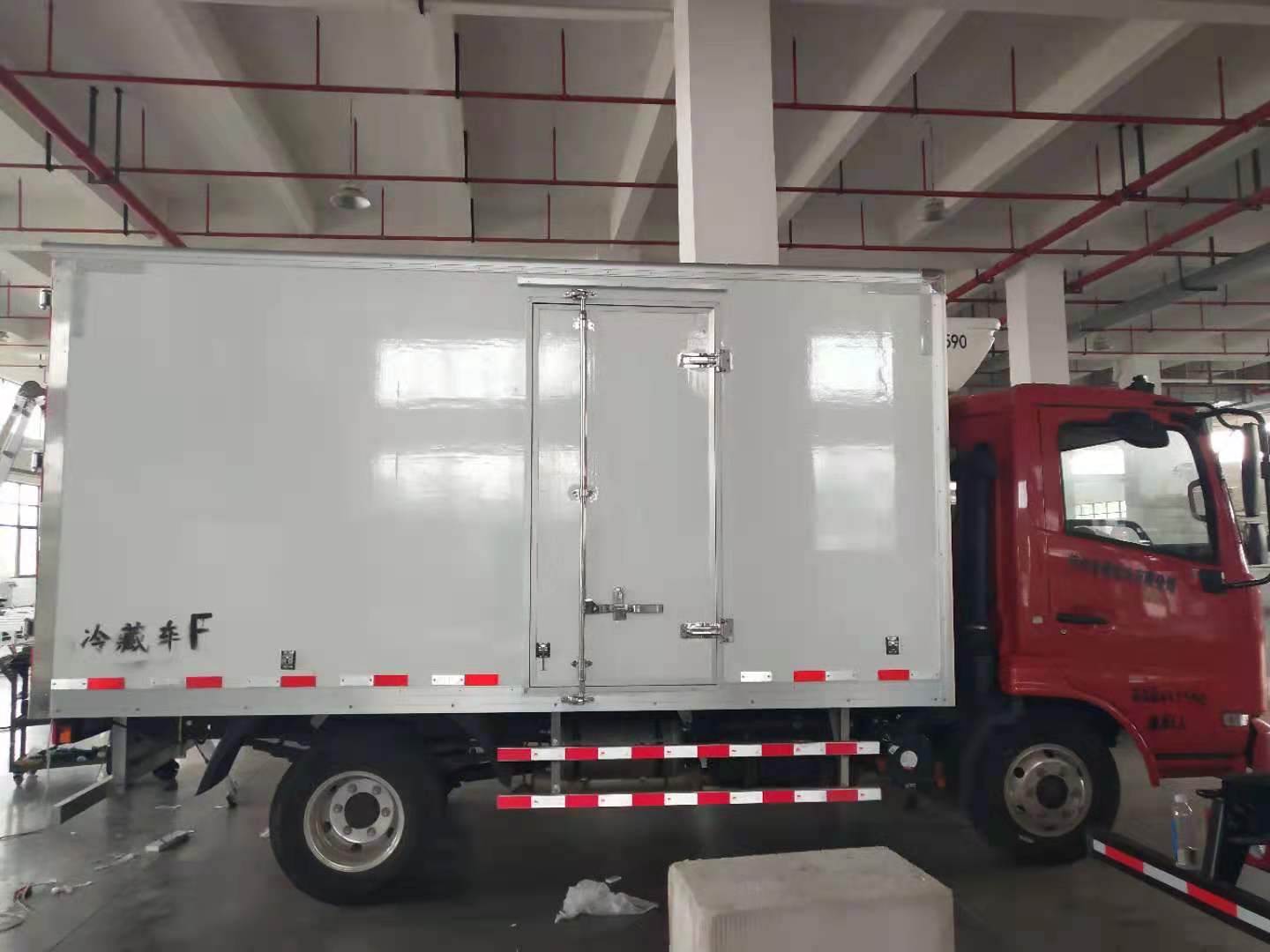
Recommended: CFRT sandwich panels — maximum payload capacity, excellent impact resistance for loading dock operations, 100% recyclable.Alternative: FRP sandwich if CFRT cost premium is not justified by payload requirements.
See our dry freight body solutions for standard panel specifications.
Refrigerated Trucks (Reefers)
Recommended: CFRT skin + PU foam core sandwich — CFRT skins provide moisture barrier and impact resistance, PU foam core provides R-value insulation (R-20 to R-30 depending on thickness).Alternative: FRP skin + PU foam core is the current industry standard.
See our refrigerated body solutions for insulated panel specifications.
RV and Motorhome Bodies
Recommended: PP honeycomb sandwich panels — best balance of weight, insulation, waterproofing, and cost. CFRT skins optional for premium RVs requiring maximum durability.See our RV construction materials guide for detailed comparison.
Logistics Containers and Swap Bodies
Recommended: CFRT or FRP sandwich — both outperform aluminum for intermodal containers that experience rough handling and stacking loads.How to Evaluate Panel Suppliers
When sourcing CFRT, FRP, or sandwich panels from any manufacturer, request these items:
HOTECH provides complete technical documentation, third-party test certificates, and CKD assembly support for all our panel products.
Frequently Asked Questions
Can CFRT panels be repaired in the field?
Yes. Minor damage can be repaired using a hot air gun (200-220°C) to locally remelt the PP matrix. For larger damage, a CFRT patch can be thermally welded over the damaged area. This is a significant advantage over FRP, which requires grinding, resin application, and a 24-hour cure time for repairs.
What is the maximum panel size HOTECH can produce?
Our production line handles panels up to 2,500mm wide and 12,000mm long in a single piece. For longer panels, we use butt-joint splicing with CFRT tape reinforcement. Standard truck body wall panels (2,400 x 6,000mm) are produced as single pieces without joints.
Does CFRT fade or yellow in sunlight?
CFRT panels with UV-stabilized PP matrix and gel coat or film surface finish resist yellowing for 10+ years in outdoor exposure. We add 0.3-0.5% Tinuvin 770 UV stabilizer to the PP matrix. For additional protection, painted or film-laminated surfaces are available.
How do composite panels perform in extreme cold?
All three materials (CFRT, FRP, aluminum) maintain structural integrity down to -40°C. However, CFRT's impact resistance advantage becomes even more pronounced at low temperatures because the PP matrix remains ductile, while FRP becomes more brittle. For refrigerated trucks operating in cold chains, this is an important consideration.
What is the fire performance of CFRT panels?
HOTECH CFRT panels are tested and certified to ECE R118 (European vehicle interior fire safety) and FMVSS 302 (US vehicle flammability standard). PP is self-extinguishing when flame-retardant additives (typically Mg(OH)2 or APP) are incorporated into the matrix. We offer standard (B2) and flame-retardant (B1) grades.
Ready to Evaluate Composite Panels for Your Truck Bodies?
HOTECH manufactures CFRT, FRP, and PP honeycomb sandwich panels at our Tongxiang factory with 31 patents and 15 years of composite panel production experience. We supply panels as flat stock, pre-cut kits, or complete CKD truck body assemblies.
![PP Honeycomb Panel — Properties, Applications & How It's Made [2026]](/images/products/pp-honeycomb-panel.jpg)
