The Problem with Single-Use Packaging
Global supply chains consume approximately 900 million tons of packaging annually. Corrugated cardboard accounts for roughly 40% of this volume. For B2B shipping — automotive parts, electronics components, food ingredients, industrial equipment — corrugated boxes are the default. They are cheap, widely available, and recyclable.
They are also structurally weak when wet, limited to 5-15 reuse cycles under ideal conditions (and often just 1-2 cycles in practice), and responsible for an enormous waste stream. A medium-sized automotive parts supplier ships 50,000-200,000 corrugated boxes per year. At $2-8 per box, that is $100,000-1,600,000 annually in packaging that is used once and discarded.
PP (polypropylene) honeycomb reusable packaging offers an alternative: boxes, trays, dividers, and pallets that survive 200+ reuse cycles, resist water and chemicals, and collapse flat for return shipping. The upfront cost is 5-10x higher per unit, but the cost per trip is 60-80% lower.
PP Honeycomb vs. Corrugated Cardboard: Head-to-Head
| Property | PP Honeycomb Box | Corrugated Cardboard Box |
|---|---|---|
| Material | Polypropylene honeycomb panel | Recycled/virgin kraft paper |
| Weight (standard 600x400x300mm) | 1.8-3.0 kg | 0.8-1.5 kg |
| Wall Thickness | 5-10mm | 3-7mm (single to double wall) |
| Edge Crush Test (ECT) | 15-40 kN/m | 5-15 kN/m |
| Burst Strength | 2000-5000 kPa | 800-2000 kPa |
| Max Load Capacity | 200-500 kg | 15-40 kg |
| Water Resistance | Excellent (< 0.1% absorption) | Poor (absorbs moisture, collapses) |
| Chemical Resistance | Excellent (acids, alkalis, oils) | Poor (dissolves in water, stains with oils) |
| Dust Generation | Zero | Significant (fiber shedding) |
| Reuse Cycles | 200-500+ | 1-15 (typically 1-5) |
| Collapsible for Return | Yes (folds flat, 80% volume reduction) | Yes (but degrades with each fold) |
| Operating Temperature | -40 to +80C | -20 to +60C (weakens above 40C with humidity) |
| Recyclability | 100% (single-material PP) | Yes (but contaminated boxes are not recyclable) |
| Unit Cost | $15-60 | $2-8 |
| Cost per Trip | $0.03-0.30 | $2-8 |
Cost-Per-Trip Analysis: Real Numbers
Let's model three common scenarios to show the lifecycle economics:
Scenario 1: Automotive Parts Supply Chain
An auto parts manufacturer ships 100,000 boxes per year to 5 assembly plants, with boxes returning empty on return trucks (closed-loop logistics already in place).
| Factor | Corrugated (single-use) | PP Honeycomb (reusable) |
|---|---|---|
| Units needed | 100,000/year | 2,000 (50 trips/year x 2,000 = 100,000 shipments) |
| Unit cost | $5 each | $45 each |
| Annual purchase cost | $500,000 | $90,000 (Year 1 only) |
| Years 2-5 purchase cost | $500,000/year | $9,000/year (5% replacement) |
| Disposal cost | $25,000/year (recycling/waste) | $0 (reuse) |
| 5-year total cost | $2,625,000 | $126,000 |
| 5-year savings | Baseline | $2,499,000 (95% reduction) |
Even accounting for return shipping costs ($0.30-0.80 per empty box per trip using existing return truck space), the reusable system saves over $2 million in 5 years for this scenario.
Scenario 2: Electronics Component Distribution
An electronics distributor ships 30,000 boxes per year to various customers (open-loop logistics — boxes must be returned via reverse logistics program).
| Factor | Corrugated | PP Honeycomb (reusable) |
|---|---|---|
| Units needed | 30,000/year | 3,000 (10 trips/year, longer return cycle) |
| Unit cost | $6 each | $35 each |
| Annual purchase cost | $180,000 | $105,000 (Year 1) |
| Return logistics cost | $0 | $30,000/year ($1/box return shipping) |
| Years 2-5 purchase cost | $180,000/year | $5,250/year (5% replacement) + $30,000 return |
| 5-year total cost | $900,000 | $245,250 |
| 5-year savings | Baseline | $654,750 (73% reduction) |
Even with paid return shipping in an open-loop system, the savings are substantial. The breakeven point is reached after the 3rd reuse cycle — meaning the investment pays for itself within the first year.
Scenario 3: Food Ingredient Supply (Cold Chain)
A food company ships 20,000 boxes per year of temperature-sensitive ingredients. Corrugated boxes fail in cold chain environments due to condensation.
| Factor | Corrugated + Liner | PP Honeycomb |
|---|---|---|
| Units needed | 20,000/year | 2,500 (8 trips/year) |
| Unit cost | $8 each (with moisture liner) | $50 each |
| Product damage rate | 2-4% ($200,000-400,000 loss) | < 0.1% ($10,000 loss) |
| Cleaning/sanitation | Not possible (discard) | Washable (FDA-compliant PP) |
| Annual packaging cost | $160,000 | $125,000 (Year 1) |
| Product damage avoided | Baseline | $190,000-390,000/year |
| 5-year total net cost | $2,800,000+ | $287,500 |
In cold chain applications, the avoided product damage alone justifies the switch — even before counting packaging cost savings.
Product Types and Specifications
PP honeycomb reusable packaging comes in several forms:
Collapsible Boxes
The most common format. Four walls and a base made from PP honeycomb panels (typically 5-8mm thick), connected with PP or metal hinges, collapsing flat for return shipping at 15-20% of assembled volume.
| Size Category | Dimensions (LxWxH mm) | Wall Thickness | Max Load (kg) | Unit Weight (kg) | Price Range |
|---|---|---|---|---|---|
| Small | 400x300x200 | 5mm | 50 | 1.2 | $15-25 |
| Medium | 600x400x300 | 6mm | 150 | 2.5 | $25-40 |
| Large | 800x600x400 | 8mm | 300 | 4.5 | $40-65 |
| Euro Pallet | 1200x800x600 | 10mm | 500 | 8.0 | $80-120 |
Stackable Trays and Totes
Open-top containers for warehouse picking and assembly line supply. PP honeycomb tray walls (3-5mm) with reinforced PP rims for stacking. Each tray supports 3-5 stacking levels when loaded.
Custom Dunnage and Dividers
Internal protective dividers, cell packs, and cushioning inserts for fragile items. PP honeycomb dividers replace corrugated and foam inserts. They absorb impact energy without permanent deformation and do not generate dust or particles — critical for electronics and clean room applications.
Pallets
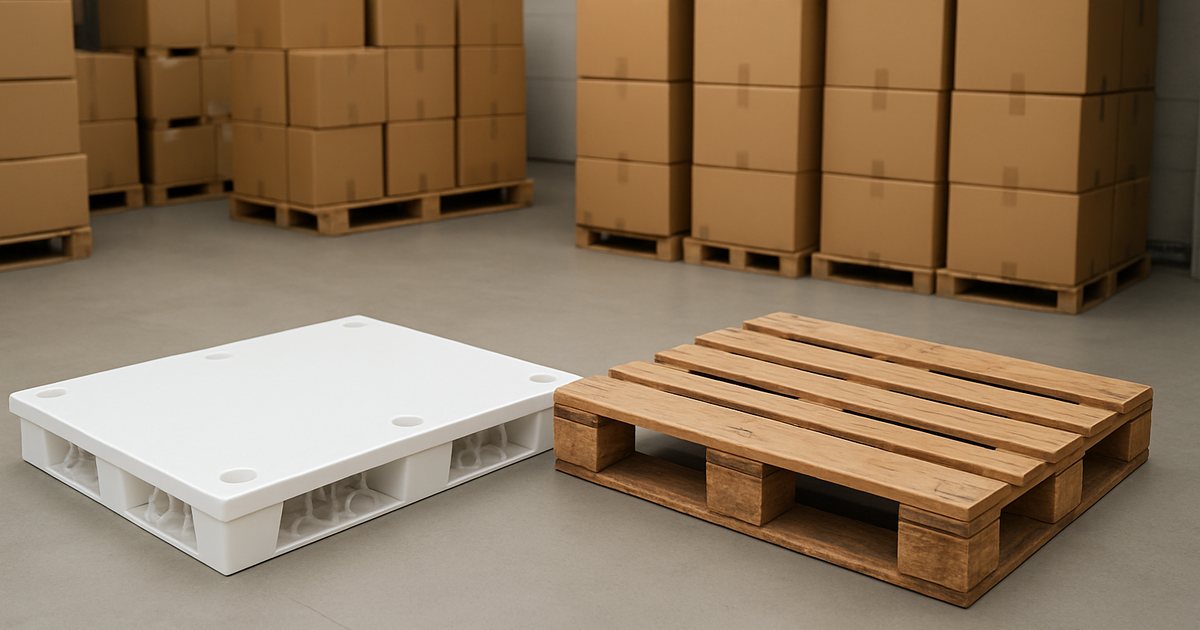
PP honeycomb pallets (see our detailed pallet comparison) weigh 60% less than wood, last 200+ cycles, and require no fumigation for international shipping (ISPM-15 exempt).
Industry-Specific Applications
Automotive Manufacturing
Auto manufacturers are the largest adopters of reusable packaging. Parts travel between tier-1 suppliers and assembly plants on closed-loop routes — the return logistics infrastructure already exists. PP honeycomb boxes eliminate cardboard dust contamination on paint lines, reduce packaging waste handling (a major hidden cost in lean manufacturing), and survive the forklift impacts that destroy corrugated boxes.
Major automotive OEMs including Toyota, Volkswagen, and BMW have mandated reusable packaging for tier-1 suppliers. PP honeycomb is the preferred material because it meets both the structural requirements and the cleanliness standards of automotive assembly environments.
Electronics and Semiconductor
ESD (electrostatic discharge) is the primary concern. Standard PP honeycomb can be manufactured with carbon black loading or conductive additives to achieve surface resistivity of 10^3 to 10^9 ohms per square, meeting ANSI/ESD S20.20 requirements. Combined with zero dust generation and chemical resistance (no outgassing), PP honeycomb is ideal for semiconductor wafer transport, PCB assembly, and component logistics.
Food and Pharmaceutical
PP is FDA-compliant (21 CFR 177.1520) for food contact. PP honeycomb boxes can be pressure-washed, sanitized, and reused in food supply chains — something impossible with corrugated cardboard. For pharmaceutical logistics, the chemical inertness and temperature stability of PP are critical.
Hazardous Materials (DG Packaging)
PP honeycomb boxes can be configured to meet UN packaging requirements for dangerous goods (UN certification testing per 49 CFR Part 178). The chemical resistance of PP handles acids, bases, solvents, and oils that would destroy corrugated containers.
ROI Calculator: When Does Reusable Packaging Pay Off?
The breakeven formula is straightforward:
Breakeven trips = Reusable unit cost / (Single-use unit cost - Reusable per-trip cost)Where reusable per-trip cost includes return shipping and cleaning.
Example: $40 PP honeycomb box, $5 corrugated box, $0.50 per-trip cost for return logistics:
Breakeven = $40 / ($5.00 - $0.50) = 8.9 tripsAfter 9 uses, the reusable box starts saving money on every subsequent trip. Over 200+ reuse cycles, the savings compound to 80-95% cost reduction versus single-use packaging.
Factors That Improve ROI
- Closed-loop logistics (dedicated return routes): Reduces per-trip return cost to near zero
- High shipment frequency (daily or weekly): Faster trip accumulation = faster breakeven
- High single-use cost (custom-printed, reinforced, or lined corrugated): Larger per-trip savings
- Product damage reduction: Avoided damage costs can exceed packaging savings
- Regulatory compliance: ISPM-15 exemption, clean room requirements, or waste reduction mandates
Factors That Reduce ROI
- Open-loop logistics (unknown return paths): Higher per-trip return cost
- Low shipment frequency (monthly or quarterly): Slower breakeven
- Long distances (international shipping with empty return containers): High return freight cost
- High loss rate (theft, damage, unreturned boxes): Faster replacement spend
Environmental Impact
The sustainability argument for reusable packaging is compelling:
| Environmental Metric | Corrugated (100,000 boxes/year, single use) | PP Honeycomb (2,000 boxes, 50 trips/year) |
|---|---|---|
| Raw material consumed | 100-200 tons of paper/year | 0.4-1.0 tons of PP (once) |
| Trees harvested | 600-1,200 trees/year | Zero |
| Water consumed in production | 2,000-5,000 m3/year | 40-100 m3 (once) |
| CO2 emissions (production) | 80-150 tons/year | 1.5-4 tons (once) |
| Waste to landfill/recycling | 100-200 tons/year | < 0.5 tons/year |
| End-of-life | Recycling (with contamination losses) | 100% recycling (single-material PP) |
Over a 5-year period, switching to PP honeycomb reusable packaging reduces raw material consumption by 95-99%, CO2 emissions by 90-95%, and waste generation by 99%+.
For companies with ESG commitments and Scope 3 emission targets, reusable packaging is one of the highest-impact, lowest-cost interventions available.
Implementation Guide
Step 1: Identify High-Volume Closed-Loop Routes
Start with your highest-volume shipping routes where return logistics already exist (e.g., supplier-to-factory or factory-to-warehouse). These routes have the fastest ROI because return shipping cost is near zero.
Step 2: Specify Box Dimensions and Load Requirements
Standardize on the fewest possible box sizes. Each unique size requires a separate tool, increasing upfront costs. Most operations can be served by 2-3 standard sizes plus custom dunnage inserts.
Step 3: Pilot Program (3-6 Months)
Start with 50-100 reusable boxes on a single route. Track: reuse cycles per box, damage rate, return rate, cleaning frequency, and total cost versus corrugated baseline.
Step 4: Scale
Once the pilot validates the economics, roll out across all closed-loop routes. Address open-loop routes last, when reverse logistics processes are mature.
Frequently Asked Questions
How many times can a PP honeycomb box be reused?
Under normal logistics conditions — forklift handling, stacking, loading/unloading — PP honeycomb boxes last 200-500+ reuse cycles. We have customers in automotive supply chains using the same boxes for 8+ years with no structural degradation. The limiting factor is usually cosmetic wear (scratches, scuffs) rather than structural failure. Heavily damaged panels can be replaced individually without discarding the entire box.
Are PP honeycomb boxes suitable for food contact?
Yes. Polypropylene is FDA-compliant (21 CFR 177.1520) for direct food contact. PP honeycomb boxes can be pressure-washed and sanitized between uses. We recommend boxes with sealed edges (thermal-welded PP edge strips) to prevent food debris from entering the honeycomb cells. For HACCP environments, we supply boxes in detectable blue PP for easy identification in case of breakage.
How do PP honeycomb boxes handle extreme temperatures?
PP honeycomb maintains structural integrity from -40C to +80C. This covers cold chain logistics (frozen food at -25C, refrigerated pharma at 2-8C) and hot climate outdoor storage (up to 60-70C in direct sun). At temperatures below -20C, impact resistance decreases slightly but compressive and flexural strength are maintained. Above 80C, the panel begins to soften — not suitable for autoclave or oven environments.
What is the minimum order quantity for custom reusable packaging?
For standard sizes (400x300, 600x400, 800x600mm), our MOQ is 100 units. For fully custom sizes requiring new cutting templates, the MOQ is 200 units. Design and prototyping takes 5-10 business days; production lead time is 15-25 business days. We provide 3D drawings and physical prototypes for approval before production.
Can PP honeycomb boxes be branded or printed?
Yes. PP surfaces accept screen printing, pad printing, and adhesive labels. For permanent branding, we recommend hot-stamp printing which embeds the ink into the PP surface — it withstands pressure washing and chemical exposure without fading. Common markings include company logos, handling instructions, RFID tags, and barcode labels for tracking.
Source Reusable Packaging Solutions
HOTECH manufactures PP honeycomb panels, boxes, trays, dividers, and pallets at our 50,000+ sqm facility in Tongxiang, Zhejiang. We supply standard sizes from stock and custom packaging solutions from 200 units. Our engineering team assists with packaging design optimization, stackability analysis, and logistics integration.
![PP Honeycomb Panel — Properties, Applications & How It's Made [2026]](/images/products/pp-honeycomb-panel.jpg)