Travel Trailer Wall Construction: What's Behind the Skin
A travel trailer wall is a sandwich structure — even if the builder didn't think of it that way. From outside to inside, a typical wall consists of: exterior skin (aluminum or fiberglass), wall backing substrate, framing (wood or aluminum studs), insulation (fiberglass batts or foam), vapor barrier (sometimes), and interior paneling.
The wall backing — also called the exterior substrate — is the structural layer bonded to the outer skin. It provides the rigidity that keeps the wall flat, the surface that the skin adheres to, and the mounting substrate for windows, doors, and accessories. When this layer fails, the entire wall structure is compromised.
Understanding these layers matters because travel trailer wall failures almost always start with the wall backing material absorbing moisture, softening, and delaminating from the outer skin. Choosing the right backing material determines whether your walls last 5 years or 20 years.
Wall Backing Materials Compared
Luan Plywood (Traditional)
Luan (also spelled lauan) is a thin tropical hardwood plywood (2.5–5 mm) that has been the default travel trailer wall backing for decades. It is inexpensive, lightweight, and easy to bond with fiberglass or aluminum skin.
Why it fails: Luan is extremely moisture-sensitive. Any breach in the outer skin seal — a loose window gasket, a cracked sealant joint, a screw hole — allows water to reach the luan substrate. Wet luan swells, delaminates, grows mold, and eventually disintegrates into a pulpy mass. This is the number one structural failure mode in travel trailers over 5 years old. Still used because: Cost. A 4×8 sheet of 3mm luan costs $8–12. No other material comes close at this price point.Azdel (Polypropylene Composite)
Azdel SuperLite is a fiberglass-reinforced polypropylene composite sheet specifically developed as a plywood replacement for RV walls. Several major RV brands (Keystone, Jayco, Winnebago) now use Azdel in their premium models.
Advantages: Waterproof — zero moisture absorption. Approximately 50% lighter than equivalent luan. No mold, no rot, no delamination from moisture. Can be bonded with standard RV adhesives. Limitations: Higher cost than luan ($15–25/m² vs $5–8/m²). Slightly lower stiffness than luan — requires adequate stud spacing (typically 16" or less). Not widely available for aftermarket purchase (primarily OEM supply).Fiberglass Sheet (FRP)
Some builders use a single-layer FRP (fiberglass reinforced plastic) sheet as the wall backing, eliminating the need for a separate backing + skin construction.
Advantages: Waterproof. Moderate stiffness. Available in various thicknesses and textures. Limitations: Without a core material, FRP sheet alone has limited insulation and sound dampening properties. Can crack on sharp impacts. Not a true sandwich — lacks the stiffness-per-weight of a cored panel.PP Honeycomb Composite Panel
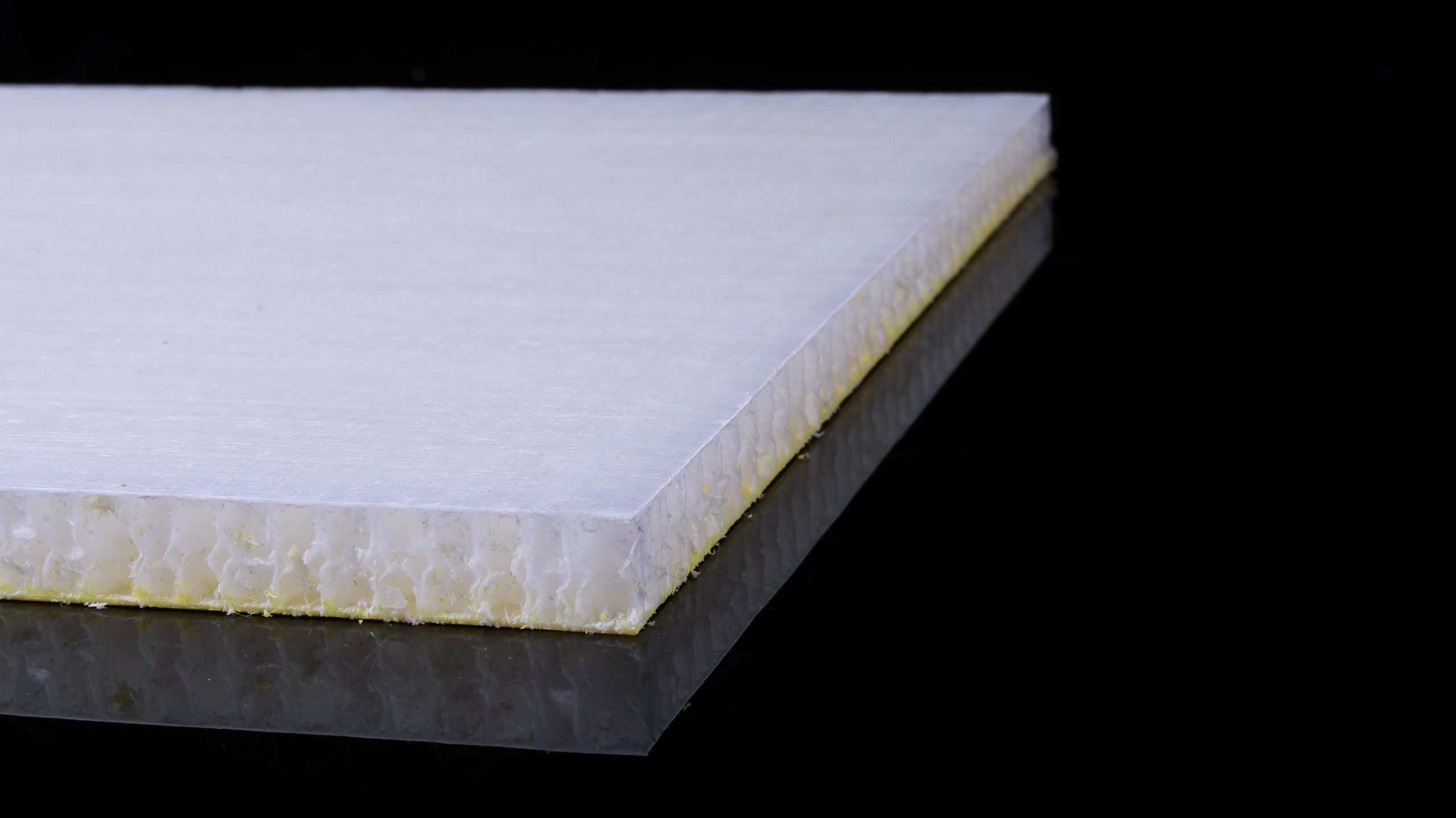
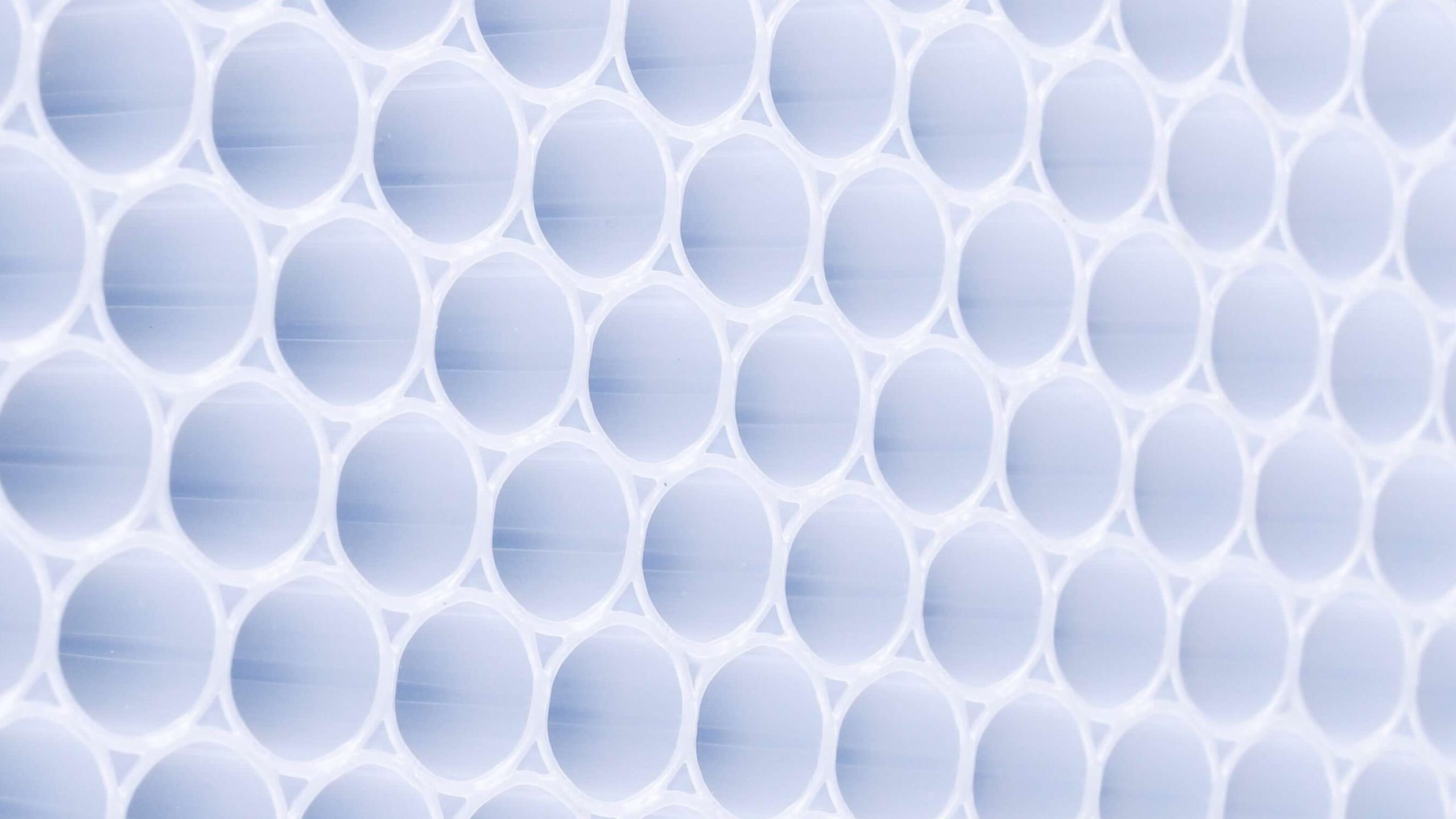
PP honeycomb sandwich panels can serve as both the wall backing and structural panel in a single component — replacing luan backing + insulation + interior paneling with one material.
Advantages: Completely waterproof (< 0.1% absorption). 40–60% lighter than luan at equivalent stiffness. Superior sound insulation (honeycomb dampens vibration). Can include MPP insulation layer for thermal performance. Fully recyclable. No mold or rot pathway — eliminates the primary failure mode of traditional construction. Limitations: Higher material cost than luan. Requires different bonding approach than traditional plywood (thermal lamination or structural adhesive rather than standard contact cement). Less familiar to traditional RV builders.Wall Backing Comparison Table
| Property | Luan Plywood | Azdel SuperLite | FRP Sheet | PP Honeycomb Panel |
|---|---|---|---|---|
| Thickness | 2.5–5 mm | 3–5 mm | 1.5–3 mm | 8–15 mm (full panel) |
| Weight (kg/m²) | 1.5–3.0 | 1.0–1.5 | 2.5–4.5 | 1.8–3.0 (includes insulation) |
| Water Absorption | 12–20% | < 0.1% | < 1% | < 0.1% |
| Mold/Rot Risk | Very high | None | Low | None |
| Stiffness | Moderate | Moderate | Moderate | High (sandwich effect) |
| Sound Dampening | Low | Low | Low | High (honeycomb cells) |
| Cost ($/m²) | $5–8 | $15–25 | $12–20 | $15–25 |
| Includes Insulation | No | No | No | Optional (with MPP layer) |
| Lifespan | 5–8 years* | 15–20 years | 10–15 years | 15–20 years |
*Luan lifespan depends heavily on sealant maintenance. Neglected seals → 3–5 years.
Travel Trailer Floor Materials
The Floor Problem
Travel trailer floors take a beating from three directions: heavy foot traffic and furniture loads from above, road vibration and flexing from below, and moisture intrusion from rain, spills, and condensation. The floor is the most structurally critical panel in the trailer and the most expensive to replace.
Floor Material Options
Standard Plywood (Current Industry Standard)Most travel trailers use 15–19 mm (5/8" – 3/4") plywood for the floor deck. CDX or marine-grade plywood is common. Plywood floors work well when dry but fail when moisture reaches them — which happens through bathroom and kitchen leaks, condensation under refrigerators, and water wicking through unsealed edges and screw penetrations.
Composite Decking (Bamboo, Plastic Lumber)Some premium builders and aftermarket renovators use composite decking materials. These resist moisture better than plywood but are heavier and more expensive. Composite lumber is designed for outdoor deck applications and can be overkill for an interior trailer floor.
CFRT Honeycomb Floor PanelsCFRT (continuous fiber reinforced thermoplastic) honeycomb panels are purpose-built for vehicle floor applications. The anti-slip CFRT surface provides traction even when wet, the honeycomb core distributes loads across the panel surface, and the entire construction is completely waterproof.
Floor Panel Comparison
| Property | Plywood (19mm) | Composite Decking | CFRT Honeycomb (20mm) |
|---|---|---|---|
| Weight (kg/m²) | 10–13 | 14–18 | 5–7 |
| Load Capacity | Good | Good | 500+ kg/m² |
| Water Absorption | 8–15% | 1–3% | < 0.1% |
| Under-Fridge Rot Risk | High | Low | Zero |
| Service Life | 7–10 years | 12–15 years | 15+ years |
| Surface | Needs vinyl/carpet | Built-in texture | Anti-slip CFRT surface |
| Cost ($/m²) | $15–25 | $30–50 | $25–40 |
How to Replace a Travel Trailer Floor
Floor replacement is the most common major renovation for travel trailers over 8 years old. Here is the process overview: