Quick Answer
RV interior wall paneling has evolved far beyond the flimsy luan plywood used in budget factory builds. Today's options include vinyl wall panels, WPC (wood plastic composite) slats, real wood shiplap, FRP liners, and PP honeycomb composite panels. For manufacturers building durable, lightweight RVs, PP honeycomb panels with decorative face sheets combine structural performance, moisture immunity, and design flexibility in a single layer.
The Problem with Factory RV Walls
Most factory-built RVs use 3mm (1/8 inch) luan plywood for interior wall paneling. It is the cheapest option — and it shows. Luan plywood absorbs moisture, warps when humidity changes, dents from minor impacts, and develops mold if water reaches it through a leaking window or roof seal.
The bigger issue: luan is decorative only. It adds no structural value to the wall assembly. The actual wall structure is a sandwich of exterior fiberglass skin, wood framing, foam insulation, and the luan interior liner — each layer bonded with adhesive. When moisture infiltrates this assembly, the whole system fails from the inside out.
Interior Paneling Options Compared
| Material | Weight (kg/m²) | Moisture Resistance | Durability | Look & Feel | DIY Difficulty | Cost/m² |
|---|---|---|---|---|---|---|
| Luan Plywood | 1.5-2.5 | Poor | Low | Budget | Easy | $5-10 |
| Vinyl Panels | 1.0-2.0 | Good | Medium | Modern | Easy | $15-25 |
| Peel-and-Stick Wallpaper | 0.3-0.5 | Fair | Low | Varied | Very Easy | $8-18 |
| WPC Slat Panels | 3.0-5.0 | Good | High | Contemporary | Medium | $25-45 |
| Real Wood Shiplap | 3.5-6.0 | Fair | High | Rustic/Premium | Medium | $20-40 |
| FRP Liner | 2.0-4.0 | Good (surface) | High | Clinical | Medium | $15-25 |
| PP Honeycomb Panel (decorative face) | 1.5-3.0 | Excellent | Very High | Customizable | Medium | $18-35 |
Budget Options: Vinyl and Peel-and-Stick
Vinyl wall panels are lightweight, waterproof on the surface, and come in a wide range of colors and patterns. They install over existing walls with adhesive or clips. Many modern RV renovations use vinyl for a clean, updated look at low cost. Peel-and-stick wallpaper is the easiest RV interior upgrade. Apply directly over existing luan or painted walls. Hundreds of patterns available. However, it offers no structural improvement and may peel in high-humidity environments.Mid-Range: WPC Slats and Shiplap
WPC (wood-plastic composite) slat panels are a popular choice for modern, boutique-style RV interiors. The interlocking slats create a textured wall surface that feels premium. Made from a mixture of wood fiber and polymer, WPC is more moisture resistant than real wood but heavier at 3-5 kg/m². Real wood shiplap — typically 1/4 inch thick cedar or pine — brings warmth and authenticity. It is beautiful but adds significant weight (3.5-6 kg/m²) and requires sealing to protect against moisture. In a motorhome with 25 sqm of interior wall surface, shiplap adds 90-150 kg compared to luan.Commercial/OEM: FRP and Composite Panels
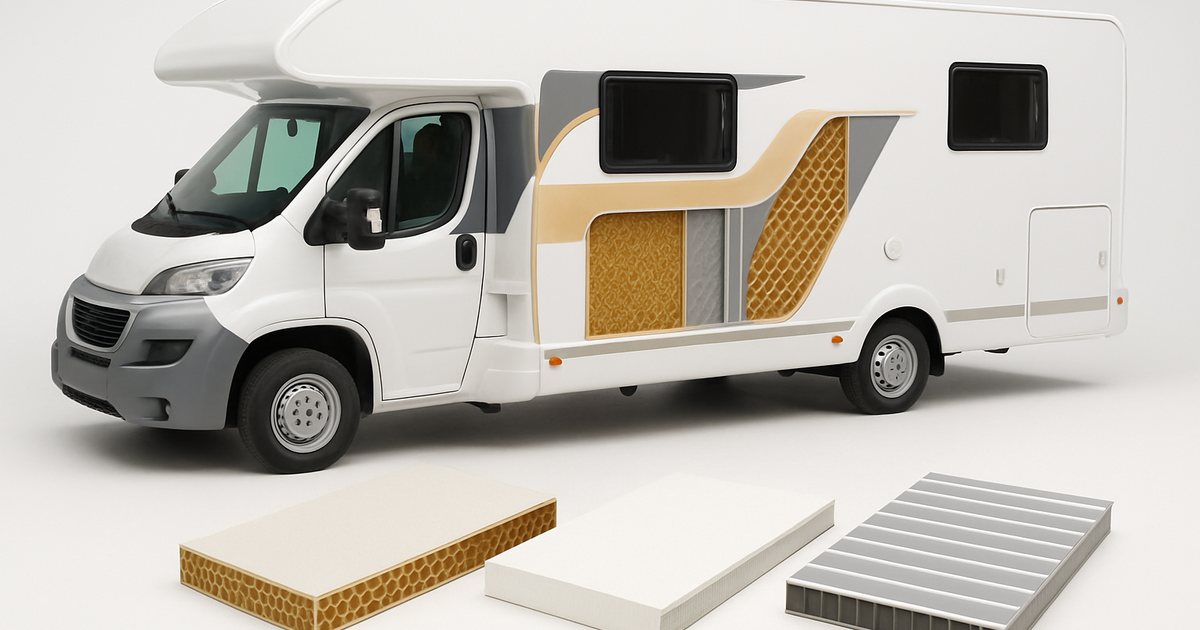
FRP liners are used in commercial motorhomes, ambulances, and food service vehicles where easy cleaning is the priority. The smooth, non-porous surface resists stains and bacteria. FRP is functional but not aesthetically warm — it looks clinical. PP honeycomb composite panels with decorative face sheets offer the best combination for RV manufacturers. The panel serves as both the structural wall element and the interior finish — eliminating the need for separate framing, insulation substrate, and decorative liner. Face sheet options include woodgrain-printed PET, smooth white fiberglass, textured surfaces, and fabric laminations.The Case for Composite Wall Panels in RV Manufacturing
For RV manufacturers and conversion shops, the most significant opportunity is not choosing a better wall covering — it is eliminating layers from the wall assembly.
Traditional RV wall construction: exterior skin + wood frame + foam insulation + luan interior = 4 layers, 6-10 kg/m², multiple bonding steps, moisture-vulnerable joints.
Composite panel construction: exterior composite panel + interior composite panel with decorative face = 2 layers, 3-6 kg/m², thermal bonded (no adhesive joints), zero moisture vulnerability.
Our CFRT (continuous fiber reinforced thermoplastic) panels with anti-slip or decorative face sheets are used by RV manufacturers as single-layer wall panels. A 15mm CFRT panel with woodgrain PET face sheet weighs 2.5 kg/m² and provides structural rigidity, thermal insulation (via honeycomb air cells), moisture immunity, and a finished interior surface — all in one panel.
Weight Impact on RV Performance
Interior paneling weight affects GVWR (Gross Vehicle Weight Rating) headroom, which determines how much gear, water, and supplies you can carry.
| Paneling Choice | Weight for 25 sqm | vs Luan Plywood |
|---|---|---|
| Luan Plywood (3mm) | 50 kg | Baseline |
| WPC Slat Panels | 100 kg | +50 kg |
| Cedar Shiplap | 125 kg | +75 kg |
| Vinyl Panels | 38 kg | -12 kg |
| PP Honeycomb (12mm, decorative face) | 50 kg | 0 kg (but structural!) |
The PP honeycomb panel weighs the same as the luan it replaces — but also replaces the wood frame and insulation layer, saving an additional 80-120 kg from the total wall assembly.
Frequently Asked Questions
Can I install PP honeycomb panels over my existing RV walls?
Yes, if you want a quick upgrade — attach thin (8mm) PP honeycomb panels with decorative face sheets over your existing walls using construction adhesive. For a full renovation, remove the old luan and frame, then install thicker (15-20mm) panels as structural wall elements.
What face sheet options are available for interior panels?
We offer PET non-woven fabric (white, gray, or custom colors), woodgrain-printed PET film, smooth fiberglass (paintable), textured anti-slip surfaces, and fabric laminations. Custom printing is available on orders above 500 sqm.
How do composite panels handle temperature changes in an RV?
PP honeycomb panels have a low coefficient of thermal expansion and do not warp or buckle with temperature changes. The operating range of -40 to +80°C covers all RV use scenarios, including winter camping and desert heat. Unlike wood, polypropylene does not expand or contract with humidity changes.
Are PP honeycomb panels safe for interior use?
Yes. Our panels are manufactured from food-grade polypropylene without solvents or adhesives. The thermal lamination process produces zero VOC emissions. Panels are tested and certified to FMVSS 302 for vehicle interior fire safety.
What is the minimum order for custom-face panels?
Standard white and gray panels ship from stock with a minimum order of 50 sqm. Custom face sheets (specific colors, woodgrain patterns, fabric lamination) require a minimum of 300 sqm. Lead time for custom orders is 15-25 days.
Related Guides
- CFRT vs Baltic Birch for Van Conversions — Weight, Moisture & Cost
- RV Wall Panel Materials: Complete Comparison Guide
- Composite Panels for RV & Camper Construction
- Lightweight Panels for Van Conversion & RV Builds
- Lightweight Composite Panels for Vehicle Bodies
- RV Floor Repair & Replacement Guide
Upgrade Your RV Interior
Whether you are a DIY renovator or an OEM manufacturer, we supply PP honeycomb panels with decorative face sheets in the sizes and quantities you need. Free A4 samples available.