Quick Answer
Camper siding panels protect your RV from weather, impacts, and UV damage. The most common options are fiberglass (FRP), aluminum, and luan plywood — but PP honeycomb composite panels are emerging as the superior long-term choice. They weigh 40-60% less than fiberglass, resist moisture completely, and last 20+ years without delamination. Here is how each material compares.
Why Camper Siding Material Matters
The exterior siding on a camper or RV accounts for 25-40 sqm of surface area on a typical Class C motorhome. That is a lot of material, and the choice has compounding effects on vehicle weight, fuel economy, maintenance costs, and resale value.
A poorly chosen siding material leads to the most dreaded RV problem: delamination. When moisture infiltrates through a small crack or failed sealant joint and reaches a water-absorbing substrate like luan plywood, the outer skin separates from the wall. Repair costs typically range from $2,000 to $8,000 per panel — and in severe cases, the vehicle is written off.
Camper Siding Materials Compared
| Material | Weight (kg/m²) | Water Resistance | Lifespan | Impact Resistance | Cost per m² |
|---|---|---|---|---|---|
| Fiberglass (FRP) | 3.5-5.0 | Good (surface only) | 10-15 years | Medium | $15-25 |
| Aluminum Sheet | 2.7-4.0 | Excellent | 20+ years | Low (dents easily) | $20-35 |
| Luan Plywood + Vinyl | 4.0-6.0 | Poor | 5-10 years | Low | $8-15 |
| PP Honeycomb Composite | 1.5-3.0 | Excellent (0% absorption) | 20+ years | High | $18-30 |
| CFRT Composite | 2.0-3.5 | Excellent | 20+ years | Very High | $25-40 |
Fiberglass (FRP) Siding
Fiberglass-reinforced plastic siding is the current industry standard for mid-range and premium RVs. It consists of a thin fiberglass sheet (typically 0.045-0.090 inches thick) bonded to a plywood or foam substrate with adhesive.
Advantages: Smooth, glossy finish that cleans easily. Good UV resistance. Available in white, off-white, and smooth or pebbled textures. Standard 4x8 ft sheets are readily available from distributors. Disadvantages: The fiberglass itself is waterproof, but the substrate underneath is not. When moisture penetrates through screw holes, corner trim joints, or sealant failures, the plywood substrate swells and the fiberglass delaminates. This is the number one warranty claim in the RV industry.Aluminum Siding
Aluminum siding was the original RV exterior material and remains popular on vintage Airstream-style trailers and budget builds.
Advantages: Truly waterproof. No delamination risk. Lightweight at 2.7-4.0 kg/m². Easily repairable — you can patch individual sections without replacing entire panels. Disadvantages: Dents on impact. Shows every ding from road debris, hail, and parking lot accidents. Oxidizes over time, requiring regular polishing. Poor thermal insulation without a separate insulation layer. Noise — rain on an aluminum roof is loud.PP Honeycomb Composite Siding
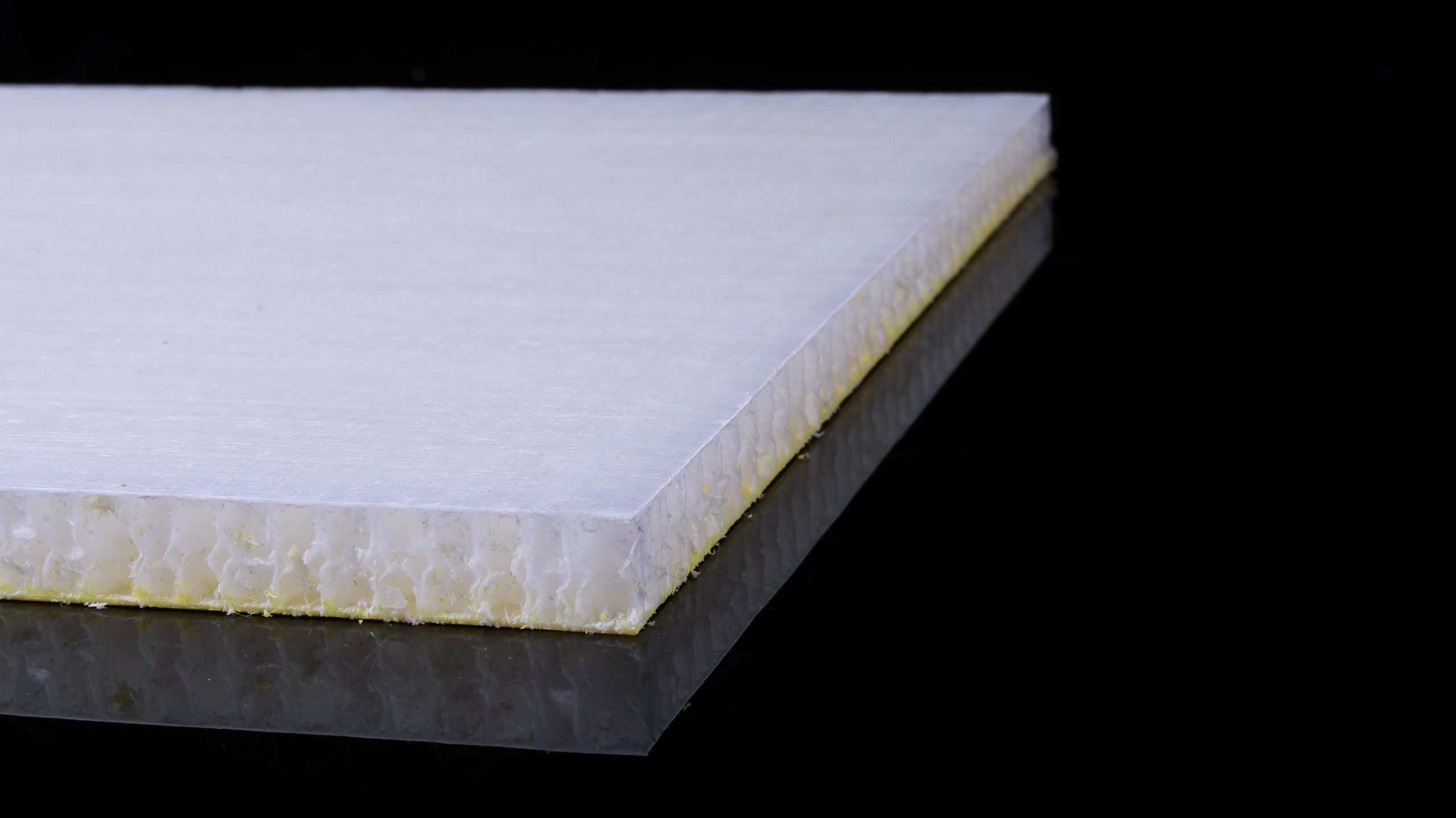
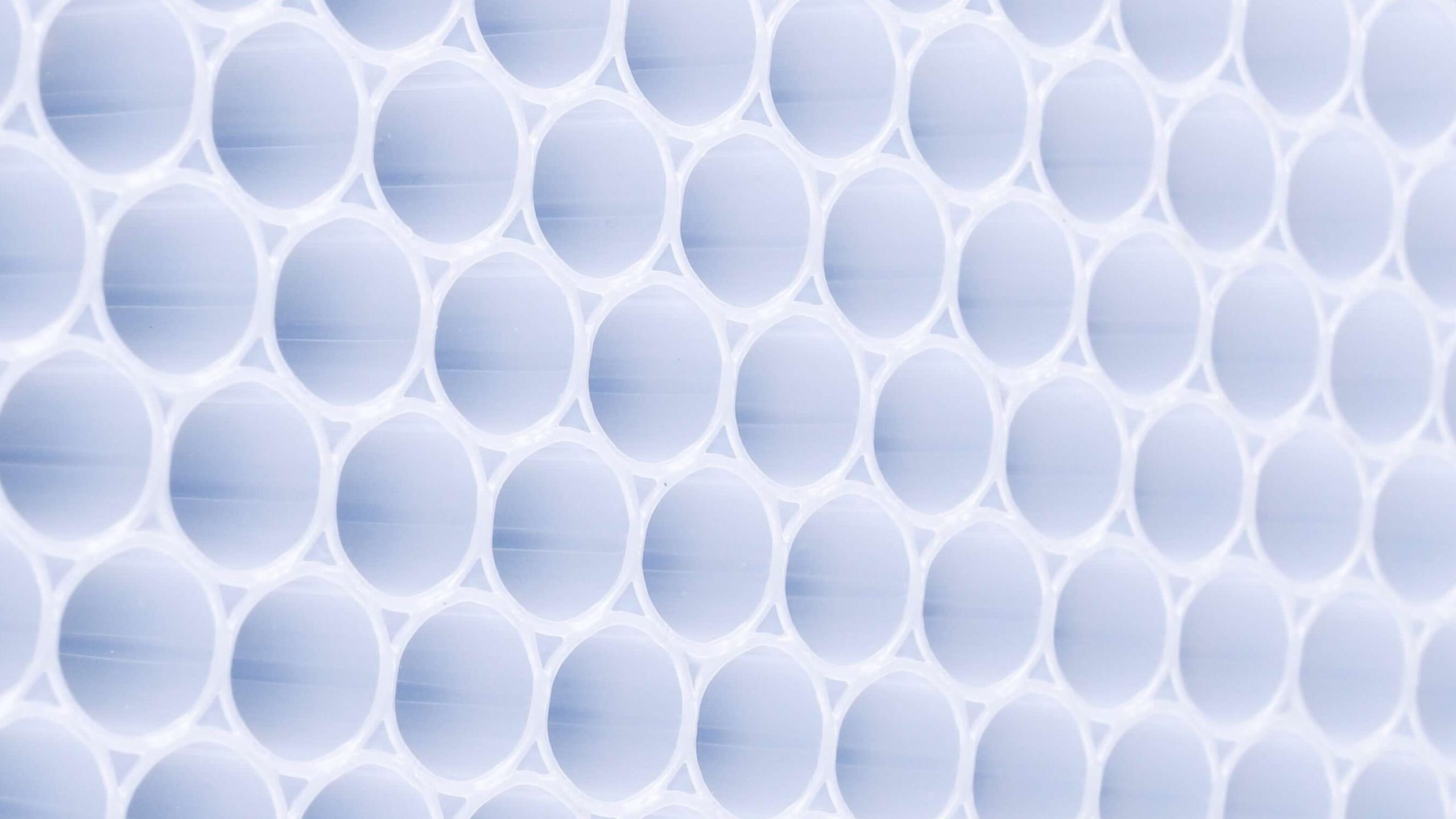
PP (polypropylene) honeycomb composite panels represent the next generation of camper siding. The panel consists of a PP honeycomb core sandwiched between face sheets — typically fiberglass-reinforced PP or PET non-woven fabric.
Advantages: The lightest option at 1.5-3.0 kg/m² — up to 60% lighter than FRP-over-plywood. Zero water absorption means zero delamination risk, permanently. Impact resistant — the honeycomb core absorbs energy without permanent deformation. 100% recyclable polypropylene. Operating temperature range of -40 to +80°C covers all climates. Disadvantages: Not yet widely available through standard RV parts distributors (you need to source from manufacturers like HOTECH directly). Surface finish options are more limited than FRP — though laminated versions with smooth or textured faces are available.At our factory in Tongxiang, Zhejiang, we produce PP honeycomb siding panels in thicknesses from 8mm to 30mm with various face sheet options. Our standard RV siding panel uses an 8mm honeycomb core with PET non-woven face sheets, weighing just 1.8 kg/m².
How to Choose the Right Siding for Your Camper
For budget builds or repairs: Aluminum is the most cost-effective waterproof option. Easy to source and install. For mid-range builds: If you must use FRP, ensure the substrate is closed-cell foam (not luan plywood) to minimize delamination risk. Better yet, switch to PP honeycomb panels — the material cost is comparable to FRP-over-foam. For premium or long-life builds: PP honeycomb panels with fiberglass-reinforced face sheets. Zero maintenance, zero delamination, lightest weight. For high-traffic areas like the lower sidewall, upgrade to CFRT panels with anti-scratch surfaces.Weight Savings and Fuel Impact
Every 100 kg of weight reduction on a motorhome improves fuel economy by 3-5%. A typical Class C motorhome has about 35 sqm of exterior siding. Switching from FRP-over-plywood (average 5 kg/m²) to PP honeycomb (average 2 kg/m²) saves approximately 105 kg.
Over a 10-year vehicle life with 15,000 km/year of travel, that translates to roughly $3,500-5,200 in fuel savings — more than covering the material cost difference.
Replacement Tips
Frequently Asked Questions
Can I replace my RV's fiberglass siding with PP honeycomb panels?
Yes. PP honeycomb panels can be cut to the same dimensions as your existing FRP siding and installed using the same fastening points. The main difference is that PP honeycomb panels are structural on their own — you do not need a separate plywood substrate underneath, which simplifies the wall assembly and saves additional weight.
How much does camper siding replacement cost?
Material costs range from $8-15/m² for luan plywood, $15-25/m² for FRP, $18-30/m² for PP honeycomb, and $20-35/m² for aluminum. Professional installation adds $30-60/m² depending on complexity. A full siding replacement on a 9m (30 ft) motorhome typically costs $3,000-8,000 including labor.
What thickness should I use for camper siding panels?
For exterior siding, 8-12mm is standard. Thicker panels (15-20mm) are used for structural sidewalls where the panel replaces both the siding and the wall substrate. For floor panels, 20-30mm with a higher-density honeycomb core is recommended to handle point loads from furniture and occupants.
Are PP honeycomb panels UV resistant?
The polypropylene core is sensitive to UV radiation, but all our camper siding panels include UV-stabilized face sheets (fiberglass-reinforced PP or PET non-woven with UV additives) that protect the core from direct sunlight. Tested per ASTM G154, our panels show no significant degradation after 2,000 hours of accelerated UV exposure.
Do you ship cut-to-size panels for individual camper builds?
Yes. We can supply panels cut to your specified dimensions. Minimum order is typically 50 sqm for custom sizes, but we stock standard 4x8 ft (1220x2440mm) and 4x10 ft (1220x3050mm) sheets that ship within 5-7 days for smaller orders.
Related Guides
- RV Wall Panel Materials: Complete Comparison Guide
- Composite Panels for RV & Camper Construction
- PP Honeycomb Panel: Properties, Applications & Manufacturing Guide
- RV Interior Wall Paneling: Options from Budget to Premium
- Composite Panel Price Guide 2026: FOB Cost, MOQ & Freight
Get a Sample
Need to evaluate PP honeycomb panels for your camper build or RV production line? We provide free A4-size samples on qualified enquiries and cover panel costs on evaluation pieces up to 1 sqm.