Quick Answer: 2026 Composite Panel Price Bands
Buyers usually want the number before the explanation, so here it is. These are FOB Shanghai/Ningbo ranges from our own 2026 order book for volume orders, in USD per square metre:
| Panel type | Thickness | FOB price range (USD/m²) | Typical MOQ |
|---|---|---|---|
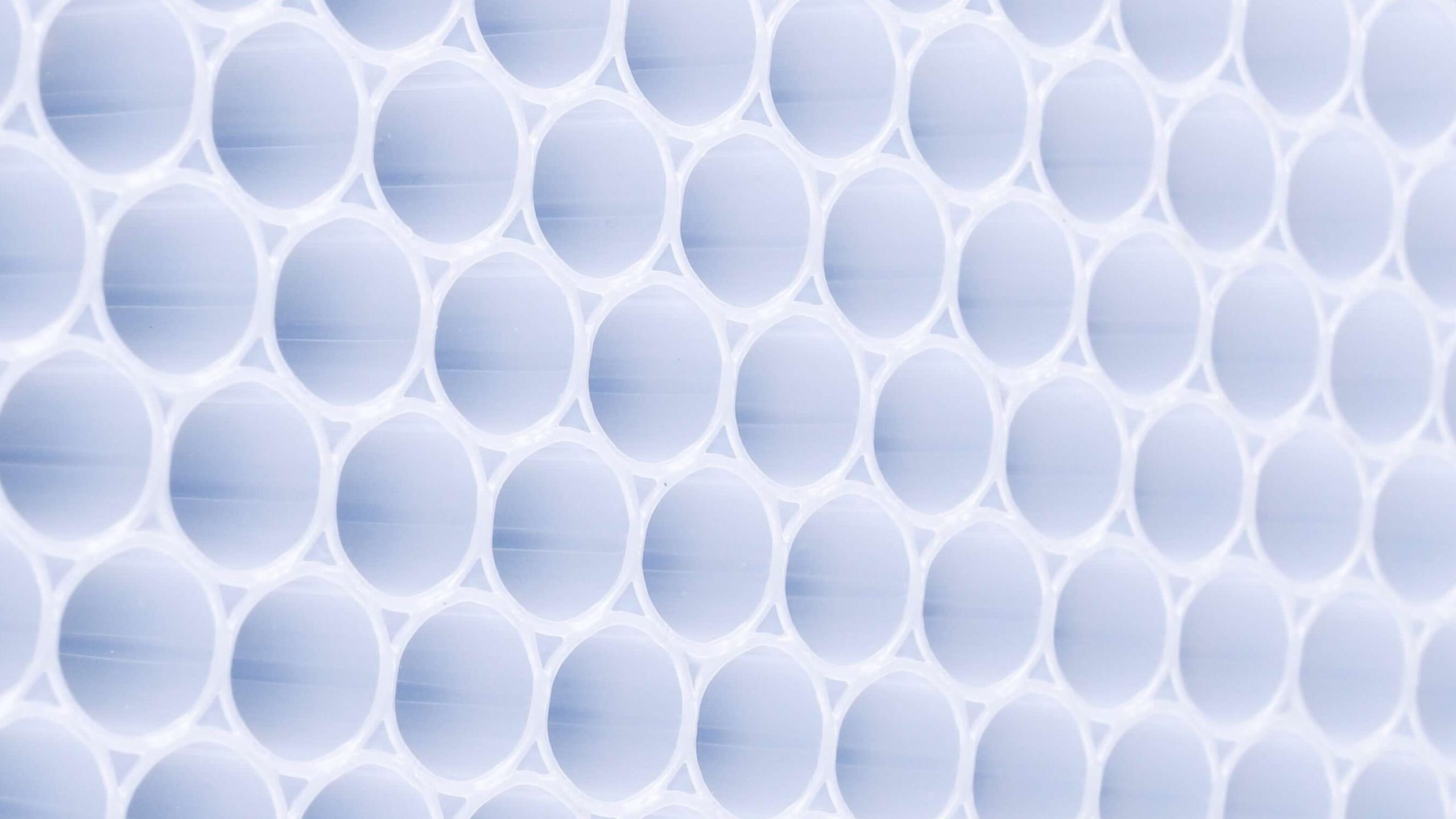
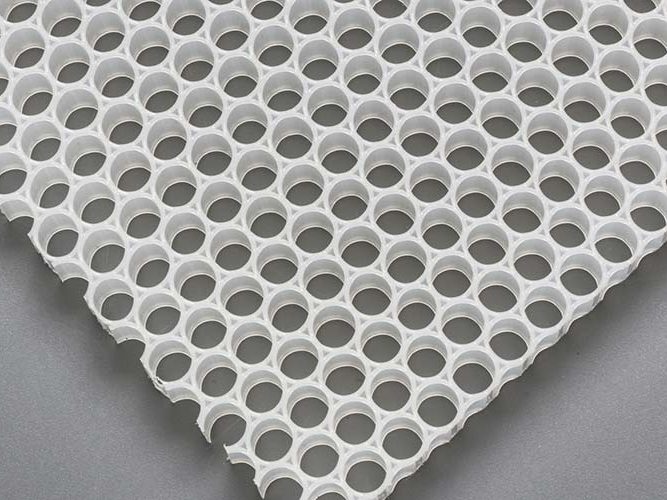
| PP honeycomb core only (no skins) | 10-30 mm | 6 - 14 | 300 m² |
| PP honeycomb + PP/PET non-woven skins | 15-25 mm | 18 - 28 | 200 m² |
| PP honeycomb + GRP skins | 20 mm | 26 - 42 | 200 m² |
| CFRT panel (continuous glass fibre skins) | 15-30 mm | 34 - 58 | 200 m² |
| Carbon fibre skinned honeycomb | 10-20 mm | 120 - 340 | 50 m² |
| MPP insulation panel | 40-100 mm | 30 - 65 | 200 m² |
| FRP plywood-backed truck panel | 25-40 mm | 28 - 55 | 200 m² |
If you only take one thing from this article, take this: the FOB number is typically 55-70 percent of what the panel actually costs you delivered. The rest is freight, duty, handling and yield loss, and that is where most sourcing decisions are actually won or lost.

What Actually Drives the Price
Seven variables move the number, roughly in order of impact.
1. Skin material and areal weight. This is the single biggest lever. A PET non-woven skin adds a few dollars per square metre. A 1.2 mm GRP skin adds 8-14. A carbon fibre prepreg skin can multiply the panel price by six. Skins are usually 45-60 percent of panel cost on a standard build. 2. Core density and cell size. A 6 mm cell core runs 30-45 percent more material per square metre than a 12 mm cell core at the same thickness, because there is simply more polymer wall per unit area. Buyers who specify 6 mm cell out of caution when 8 mm would carry the load are paying a premium for nothing. See our honeycomb core guide for the load data. 3. Order volume. Extrusion lines have setup and purge cost that does not scale. The step changes are at 200, 500, 1,000 and 3,000 m². 4. Panel size and yield. This is the one buyers underestimate. If your finished part is 2,300 x 1,150 mm and you order from a 2,440 x 1,220 mm standard sheet, your material yield is 89 percent — fine. If your part is 1,300 x 1,300 mm, you get two parts from a standard sheet and throw away 41 percent. Custom sheet sizing costs almost nothing at the factory and can save you more than any price negotiation. 5. Resin grade. Standard PP homopolymer versus FR-grade versus UV-stabilised versus food-contact grade. FR grades add 12-30 percent to the finished panel — see our fire ratings guide for when you actually need them. 6. Surface finish and lamination. Gelcoat, film lamination, embossing, and colour matching each add 2-8 USD/m². 7. Certification and testing. ISO 9001 is included. Project-specific fire or food-contact testing is not, and can add 2,000-9,000 USD amortised across the order.Price by Core Thickness
Core material scales roughly linearly with thickness, but skins do not. That means the price-per-millimetre falls as panels get thicker — which is why a thicker panel is often the cheaper way to hit a stiffness target.
| Total thickness | PP honeycomb + GRP skin (USD/m²) | Areal weight (kg/m²) | Flexural stiffness (relative) |
|---|---|---|---|
| 10 mm | 22 - 30 | 2.8 - 3.6 | 1.0x |
| 15 mm | 24 - 34 | 3.1 - 4.0 | 2.2x |
| 20 mm | 26 - 42 | 3.5 - 4.5 | 3.9x |
| 25 mm | 29 - 46 | 3.9 - 5.0 | 6.0x |
| 30 mm | 32 - 51 | 4.3 - 5.5 | 8.6x |
Read the last two columns together. Going from 10 mm to 20 mm costs about 20 percent more per square metre and adds about 25 percent weight, but delivers nearly four times the bending stiffness. In sandwich construction stiffness scales roughly with the square of the separation between skins, so buying thickness is far cheaper than buying stronger skins. This is the most reliable cost-saving move available in panel specification and it is available to almost every buyer we talk to.
MOQ Tiers and Volume Breaks
Our published tiers, which are broadly representative of what serious Chinese composite panel factories offer:
| Order volume | Discount from list | What changes |
|---|---|---|
| 200 - 499 m² | list price | Standard sizes and colours only |
| 500 - 999 m² | -6 to -9% | Custom sheet size available; FR grade unlocked |
| 1,000 - 2,999 m² | -12 to -16% | Custom cell size, dedicated run |
| 3,000 - 9,999 m² | -18 to -24% | Custom skin spec, priority scheduling |
| 10,000 m² + | -25 to -32% | Annual contract pricing, held stock |
Two notes on how to use this table. First, the jump from 200 to 500 m² is usually the best value in the whole ladder, because it unlocks custom sheet sizing — and as shown above, sizing can recover more than the discount itself. Second, if your annual requirement is 6,000 m² spread over twelve monthly releases, negotiate an annual contract at the 6,000 m² tier with monthly call-offs, rather than twelve separate 500 m² orders at the 500 m² tier. That difference alone is typically 10-15 percent.
Not sure which tier your programme falls into? Send us your annual volume and release schedule and we will quote both structures so you can compare. Contact us.The Landed Cost Math: FOB Is Not What You Pay
Here is a worked example for a real-shaped order: 2,000 m² of 20 mm PP honeycomb panel with GRP skins, shipped from Ningbo to a US inland destination.
Container fill. A 40 ft high cube has roughly 76 m³ of internal volume and about 65 m³ of usable stacking volume after pallets and dunnage. At 20 mm thickness, that is approximately 2,800-3,200 m² of panel — so this order is one container. Weight is around 8-9 tonnes, well under the 26-28 tonne payload limit, which means composite panels are always a volume-limited shipment, never weight-limited.| Cost line | Amount (USD) | Per m² |
|---|---|---|
| FOB panel price (2,000 m² @ 32) | 64,000 | 32.00 |
| Ocean freight, 40 HQ Ningbo to USWC | 2,200 - 4,500 | 1.10 - 2.25 |
| Inland drayage and rail to destination | 1,800 - 3,500 | 0.90 - 1.75 |
| Customs clearance, docs, ISF | 350 - 600 | 0.18 - 0.30 |
| Import duty (varies by HTS and destination) | verify with broker | — |
| Handling, unloading, warehousing | 600 - 1,200 | 0.30 - 0.60 |
| Yield loss at 8% (cutting scrap) | 5,120 | 2.56 |
| Approximate landed total | 74,100 - 78,900 | 37.05 - 39.45 |
Freight rates move constantly and duty depends entirely on your HTS classification and destination country, so confirm both with your broker before you build a budget. But the shape of the table holds: freight and handling add roughly 2.50-5.00 USD/m² on a 20 mm panel, and cutting yield loss is usually larger than freight.
That last point deserves emphasis. In this example, 8 percent yield loss costs 2.56 USD/m² while ocean freight costs 1.10-2.25. Buyers spend hours negotiating freight and minutes on sheet sizing. It should be the other way around.
Note also that because the shipment is volume-limited, the freight cost per square metre roughly doubles if you go from 20 mm to 40 mm panels. Insulation panels for refrigerated bodies at 80-100 mm carry four to five times the per-square-metre freight of a 20 mm dry panel. That is a strong argument for CKD or local assembly on thick-panel programmes.
CKD Body Kit Pricing
For buyers assembling vehicle bodies rather than buying panels, the economics change substantially. Flat-pack CKD kits ship far more efficiently than assembled bodies.
| Body type | Assembled FOB (USD/unit) | CKD kit FOB (USD/unit) | Units per 40 HQ, assembled vs CKD |
|---|---|---|---|
| Dry freight body, 4.2 m | 2,600 - 3,900 | 2,200 - 3,200 | 1 vs 4-5 |
| Dry freight body, 6.0 m | 3,800 - 5,400 | 3,100 - 4,400 | 1 vs 3-4 |
| Refrigerated body, 4.2 m | 4,900 - 7,200 | 3,800 - 6,500 | 1 vs 3 |
| Refrigerated body, 6.0 m | 6,800 - 9,800 | 5,400 - 8,200 | 1 vs 2-3 |
The kit itself is 15-25 percent cheaper because less factory labour is embedded, but the real saving is freight per unit, which typically drops by 60-75 percent. Against that, you carry local assembly labour and need trained staff. Our CKD assembly guide works through the full breakeven, which for most markets lands somewhere between 40 and 120 units per year.
Cost Per Kilogram of Payload Saved
This is the number that justifies composite panels to a finance director, and almost no supplier publishes it.
Take a 6 m dry freight body. Replacing 18 mm plywood walls and floor with 20 mm PP honeycomb panels removes roughly 6.5 kg/m² across about 62 m² of panel area — call it 400 kg of tare weight. The panel cost premium over plywood is roughly 14-20 USD/m², or about 870-1,240 USD for the body.
| Metric | Value |
|---|---|
| Tare weight removed | ~400 kg |
| Panel cost premium | 870 - 1,240 USD |
| Cost per kg saved | 2.20 - 3.10 USD/kg |
| Additional payload per trip | 400 kg |
| Extra revenue at 0.08 USD/kg per trip, 250 trips/yr | ~8,000 USD/yr |
| Fuel saving at 400 kg, 60,000 km/yr | 350 - 600 USD/yr |
At 2.20-3.10 USD per kilogram of tare removed, composite panels are one of the cheapest weight-reduction routes available in commercial vehicles — aluminium chassis components typically run 8-25 USD/kg saved and carbon fibre runs well above 60. The payback on the panel premium in this example is under three months of operation. Our payload guide has the full calculation with different body sizes.
Five Ways Buyers Overpay
1. Specifying 6 mm cell when 8 mm carries the load. Costs 30-45 percent more core material. Check the actual compressive requirement before defaulting to the densest option. 2. Accepting standard sheet sizes. Custom sizing is nearly free at the factory and routinely recovers 5-15 percent in yield. Send your part dimensions with the RFQ, not just a square metre total. 3. Specifying flame retardant grade where no regulation requires it. Adds 12-30 percent. Check whether the part is genuinely in a regulated location. 4. Ordering in twelve small lots instead of one contract with call-offs. Costs 10-15 percent versus contract pricing at the same annual volume. 5. Buying thin panels and thick skins to hit a stiffness target. Stiffness scales with the square of skin separation. Adding 5 mm of core is almost always cheaper than upgrading the skin.How to Get an Accurate Quote in One Round
Send this and you will get a firm price, not a request for clarification:
- Finished part dimensions (not just total m²) and quantity per part
- Total order volume and annual volume if it is a repeat programme
- Total panel thickness, or the load and span if you want us to specify it
- Skin material and finish requirement, or the environment the panel sits in
- Any fire, food-contact, or UV requirement with the standard number
- Destination port and Incoterm you want quoted
- Delivery date needed
Why Buy From HOTECH
We manufacture at Tongxiang, Zhejiang, with vertical integration from polypropylene pellet through core extrusion, skin production and thermal lamination — which is why our pricing holds when resin markets move. Fifteen years of production, 31 patents, ISO 9001, and supply to body builders and OEMs in 30+ countries.
- Standard MOQ 200 m², FR-grade MOQ 500 m²
- Custom cell size 5-30 mm and custom sheet sizing from 500 m²
- Free sample panels for evaluation on qualified enquiries
- CKD kit programmes with assembly manuals in 4 languages
Frequently Asked Questions
How much does a PP honeycomb panel cost per square metre?
For a 20 mm PP honeycomb panel with glass-reinforced skins, expect 26-42 USD/m² FOB China at volumes of 200-1,000 m², dropping toward 22-32 USD/m² above 3,000 m². Bare honeycomb core without skins runs 6-14 USD/m² depending on cell size and thickness. Prices vary with polypropylene resin markets, so quotes are typically valid for 15-30 days.
What is the typical MOQ for composite sandwich panels?
Most Chinese composite panel factories set MOQ between 200 and 1,000 m². Our standard MOQ is 200 m² for stock specifications and 500 m² for flame-retardant grades or custom cell sizes, because FR compound requires a dedicated extrusion run and line purge. Carbon fibre skinned panels have a lower MOQ of around 50 m² because the process is batch rather than continuous.
Is it cheaper to import assembled truck bodies or CKD kits?
CKD kits are cheaper in almost every case where you can assemble locally. The kit itself is 15-25 percent below the assembled price, and freight per unit drops 60-75 percent because you fit three to five kits in a 40 ft high cube versus one assembled body. The breakeven against local assembly labour and tooling typically falls between 40 and 120 units per year depending on local wage rates.
How much does freight add to composite panel cost?
Because panels are bulky and light, container shipments are always volume-limited rather than weight-limited. For a 20 mm panel, ocean freight plus inland and handling typically adds 2.50-5.00 USD/m² on a China-to-US lane. That figure roughly doubles for 40 mm panels and can be four to five times higher for 80-100 mm insulation panels. Confirm current rates with your forwarder, as ocean pricing moves substantially quarter to quarter.
Why are composite panels more expensive than plywood?
Per square metre, yes — a composite panel costs roughly two to three times an equivalent plywood sheet. The comparison that matters is cost per kilogram of tare weight removed and cost over service life. Composite panels remove about 6.5 kg/m² versus 18 mm plywood at roughly 2.20-3.10 USD per kilogram saved, they do not rot or delaminate from moisture, and they typically last the life of the vehicle rather than needing floor replacement at year five to seven.
How long is a composite panel quote valid?
Usually 15-30 days. Polypropylene is a petrochemical derivative and resin prices track crude and propylene markets, which can move 8-15 percent in a quarter. For annual contract programmes we typically agree a base price with a resin index adjustment clause rather than holding a fixed price for twelve months, which protects both sides.
Do you charge for samples?
Sample panels up to A4 size are free on qualified enquiries, and we cover the panel cost on larger evaluation pieces up to about 1 m² — the buyer covers courier freight. For custom builds requiring a dedicated production trial, we charge the trial cost and credit it against the first production order.
Related Guides
- How to Choose a Composite Panel Manufacturer in China: Buyer's Checklist
- CFRT vs FRP vs Aluminum: Composite Panel Comparison for Truck Bodies
- PP Honeycomb Panels vs Plywood, Steel and Aluminum
- Fire Ratings for Composite Panels: FMVSS 302 to EN 45545
- CKD Truck Body Assembly: How Modular Manufacturing Cuts Import Costs
Get a Firm Price
Send your part dimensions, volume, and destination port. We will come back within one working day with a line-by-line FOB quote, container fill calculation, and lead time — plus a note on where your specification is costing you money unnecessarily.