
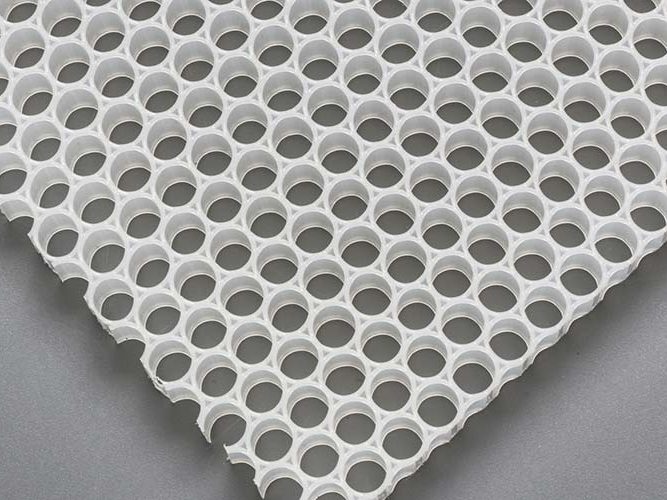
Why China Dominates PP Honeycomb Board Manufacturing
China accounts for an estimated 60-70% of global PP honeycomb production capacity. The reasons are structural, not just labor cost:
1. Raw material supply chain. China is the world's largest producer of polypropylene resin. The T30S and other injection/extrusion grades used for honeycomb core are produced domestically by Sinopec, PetroChina, and dozens of regional refiners. Raw material is cheaper and has shorter lead times than in Europe or North America. 2. Equipment manufacturing. The extrusion dies, lamination presses, and calibration ovens used for PP honeycomb production are manufactured domestically. Chinese equipment makers have iterated rapidly on European-origin designs (particularly the tube extrusion process originally patented by Tubus Bauer), producing machines that are 30-50% cheaper than European equivalents with comparable output quality. 3. Application-driven demand. China's domestic market for PP honeycomb panels is enormous — driven by the country's truck body manufacturing industry (over 3 million commercial vehicles per year), construction sector, and logistics packaging industry. This domestic demand base supports the scale needed for competitive export pricing. 4. Vertical integration. Leading Chinese manufacturers like HOTECH control the entire value chain from polypropylene pellets to finished sandwich panels. This vertical integration is difficult to replicate in smaller markets and provides cost and quality advantages over assemblers who buy core from one supplier and face sheets from another.What to Look for in a PP Honeycomb Board Manufacturer
Not all Chinese PP honeycomb manufacturers are equal. The industry ranges from large, ISO-certified operations with proprietary technology to small workshops buying core from wholesalers and laminating with basic equipment. Here is how to tell the difference.
Tier 1: Vertically Integrated Manufacturers
These companies extrude their own PP honeycomb core from raw polypropylene pellets, produce their own face sheets (or source them to controlled specifications), and laminate the finished panels in-house. They typically:
- Hold 10+ patents on core extrusion or panel construction
- Are ISO 9001 certified (and often ISO 14001 for environmental management)
- Can provide ASTM C365, C273, and D570 test reports from in-house or third-party labs
- Offer cell size customization (not just one standard cell)
- Have annual production capacity above 500,000 m2
- Supply to OEM automotive, RV, or truck body manufacturers
Tier 2: Panel Assemblers
These companies purchase honeycomb core sheets from a Tier 1 manufacturer and laminate them with face sheets using their own equipment. They can produce good-quality panels but have limited ability to customize core properties (cell size, density, wall thickness). Quality depends on their source of core and the consistency of their lamination process.
Tier 3: Trading Companies
These companies do not manufacture anything. They source panels from Tier 1 or Tier 2 factories and add a margin. They can be useful for small orders where the manufacturer's MOQ is too high, but they add cost and reduce your direct control over quality and specifications.
How to identify which tier you are dealing with: Ask for a factory tour or video tour. A Tier 1 manufacturer will show you core extrusion lines with raw polypropylene pellets being fed into extruders. A Tier 2 assembler will show you pre-made core sheets being loaded into a lamination press. A Tier 3 trader will not have a factory.Supplier Evaluation Checklist
Use this checklist when evaluating any PP honeycomb board manufacturer in China. Every "No" answer is a risk factor.
| Evaluation Item | What to Check | Red Flag If Missing |
|---|---|---|
| ISO 9001 certification | Ask for current certificate, verify on registrar website | No quality management system in place |
| In-house core extrusion | Factory tour: see raw PP pellets being extruded into core | They are buying core from someone else (Tier 2/3) |
| ASTM/ISO test reports | C365 (compression), C273 (shear), D570 (water absorption) | No objective data on product performance |
| Patent portfolio | Verify on CNIPA (China patent office) or WIPO | May be using unlicensed technology |
| Cell size range | Should offer at least 3-4 cell sizes (6, 8, 12, 19 mm minimum) | Limited customization capability |
| Thickness range | Should cover 5-80 mm panels and 5-50 mm bare core | Cannot serve structural panel applications |
| Face sheet options | GF-PP, PET non-woven, FRP, aluminum, decorative film | Limited application range |
| Production capacity | Ask for annual output in m2; verify with factory floor space | Subcontracting risk on large orders |
| Reference customers | Ask for 3+ reference customers you can contact | No track record |
| Export experience | Export packing, container loading, trade terms (FOB, CIF) | Logistics problems, damaged goods |
| Sample availability | Should provide free or low-cost samples for testing | Unwilling to let you verify quality before ordering |
HOTECH Factory Capabilities
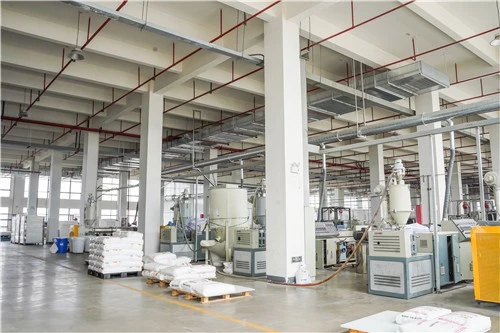
Our Tongxiang facility serves as a concrete example of what a Tier 1 PP honeycomb board manufacturer offers:
Production Infrastructure
- Factory area: 50,000+ square meters
- Employees: 100+
- Core extrusion lines: Multiple proprietary tube-extrusion lines, producing PP honeycomb core from virgin polypropylene pellets
- Lamination capacity: Continuous press lines for thermal lamination at 180-200 C
- CNC cutting: Panel cutting and edge finishing to customer dimensions
- Annual output: 1.5 million square meters of thermoplastic panel products
- Vehicle body assembly: 37,000+ truck body kits per year (CKD format)
Quality Certifications
- ISO 9001:2015 (Quality Management System)
- National High-Tech Enterprise
- SGS material testing and certification
- 31 national patents on core extrusion, panel construction, and vehicle body design
Product Range
| Product | Cell Sizes | Thickness | Face Sheet Options | MOQ |
|---|---|---|---|---|
| PP Honeycomb Core | 6, 8, 12, 19, 25 mm | 5-50 mm | Bare core (no face sheets) | 200 m2 |
| PP Honeycomb Panel | 6, 8, 12, 19, 25 mm | 8-80 mm | GF-PP, PET non-woven | 200 m2 |
| CFRT Panel | 6, 8, 12 mm | 10-40 mm | Continuous GF or CF reinforced PP | 200 m2 |
| Sandwich Panel | 6, 8, 12 mm | 10-80 mm | FRP, aluminum, stone, wood veneer | 500 m2 |
| MPP Insulation Panel | N/A (micro-foamed) | 20-80 mm | GF-PP with foam core | 500 m2 |
Second Production Base: Malaysia
Our Malaysia partner, Joinpro Sdn Bhd (Kulai, Johor, founded 2024), handles complete vehicle and product assembly — including dry freight truck bodies and refrigerated truck bodies — in coordination with the material and component manufacturing at our China factory. Together we offer delivery from component supply to complete vehicle assembly.
OEM Process: From Drawing to Delivery
For OEM and custom projects, our standard process follows these steps:
Step 1: Specification and Drawing Review (Day 1-3)
You send us your panel specification or application requirement. We need:
- Panel dimensions (length x width x thickness)
- Core cell size preference (or let us recommend based on application)
- Face sheet material and finish requirements
- Mechanical performance requirements (flexural strength, compression, shear)
- Annual volume estimate
- Target price range (helpful but not required)
Step 2: Sample Production and Testing (Day 4-15)
We produce sample panels to your specification. Samples are typically 300 x 300 mm or 600 x 600 mm — large enough for your own mechanical testing per ASTM C365 (compression), ASTM C273 (shear), or ISO 178 (flexural). We encourage customers to test our samples rather than rely solely on our published data.
Sample delivery: DHL/FedEx air freight, 3-5 days to most destinations. We provide samples at cost or free for qualified projects.
Step 3: Production (Day 15-40)
Once you approve the samples and confirm the order:
- Standard panels: 15-25 day production lead time
- Custom constructions: 25-35 day production lead time
- First orders may run 5-7 days longer for tooling setup and first-article inspection
Step 4: Quality Inspection and Packing (Day 40-45)
Every production lot undergoes:
- Dimensional inspection (length, width, thickness tolerance)
- Visual inspection (face sheet surface quality, edge quality)
- Mechanical testing (compression per C365, flexural per ISO 178 — lot sampling)
- Weight verification (areal density check against specification)
Step 5: Logistics (Day 45-75)
- FOB Tongxiang/Ningbo — we deliver to port, you arrange ocean freight
- CIF — we arrange ocean freight to your port (add 15-25 days for sea transit to most destinations)
- Full container loads (FCL) are the most economical. LCL is available for smaller orders but costs more per m2
Pricing Factors
PP honeycomb board pricing from China depends on several variables. Here is how each factor affects your FOB price:
| Factor | Impact on Price | Notes |
|---|---|---|
| Core cell size | Smaller cells cost more (more material per m2) | 6 mm cell is 30-40% more than 19 mm cell at same thickness |
| Panel thickness | Linear increase with thickness | Core material is the largest cost component |
| Face sheet material | GF-PP < PET < FRP < aluminum < carbon fiber | CFRT face sheets add 50-100% vs standard GF-PP |
| Volume | Lower price per m2 at higher volumes | Significant breaks at 500, 1000, 5000 m2 |
| Customization | Custom sizes, CNC cutting, edge treatment add cost | Standard sheet sizes are most economical |
| Current PP resin price | Fluctuates with petrochemical markets | We adjust pricing quarterly based on resin index |
| Product | Cell Size | Thickness | FOB Price Range |
|---|---|---|---|
| PP honeycomb core sheet | 8 mm | 10-30 mm | USD 4-10/m2 |
| PP honeycomb panel (GF face) | 8 mm | 15-25 mm | USD 10-18/m2 |
| PP honeycomb panel (PET face) | 8 mm | 10-20 mm | USD 8-15/m2 |
| CFRT honeycomb panel | 6-8 mm | 15-25 mm | USD 25-45/m2 |
| Sandwich panel (FRP face) | 8 mm | 20-40 mm | USD 20-35/m2 |
| Custom construction | Various | Various | On application |
These are indicative ranges and depend on order volume, face sheet selection, and current resin pricing. Contact us for a firm quotation on your specific requirement.
Quality Control: What Tests to Request
When evaluating any PP honeycomb board manufacturer, request test reports for these properties at minimum:
1. Flatwise compressive strength — ASTM C365 or ISO 844 This measures the core's ability to resist through-thickness loads (people standing on floors, forklift wheels on pallets, stacked weight on packaging). Our standard 8 mm cell PP honeycomb core delivers 1.5-2.0 MPa at ASTM C365. 2. Plate shear strength — ASTM C273 This measures the core's resistance to sliding forces between the face sheets. Critical for panels used in structural applications (truck sidewalls, building partitions). Our 8 mm cell core delivers approximately 0.58 MPa plate shear per C273. See our detailed guide on honeycomb core specification and testing. 3. Water absorption — ASTM D570 This confirms the panel's moisture resistance. Any PP honeycomb panel should test below 0.5% — ours tests below 0.1%. If a supplier reports water absorption above 1%, the face sheets or edge sealing may be compromised. 4. Flexural strength and modulus — ISO 178 or ASTM D790 This measures the panel's bending performance as a complete sandwich structure (not just the core). Results depend on both core and face sheet properties. 5. Face sheet adhesion — peel test For thermally laminated panels, the bond between the face sheet and core should be stronger than the core itself. A properly laminated panel should fail in the core, not at the bond line. Ask the supplier to demonstrate this with a peel test sample.Common Mistakes When Sourcing from China
Based on our experience working with hundreds of international buyers, here are the most common sourcing mistakes and how to avoid them:
1. Specifying only thickness and size. A complete PP honeycomb panel specification needs: cell size, core density, face sheet material and weight, panel thickness, required mechanical properties, and any special requirements (fire rating, UV stabilization, anti-slip surface). "20 mm PP honeycomb panel, 1220 x 2440 mm" is not a specification — it is a starting point. 2. Comparing prices without comparing specifications. A cheaper quote often means smaller cell size, thinner face sheets, recycled (rather than virgin) PP, or no UV stabilization. Always compare test data alongside prices. 3. Not testing samples before ordering. We send samples to every new customer and strongly recommend independent testing. The cost of a C365 and D570 test at a local lab is trivial compared to the cost of receiving 5,000 m2 of panels that do not meet your application requirements. 4. Ignoring logistics costs. Panel weight and packing density affect shipping cost significantly. A 30 mm panel takes half as many m2 per container as a 15 mm panel. Include freight in your total landed cost calculation, not just FOB price. 5. Not specifying edge treatment. PP honeycomb panels have exposed core cells at cut edges. For panels used in wet environments or where edge appearance matters, specify edge-sealing (thermal edge seal or edge strip) in your order. Adding this after delivery is possible but more expensive.Frequently Asked Questions
What is the minimum order quantity for PP honeycomb boards from China?
Standard panels (stock cell size and face sheet): 200 m2 minimum. Custom constructions (non-standard cell size, custom face sheets, special sizes): 500 m2 minimum. These MOQs apply to our factory; other manufacturers may have different minimums. For orders below 200 m2, consider working with a trading company or distributor who stocks standard panels, though prices will be higher.
How long does it take to get PP honeycomb boards from China?
Production lead time is 15-25 days for standard panels and 25-35 days for custom builds. Add 3-5 days for sample delivery (air freight) or 25-40 days for sea freight to most destinations. First orders may take 5-7 days longer for tooling and first-article inspection. Total time from first enquiry to delivery: typically 45-75 days for sea freight orders.
Can Chinese manufacturers make custom cell sizes and thicknesses?
Tier 1 manufacturers with in-house core extrusion can adjust cell size, core density, and panel thickness to your specification. Standard cell sizes are 6, 8, 12, 19, and 25 mm. Custom cell sizes between 5 and 30 mm are possible for orders above 500 m2. Panel thickness can be specified from 5 mm to 80 mm in increments as small as 1 mm.
How do I verify a Chinese PP honeycomb manufacturer is legitimate?
Request and verify: (1) ISO 9001 certificate with the registrar; (2) patent numbers on CNIPA or WIPO databases; (3) factory photos or video tour showing core extrusion lines; (4) ASTM/ISO test reports with lab identification; (5) references from existing export customers. A legitimate Tier 1 manufacturer will provide all five without hesitation.
What is the difference between PP honeycomb board and PP honeycomb panel?
The terms are used interchangeably in the industry. Both refer to a sandwich structure with a polypropylene honeycomb core and face sheets. "Board" is more commonly used in packaging and signage applications; "panel" is more common in construction, vehicle, and structural applications. The product is the same.
Related Guides
- PP Honeycomb Panel vs Plywood: Weight, Strength & Cost Comparison
- Lightweight Panel Materials for Van Conversion & RV
- Composite Panel Manufacturing Process: From Core to Finished Product
- Composite Panel Price Guide 2026
- Honeycomb Core Specification: Cell Size, Density & Ribbon Direction
Start Your OEM Project
HOTECH is a vertically integrated PP honeycomb board manufacturer with 31 patents and 1.5 million m2 annual capacity. We supply panel OEMs, truck body builders, RV manufacturers, and packaging companies across 6 continents from our Tongxiang (China) and Kulai (Malaysia) production bases.
Send us your specification or application requirement. We will provide a technical recommendation, test data, sample panels, and FOB pricing within 3 working days.
Sources: ASTM C365 (flatwise compressive properties of sandwich cores), ASTM C273 (shear properties of sandwich core materials), ASTM D570 (water absorption of plastics), ISO 178 (flexural properties of plastics), ISO 9001:2015, HOTECH production specifications and test data (2026).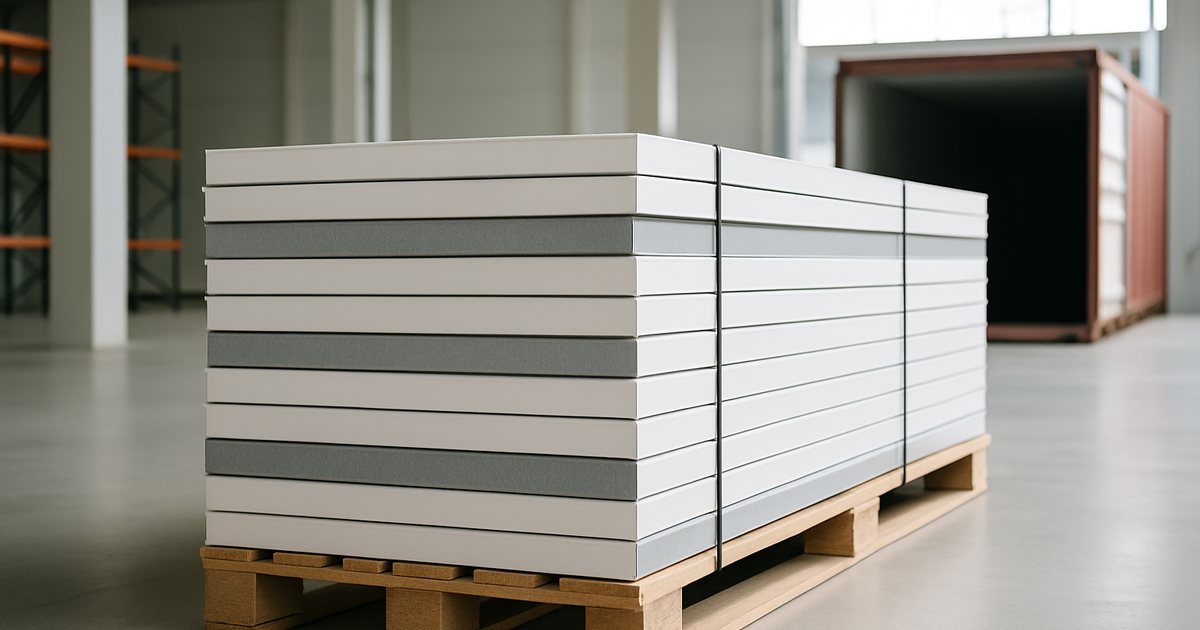

![PP Honeycomb Panel — Properties, Applications & How It's Made [2026]](/images/products/pp-honeycomb-panel.jpg)