Why This Comparison Matters
Plywood has been the default structural panel material for over a century. It is cheap, widely available, and well understood by every fabricator on the planet. If you are building truck bodies, RV interiors, exhibition stands, reusable packaging, or construction formwork, plywood is almost certainly the material you are replacing — or the material someone is asking you to replace.
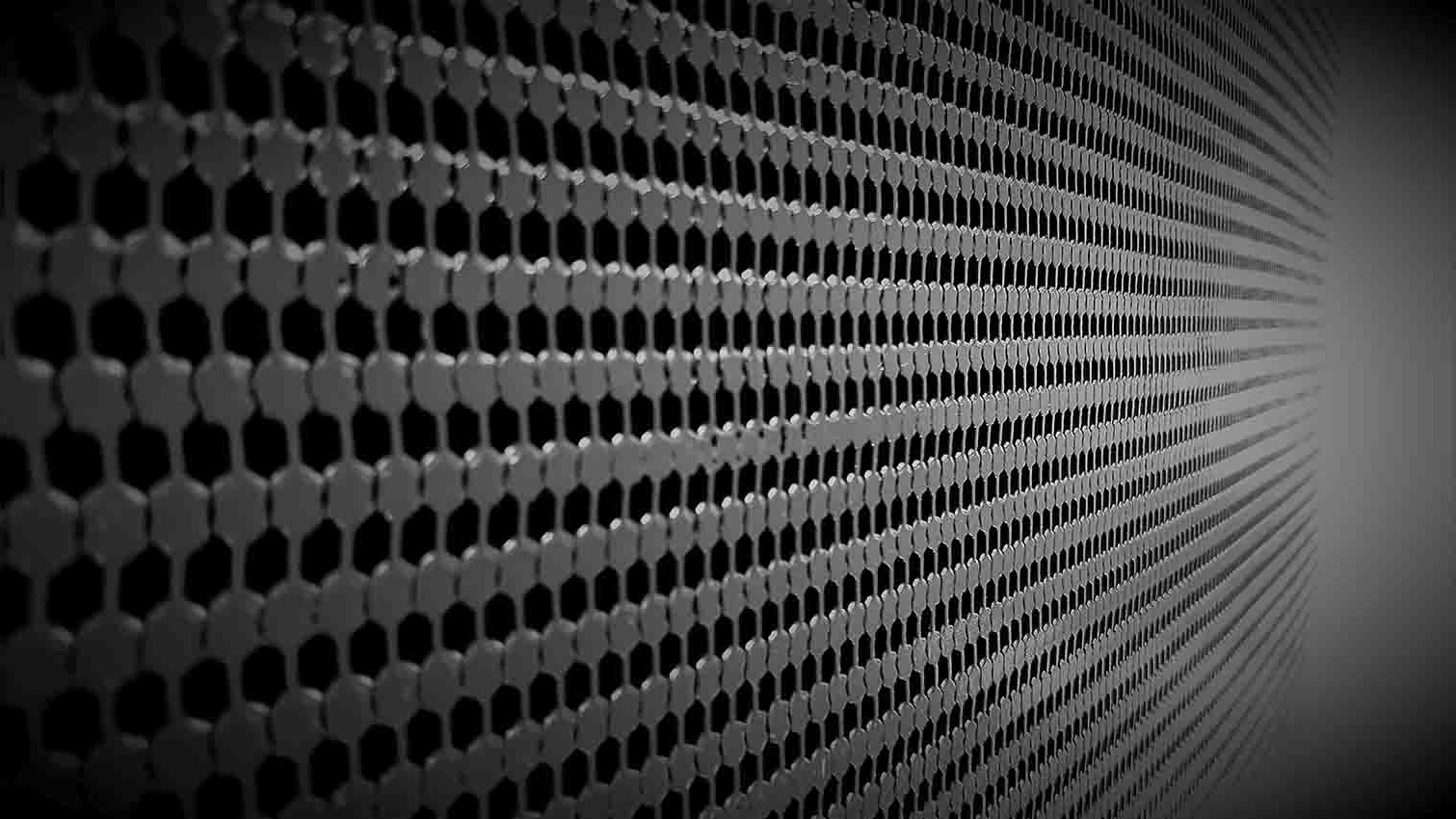
PP (polypropylene) honeycomb panels are the most common replacement. They use a hexagonal honeycomb core made from extruded polypropylene, sandwiched between rigid face sheets (typically glass fiber reinforced PP, PET non-woven, or fiberglass). The result is a panel that behaves like a structural I-beam in two dimensions: the face sheets carry bending loads while the core handles shear and prevents buckling.
The question is not whether PP honeycomb is lighter — that is obvious. The question is whether the weight saving justifies the engineering trade-offs and the price difference in your specific application. That is what the data below answers.
Head-to-Head Property Comparison
All PP honeycomb data is from our production line at Tongxiang, Zhejiang, tested per the ISO standards noted. Plywood data is for standard birch plywood per EN 636 / EN 310 testing.
| Property | PP Honeycomb Panel (20 mm, GF face) | Birch Plywood (18 mm) | Winner | Notes |
|---|---|---|---|---|
| Areal density | 2.5-4.0 kg/m2 | 9.0-12.0 kg/m2 | PP Honeycomb (60-75% lighter) | Weight saving scales linearly with panel area |
| Flexural strength (ISO 178) | 15-35 MPa | 30-50 MPa | Plywood (higher absolute) | But PP wins on specific strength (strength/weight) |
| Flexural modulus (ISO 178) | 1.5-3.5 GPa | 6.0-8.0 GPa | Plywood (stiffer per mm) | Honeycomb gains stiffness rapidly with thickness |
| Compressive strength (ASTM C365) | 0.8-2.5 MPa (core) | 5-10 MPa (cross-grain) | Plywood | Relevant for concentrated point loads |
| Water absorption, 24 h (ASTM D570) | < 0.1% | 8-15% | PP Honeycomb | The single most important difference in wet environments |
| Dimensional stability in humidity | No change | Swells 2-5% across grain | PP Honeycomb | Plywood warping is cumulative and irreversible |
| Operating temperature | -40 to +80 C | -20 to +60 C | PP Honeycomb | Plywood dries out and cracks in sustained heat |
| Thermal conductivity | 0.06-0.08 W/mK | 0.12-0.17 W/mK | PP Honeycomb (better insulator) | Honeycomb air cells provide thermal break |
| Service life (outdoor, unsealed) | 20+ years | 5-10 years | PP Honeycomb | Plywood degrades rapidly without paint/sealant |
| Recyclability | 100% thermoplastic | Not recyclable (formaldehyde glue) | PP Honeycomb | EU end-of-life vehicle directive favors recyclable materials |
| Formaldehyde emissions | Zero | E1 grade: < 0.1 mg/m3 | PP Honeycomb | Regulatory pressure increasing globally |
| Fire behavior (UL 94) | HB (self-extinguishing grades available) | HB (untreated) | Comparable | FR grades available for both; neither is inherently fireproof |
| Cost per m2 (FOB China) | USD 8-18 | USD 5-12 | Plywood (cheaper upfront) | See total cost analysis below |
The Specific Strength Argument
Engineers sometimes dismiss PP honeycomb panels because plywood has higher flexural strength in absolute terms (30-50 MPa vs 15-35 MPa). This comparison misses the point, because the two panels do not weigh the same.
The relevant engineering metric is specific flexural strength — flexural strength divided by areal density:
| Material | Flexural Strength (MPa) | Areal Density (kg/m2) | Specific Strength (MPa per kg/m2) |
|---|---|---|---|
| PP Honeycomb 20 mm (GF face, 8 mm cell) | 25 | 3.0 | 8.3 |
| Birch Plywood 18 mm | 40 | 10.0 | 4.0 |
| PP Honeycomb 30 mm (GF face, 8 mm cell) | 32 | 3.8 | 8.4 |
| Marine Plywood 18 mm | 45 | 11.0 | 4.1 |
The PP honeycomb panel is roughly twice as structurally efficient per unit of weight. In any application where total panel weight matters — vehicle bodies, portable structures, reusable packaging, anything that gets shipped — this ratio is the number that drives the decision.
There is a second, subtler point. Sandwich panel stiffness scales with the cube of core thickness (per classical sandwich beam theory). If you need more stiffness from a PP honeycomb panel, you increase core thickness from 20 mm to 30 mm. The weight increase is small (roughly 0.8 kg/m2 of additional core) but the stiffness increase is large. With plywood, the only way to get more stiffness is to use thicker plywood — which adds weight linearly and quickly erodes the already-thin specific strength advantage.
Water and Moisture: Where Plywood Fails
This is the section that decides most real-world material selections, and it is not close.
Birch plywood absorbs 8-15% of its weight in water within 24 hours of immersion (EN 317). In practice, plywood does not need to be submerged — it absorbs moisture from the air. In humid climates (Southeast Asia, Gulf states, coastal areas), plywood interior panels can reach 12-15% moisture content within months. At that level:
- Fungal growth begins at 20% moisture content. Once established, rot propagates through the panel even if it dries out later.
- Dimensional swelling of 2-5% across the grain warps the panel and stresses fastener holes. Warped plywood panels in truck sidewalls or RV interiors create gaps that admit more moisture — a self-accelerating failure.
- Delamination occurs when moisture reaches the glue lines between veneers. This is the number one warranty claim in the RV industry and the primary reason for truck body panel replacements.
- Formaldehyde emissions increase as moisture breaks down urea-formaldehyde adhesive. Indoor air quality regulations (CARB Phase 2, EU E1) apply to enclosed vehicle interiors.
For any application that will see rain, humidity, washdown, or condensation — truck bodies, refrigerated vehicles, food processing environments, marine use, outdoor signage — this single property makes the material selection decision.
Total Cost of Ownership Analysis
Plywood is cheaper per square meter at the point of purchase. That is where its cost advantage ends.
| Cost Factor | PP Honeycomb Panel | Birch Plywood | Difference |
|---|---|---|---|
| Material cost (20 mm, FOB) | USD 8-18/m2 | USD 5-12/m2 | Plywood is 20-40% cheaper upfront |
| Surface treatment | None required | Paint/sealant every 2-3 years | USD 3-8/m2 per cycle for plywood |
| Expected replacements over 20 years | 0 | 2-3 (every 5-8 years) | Plywood total material cost: USD 15-48/m2 |
| Weight-related fuel savings (vehicle) | Baseline | +6-8 kg/m2 extra weight | Approximately USD 0.40-0.80/m2/year in fuel for a truck body |
| Payload gain (vehicle) | +6-8 kg/m2 capacity | Baseline | Revenue opportunity from carrying more freight per trip |
| Disposal/recycling | Recyclable (value recovery) | Landfill (cost) | PP has positive scrap value; plywood disposal costs USD 0.5-2/m2 |
| Installation labor | Similar | Similar | Standard tools work on both |
| 20-year total cost | USD 8-18/m2 | USD 25-65/m2 | PP honeycomb is 50-70% cheaper over 20 years |
The payload calculation deserves emphasis. A typical 4.2-meter dry freight truck body uses approximately 50 m2 of wall, floor, and roof panels. Switching from plywood to PP honeycomb saves 300-400 kg of body weight. For a logistics fleet running 250 days per year, that weight saving translates to either more cargo per trip or reduced fuel consumption — both of which are worth real money.
At our facility, we work with truck body builders who have switched entire fleets from plywood to PP honeycomb panels and report payback periods of 12-18 months on the material cost premium, driven primarily by elimination of panel replacements and reduced fuel costs.
Application Suitability Matrix
Not every application favors the same material. Here is an honest assessment of which material wins where:
| Application | Recommended Material | Reason |
|---|---|---|
| Dry freight truck sidewalls | PP Honeycomb | Moisture immunity, weight saving, 20+ year life |
| Dry freight truck floors | PP Honeycomb (CFRT) | Fork truck impact resistance, waterproof, no rot |
| RV floor panels | PP Honeycomb | Zero water absorption prevents delamination |
| RV interior wall liners | PP Honeycomb or Plywood | Plywood acceptable if sealed and in dry climates |
| Van conversion wall panels | PP Honeycomb | Condensation resistance critical in camper vans |
| Exhibition/trade show walls | PP Honeycomb | Lightweight for transport, reusable, no warping |
| Reusable packaging/pallets | PP Honeycomb | Survives outdoor storage, washable, recyclable |
| Construction formwork | Plywood | Lower cost per cycle; PP honeycomb emerging for reusable formwork |
| Furniture core | Either | Plywood for edge-fastening; PP honeycomb for weight-sensitive furniture |
| Acoustic barriers/partitions | PP Honeycomb | Honeycomb cells provide sound absorption; fill with mineral wool if needed |
| Outdoor signage | PP Honeycomb | Weatherproof without sealing or painting |
| Marine bulkheads | PP Honeycomb | Zero water absorption; plywood rots even with marine-grade treatment |
Van Conversion: A Growing Replacement Market
The van conversion and camper van market deserves specific attention because it is one of the fastest-growing segments for plywood-to-honeycomb replacement. Van lifers and professional van builders face a fundamental problem with plywood: condensation.
A camper van generates 1-2 liters of moisture per night from breathing, cooking, and body heat. In cold weather, that moisture condenses on cold surfaces — including any plywood wall or ceiling panel that is not perfectly vapor-sealed. Over one season of use, unsealed plywood panels can reach moisture levels that trigger mold growth, delamination, and structural weakening.
PP honeycomb panels solve this problem at the material level. They do not absorb the moisture, do not support mold, and do not delaminate. A 10 mm or 15 mm PP honeycomb panel with a decorative PET face sheet weighs 1.5-2.5 kg/m2 — compared to 5-7 kg/m2 for equivalent plywood paneling — and keeps the vehicle under its gross weight limit even with a full interior build-out.
For van conversion builders sourcing panels in volume, we supply custom-cut PP honeycomb panels with decorative face sheets, edge-banding, and CNC routing for outlets and fixtures. Minimum order is 200 m2 — roughly enough for 15-20 van builds.
Thickness Selection Guide: Matching PP Honeycomb to Your Plywood Replacement
If you are replacing an existing plywood panel with PP honeycomb, the thickness mapping is not 1:1. Because PP honeycomb is a sandwich structure (face sheets + core), its stiffness behavior differs from solid plywood. Here is a practical guide:
| Replacing Plywood | Recommended PP Honeycomb | Typical Application | Weight Saving |
|---|---|---|---|
| 6 mm plywood | 8-10 mm PP honeycomb | Interior liners, furniture backs | 60-70% |
| 9 mm plywood | 12-15 mm PP honeycomb | Wall panels, partitions, packaging | 65-70% |
| 12 mm plywood | 15-20 mm PP honeycomb | Structural walls, display boards | 65-75% |
| 18 mm plywood | 20-25 mm PP honeycomb | Truck sidewalls, RV floors, pallets | 60-70% |
| 24 mm plywood | 25-30 mm PP honeycomb | Heavy-duty floors, structural decking | 60-65% |
These are starting points. The exact replacement thickness depends on your load case, span length, and face sheet selection. We routinely run finite element analysis for customers switching from plywood to PP honeycomb in structural applications — contact us with your panel dimensions, loading conditions, and current plywood specification, and we will provide a matched PP honeycomb recommendation.
Environmental and Regulatory Pressure
Three regulatory trends are accelerating the shift from plywood to PP honeycomb:
1. Formaldehyde emissions. Plywood uses formaldehyde-based adhesives (urea-formaldehyde for interior grade, phenol-formaldehyde for exterior/marine grade). Regulations are tightening globally: CARB Phase 2 in California, EU E1 standard, Japan F4-star. PP honeycomb panels contain zero formaldehyde — no adhesive is used in thermal lamination. 2. End-of-life vehicle regulations. The EU End-of-Life Vehicles Directive (2000/53/EC) requires 95% recyclability by weight for new vehicles. Plywood panels bonded with thermoset adhesives cannot be recycled and count against this target. PP honeycomb panels are 100% thermoplastic and can be melted and re-extruded indefinitely. 3. Deforestation and sustainability sourcing. FSC-certified plywood costs 20-40% more than standard plywood and is subject to supply constraints. PP honeycomb eliminates wood from the supply chain entirely, which simplifies sustainability reporting for companies with ESG commitments.These are not future concerns — they are current purchasing requirements for automotive OEMs, major logistics operators, and government procurement in the EU and several Asia-Pacific markets.
Manufacturing Capabilities: What We Supply
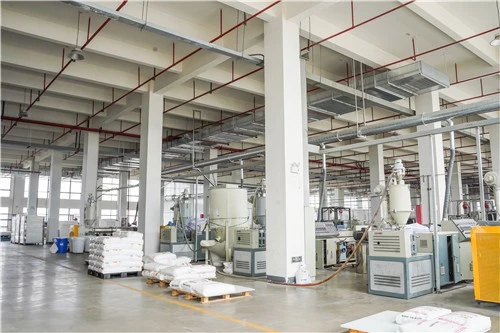
At our Tongxiang facility (50,000+ sqm, 100+ employees, ISO 9001:2015 certified), we manufacture PP honeycomb panels with the following specifications:
- Core cell sizes: 6, 8, 12, 19, 25 mm
- Panel thickness range: 5 mm to 80 mm
- Face sheet options: Glass fiber reinforced PP, PET non-woven, fiberglass, carbon fiber, aluminum foil, decorative film, anti-slip textured
- Standard sheet sizes: 1220 x 2440 mm, 1500 x 3000 mm, custom sizes available
- MOQ: 200 m2 (standard builds), 500 m2 (custom constructions)
- Lead time: 15-25 days (standard), 25-35 days (custom)
- Certifications: ISO 9001:2015, National High-Tech Enterprise, SGS tested, ASTM C365 / C273 / D570 test reports available
Frequently Asked Questions
Is PP honeycomb panel as strong as plywood?
In absolute flexural strength, no — birch plywood at 18 mm delivers 30-50 MPa vs 15-35 MPa for a 20 mm PP honeycomb panel with glass fiber face sheets. However, the PP honeycomb panel weighs 60-75% less, so its specific strength (strength per unit weight) is approximately twice that of plywood. For most structural applications, the PP honeycomb panel meets or exceeds the required performance at much lower weight. Where higher stiffness is needed, increasing core thickness from 20 mm to 30 mm dramatically increases bending stiffness with minimal weight gain.
Can PP honeycomb panels be cut and drilled like plywood?
Yes. PP honeycomb panels can be cut with standard circular saws, jigsaws, and CNC routers using carbide-tipped blades. They can be drilled with standard HSS or carbide drill bits. No special equipment is required. Edge-sealing is recommended for exposed edges in wet environments, though the core itself does not absorb water. Fastening methods include through-bolting, riveting, bonded inserts, and adhesive bonding — see our guide on cutting, joining and fastening composite panels.
How much weight do I save switching from plywood to PP honeycomb?
For a standard panel replacement — 18 mm plywood to 20 mm PP honeycomb — you save 6-8 kg per square meter. On a typical 4.2 m dry freight truck body using about 50 m2 of panels, that is 300-400 kg of weight saved. On an RV with 30-40 m2 of interior panels, the saving is 180-280 kg. This weight saving improves fuel economy, increases payload capacity, and reduces wear on suspension, brakes, and tires.
Does PP honeycomb panel cost more than plywood?
The upfront material cost is 30-50% higher (USD 8-18/m2 vs USD 5-12/m2 for standard birch plywood, FOB China). However, PP honeycomb panels require no surface treatment, no replacement over a 20-year life, and generate fuel savings in vehicle applications. Total cost of ownership over 20 years is typically 50-70% lower than plywood when maintenance, replacement, and weight-related costs are included.
Will PP honeycomb panels warp in heat or humidity?
No. Polypropylene is dimensionally stable across its operating temperature range (-40 to +80 C) and does not absorb moisture. PP honeycomb panels do not warp, swell, cup, or bow in response to humidity changes — unlike plywood, which can swell 2-5% across the grain in humid conditions and warp irreversibly.
Related Guides
- PP Honeycomb Panel: Properties, Applications & Why It Replaces Plywood
- Lightweight Panel Materials for Van Conversion & RV: Complete Guide
- PP Honeycomb Board Manufacturer China: Custom Sizes & OEM Supply
- Honeycomb Core Materials: PP vs Aluminum vs Nomex vs Paper
- Composite Panel Price Guide 2026
Get a Matched Replacement Specification
If you are evaluating PP honeycomb as a replacement for plywood in your application, send us your current plywood specification (thickness, grade, panel size) and loading requirements. We will provide a matched PP honeycomb panel recommendation with test data, weight savings calculation, and FOB pricing within 2 working days.
Request a Quote | View PP Honeycomb Panels | Download Product Datasheet
Sources: ISO 178 (flexural properties of plastics), ASTM C365 (flatwise compressive properties of sandwich cores), ASTM D570 (water absorption of plastics), EN 310 (bending strength of wood-based panels), EN 317 (swelling in thickness of particle/fibre boards), EN 636 (plywood specifications), HOTECH production test data (2026).